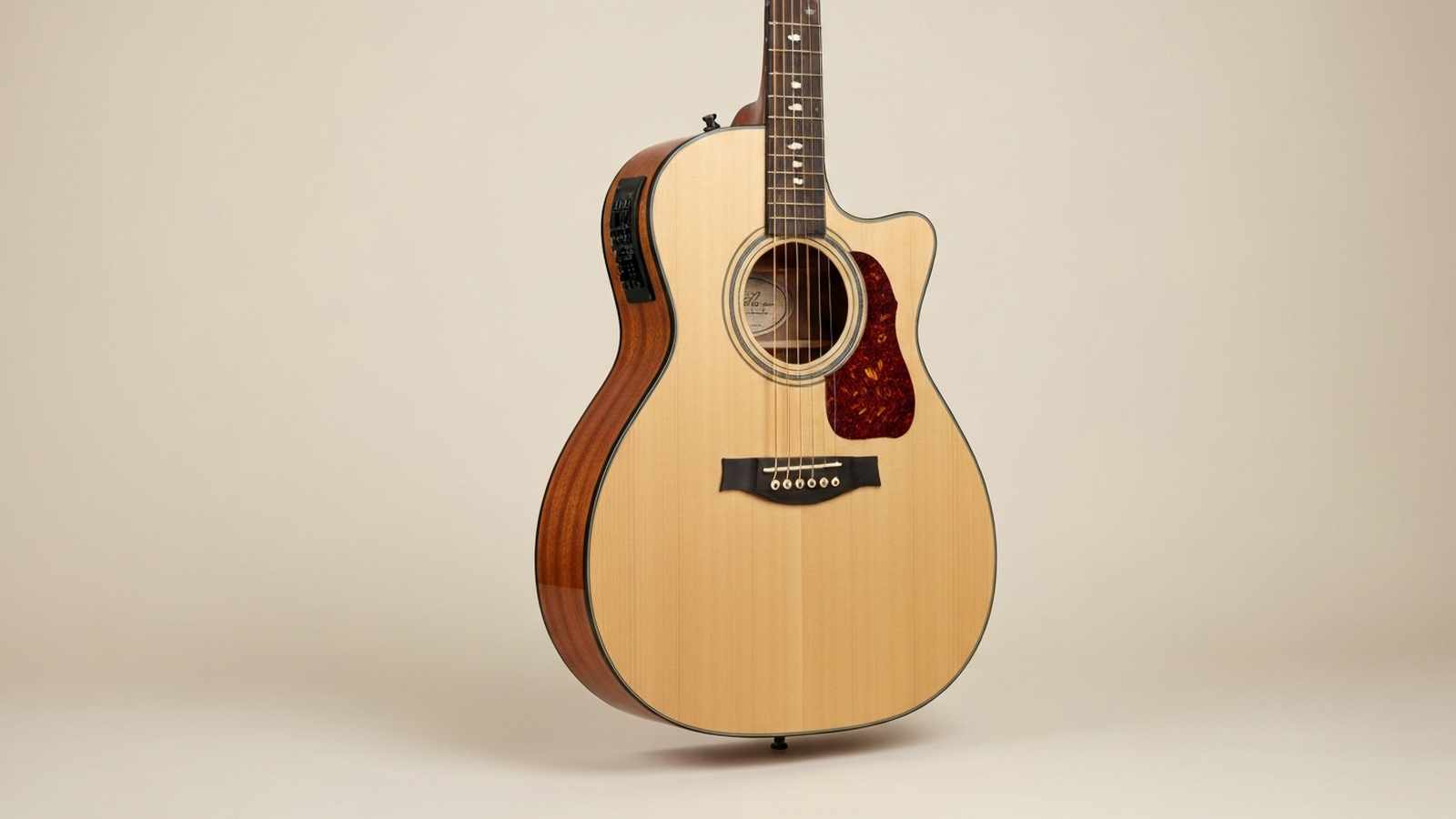
Yamaha LS-TA TransAcoustic
Affiliate link. No extra cost to you
The Smaller LL-TA That Many Fingerstyle Players Will Prefer
After comparing owner reports, demo recordings, and the spec sheets side by side, I came to the same conclusion many fingerstyle players have: this is the better TransAcoustic for most use cases. At 999 dollars street price, you get the same solid Engelmann top with A.R.E. treatment, the same solid rosewood back and sides, and the same TransAcoustic reverb and chorus actuator as the LL-TA jumbo, but in a concert body that sits naturally against a seated player. In demo recordings of "Blackbird" and similar fingerpicked repertoire, the LS-TA comes across cleaner and more articulate than its larger sibling.
At a Glance: Specifications
| Body Shape | LS (Concert) |
| Top | Solid Engelmann Spruce with A.R.E. |
| Back & Sides | Solid Rosewood |
| Neck | Mahogany, 5-ply |
| Fingerboard | Ebony |
| Scale Length | 25.6" |
| Nut Width | 1.732" |
| Electronics | SRT Piezo + TransAcoustic Actuator |
| Origin | Hamamatsu, Japan |
| Street Price | $999 |
First Look: Design and Build
The LS-TA ships in a Yamaha hardshell case that matches the LL-TA's, just with a smaller cavity profile. At 4.5 pounds on the spec sheet the LS-TA is over half a pound lighter than the LL-TA jumbo, a difference owners say you feel immediately when you lift it onto your thigh. The concert body is roughly the size of a Martin 000, which makes it ideal for seated playing and for players with smaller frames.
Satin-finish mahogany neck, gloss rosewood body, and ivoroid binding are applied to the same standard as the flagship LL-TA, which is to say cleanly, without the cost-cutting corners owners sometimes report on Indonesian-built Yamahas at this price.
Tone and Sound Character
Unplugged, the LS-TA produces a more focused and controlled tone than the LL-TA. The smaller body loses some of the bass bloom of the jumbo but gains articulation on individual notes, which is exactly what a fingerstyle player wants. In demo recordings of Tommy Emmanuel-style arpeggios, each note sits in its own space rather than smearing into the chord behind it.
With the TransAcoustic reverb engaged, owners who have played both models report the effect is actually more noticeable in the smaller LS body than in the jumbo. The concert body's tighter internal air volume reflects more of the actuator's output back to the player, which makes the reverb feel more intimate and present. For late-night practice, this is the more atmospheric of the two TransAcoustic models.
Playability and Setup Out of the Box
Owner measurements put factory action around 2.1mm low E and 1.6mm high E at the 12th fret, among the lowest factory setups reported on any Yamaha. The Hamamatsu factory quality control has a noticeably better reputation than the Chinese-built Yamaha A-series, and new owners rarely report needing any setup adjustments in their first months with the guitar.
The 1.732 inch nut width is narrower than a Martin OM-28 standard (1.75 inch) by only 0.018 inch, but the difference is perceptible to fingerstyle players. Classical-trained fingerpickers may still prefer a 1.75 inch nut, but for the hybrid pickers who make up most of Yamaha's target market, the 1.732 inch dimension is comfortable and fast.
Build Quality and Materials
Inside the body, the bracing pattern is Yamaha's scalloped X-bracing optimized for the smaller LS body. Owners who inspect through the soundhole report clean glue work with no squeeze-out. Smooth fret ends along the ebony fingerboard come up consistently in owner reviews, with sprouting or sharp edges almost never mentioned.
The TransAcoustic actuator is mounted to the back brace and adds negligible weight to the guitar. Owners commonly report battery life of around 14 hours on a set of fresh AAs, a hair below Yamaha's rated 17 hours but well within normal range for a continuously-on actuator. The SRT piezo signal passes through an onboard preamp that you can run into any PA or amp through a standard quarter-inch jack.
Who Should Buy the Yamaha LS-TA
The LS-TA is the better choice for fingerstyle players, Travis pickers, classical-trained acoustic guitarists, and anyone with a smaller frame who finds jumbo bodies uncomfortable. It is also the better recording guitar of the two TransAcoustic models because the tighter body produces a more controlled direct-mic signal with less mud in the low-mids.
Choose the LL-TA instead if you are primarily a strummer, if you play standing up at open mics, or if you want the biggest possible bass response for unplugged home listening. For singer-songwriters who split their time between strumming and picking, either model works well: pick based on how the body fits against your torso rather than on spec sheet details.
What We Loved
- Better fingerstyle articulation than the LL-TA jumbo
- TransAcoustic effects work convincingly in the smaller body
- Excellent factory action, with owner measurements around 2.1mm / 1.6mm
- Comfortable concert body size for seated playing
What to Watch
- Less bass bloom than the jumbo LL-TA for strumming
- Still depends on AA battery power for TransAcoustic effects
- No strap-button preamp: effects knobs are on the upper bout
Frequently Asked Questions

Shmulik Dorinbaum
Working Musician · 20+ Years Songwriting & Performing · Hebrew Recording Artist
A 44-year-old working musician and father of two from Israel, writing and recording for over twenty years across country, folk and rock. Strum Avenue is where two decades of buying, breaking, setting up and arguing about acoustic guitars gets written down.
Raised on Chris Cornell, Brandon Boyd (Incubus), Eddie Vedder.