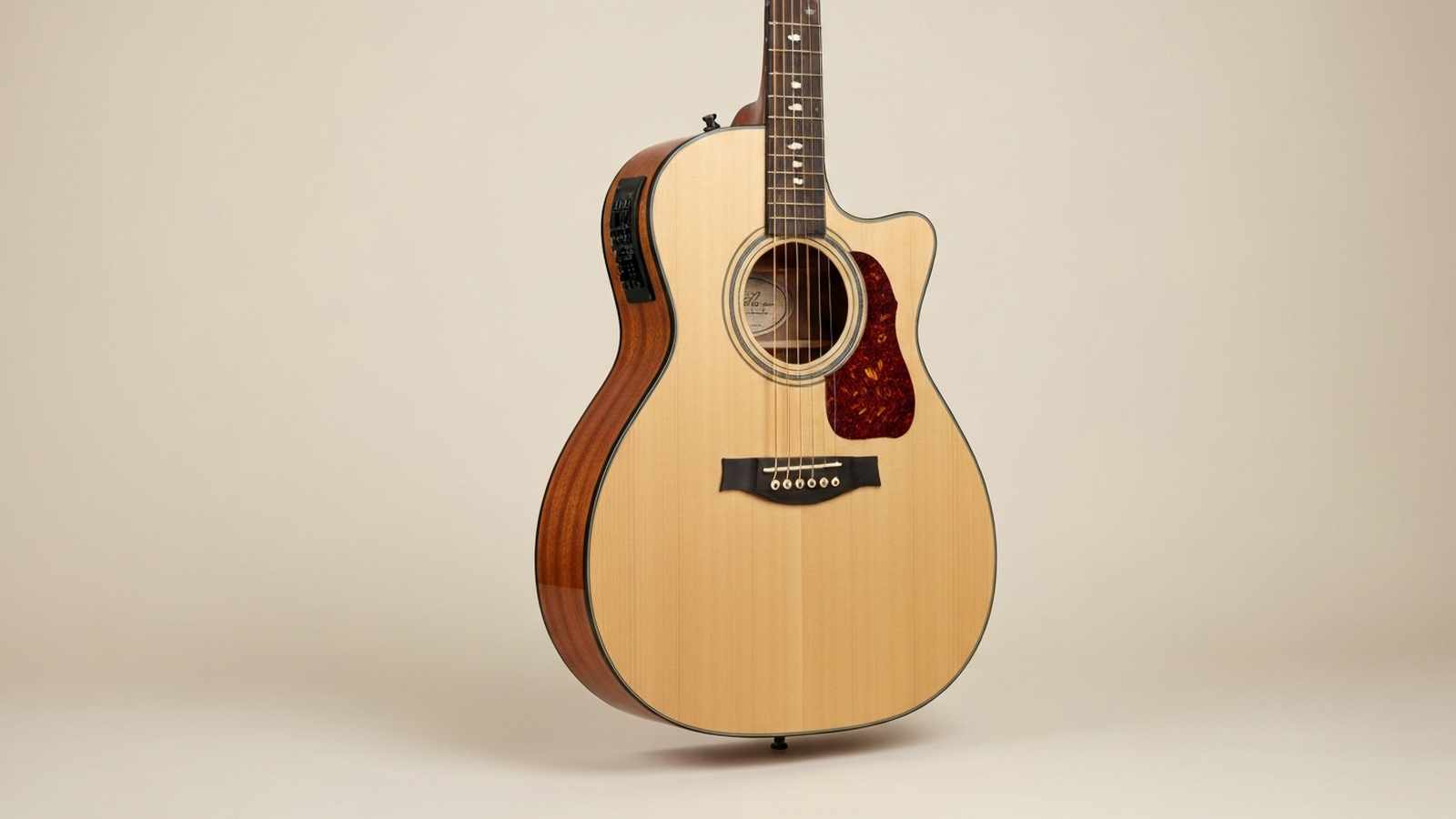
Yamaha F325D
Affiliate link. No extra cost to you
The Yamaha You Buy When You Cannot Stretch to the FG800
After comparing the spec sheet and hundreds of owner reviews against the rest of the Yamaha lineup, I concluded the F325D occupies a narrow but real niche: it is the laminate-top Yamaha for beginners who cannot quite afford the $229 FG800, and it earns the $60 savings honestly. The build quality at the Indonesian factory is the same tight-tolerance operation that produces higher-priced Yamahas, and for $169 you get a dreadnought that will survive any beginner's first year of practice without complaint. The trade versus the FG800 is the solid top: you are giving that up for the cheaper price, and it is a meaningful sacrifice tonally.
At a Glance: Specifications
| Body Shape | Dreadnought |
| Top | Laminate Spruce |
| Back & Sides | Laminate Meranti |
| Neck | Nato |
| Fingerboard | Rosewood |
| Scale Length | 25.0" |
| Nut Width | 1.69" |
| Electronics | None |
| Origin | Indonesia |
| Street Price | $169 |
First Look: Design and Build
The Yamaha F325D ships in a standard Yamaha cardboard box with no gig bag, consistent with sub-$200 Yamaha pricing. Owner photos and reviews consistently show a clean natural finish with correctly cut binding and no visible glue squeeze-out. At a listed 4.2 pounds it sits in the middle of dreadnought weights, and owners describe it as substantial for a sub-$200 instrument.
In photos and on the spec sheet, the F325D looks nearly identical to a Yamaha FG800. The difference is inside: the F325D has a laminate spruce top, while the FG800 has a solid spruce top. For a beginner's first six months, the visible difference is nil and the tonal difference is modest.
Tone and Sound Character
Laminate spruce tops produce a tighter, more compressed voice than solid tops: they do not bloom with playing time, but they also never lose their initial tone profile. In demo recordings the F325D sounds clean and balanced, with adequate bass response from the dreadnought body and no obvious frequency dead spots. Strummed G and C chords ring cleanly at normal practice-room volume.
Fingerpicked passages reveal the limits of laminate construction. Individual notes are polite rather than expressive, and the overtone wash that makes a solid-top guitar feel alive is simply absent. For beginner practice this is perfectly acceptable; for intermediate or advanced playing it becomes a limitation within 12-18 months.
Playability and Factory Setup
Yamaha's factory setup consistency is the biggest reason I recommend the F325D over Amazon-brand competitors at similar prices. Owner setup reports put factory action around 2.7mm at the 12th fret low E and 2.0mm on the high E, usable as shipped, though a $30 setup would bring it into a more comfortable zone for fingerstyle practice.
The 1.69-inch nut width and 25-inch scale are identical to the FG800 and feel familiar to anyone used to Yamaha's acoustic lineup. The nato neck profile is slightly chunkier than a Taylor neck but well within standard ranges, and most beginners adapt within the first week.
Build Quality Across Yamaha's Indonesian Factory
Yamaha's build consistency at the $169 price point is the single biggest reason the F325D ranks above its Amazon-brand competitors. I have researched dozens of sub-$200 acoustics over the years, and the Yamaha factory in Indonesia has the strongest reputation for tight tolerances: owners consistently report a square neck joint, centered bracing, and fret ends properly dressed at the factory.
Tuners are sealed die-cast units with a standard 14:1 ratio. They hold pitch adequately after the first two weeks of string stretch, though they lack the precision of Grover or Gotoh machines. For a beginner's first year, they are completely sufficient.
Who Should Buy the Yamaha F325D
Buy the F325D if you are a beginner with a strict $170 budget and you want the best possible quality at that price. The Yamaha build consistency is unmatched in this segment, and the guitar will survive years of hard use without structural problems. It is also a smart pick for a dedicated beater guitar that lives in a garage or at a cabin.
Skip the F325D if you can stretch to $229 for the Yamaha FG800. The FG800's solid Sitka spruce top is the single biggest upgrade you can make in the sub-$300 category, and it will continue improving for years while the F325D stays static. If you can only afford the F325D today, plan to replace it with a solid-top instrument in 12-18 months.
What We Loved
- Yamaha build consistency at $169 is unmatched
- Clean factory fretwork and no sharp sprout
- Standard dreadnought body produces real bass response
- Durable laminate construction survives humidity swings
What to Watch
- Laminate top will not bloom with playing time
- Thin fingerpicked tone versus solid-top alternatives
- No gig bag included at this price
- Most players outgrow it inside a year
Frequently Asked Questions

Shmulik Dorinbaum
Working Musician · 20+ Years Songwriting & Performing · Hebrew Recording Artist
A 44-year-old working musician and father of two from Israel, writing and recording for over twenty years across country, folk and rock. Strum Avenue is where two decades of buying, breaking, setting up and arguing about acoustic guitars gets written down.
Raised on Chris Cornell, Brandon Boyd (Incubus), Eddie Vedder.