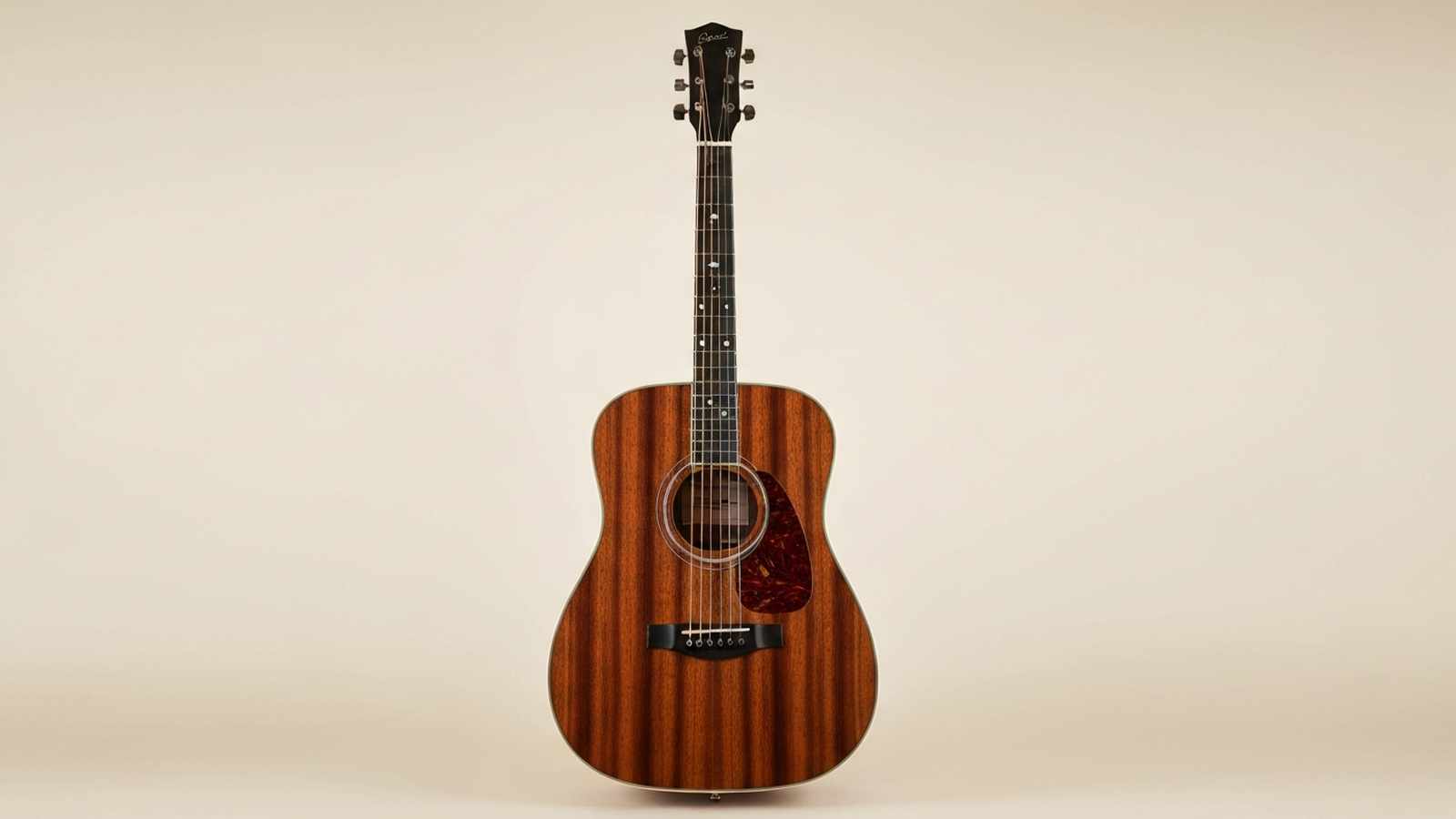
Yamaha FG800
Affiliate link. No extra cost to you
The $229 Guitar That Beats Every $500 Competitor on Value
However long I study this segment, I remain astonished that Yamaha can ship a solid Sitka spruce top, scalloped X bracing, and factory setup this clean at $229 street. Owners who also play a Seagull S6 routinely describe the FG800 as covering most of that guitar's ground at less than half the price, and the Yamaha build consistency at the Indonesian factory is still the benchmark of the sub-$250 segment. For a beginner or intermediate player who wants the single best price-to-performance acoustic guitar in 2026, this remains the clearest recommendation I give all year.
At a Glance: Specifications
| Body Shape | Dreadnought |
| Top | Solid Sitka Spruce |
| Back & Sides | Laminate Nato |
| Neck | Nato |
| Fingerboard | Rosewood |
| Scale Length | 25.0" |
| Nut Width | 1.69" |
| Electronics | None (acoustic only) |
| Origin | Indonesia |
| Street Price | $229 |
First Look: Design and Build
The Yamaha FG800 ships in Yamaha's standard cardboard box, no gig bag at this price. Owner photos and unboxing reports consistently show clean binding and correct neck alignment, with weight landing right around the listed 4.3 pounds from unit to unit, which is a quiet testament to Yamaha's factory consistency.
Visually, the FG800 is plain and understated. There is no herringbone purfling, no ornate rosette, and the headstock is basic. But a look through the soundhole reveals a solid spruce top under the bracing, and that is the spec that actually matters at this price.
Tone and Sound Character
The solid Sitka spruce top is the FG800's central advantage, and it delivers. In demo recordings, strummed open chords produce clear, balanced voicing with noticeable bass response from the dreadnought body. Long-term owners consistently report the top loosening within the first weeks of play, with noticeably more sustain than it had new, a clear sign the solid top is opening up as designed.
Fingerpicked passages are more limited. The laminate nato back and sides cannot produce the harmonic complexity of solid mahogany or rosewood, and individual notes run together more than they would on a $500-plus instrument. For strumming and beginner-to-intermediate work, this is not a practical problem.
Playability and Factory Setup
Yamaha's Indonesian factory setup is consistently better than any competing brand at this price tier. Owner setup reports put factory action around 2.4mm at the 12th fret low E and 1.8mm on the high E, effectively within spec for a factory-fresh dreadnought, and tighter than what owners typically describe on the Fender CD-60S or Epiphone DR-100.
The 1.69-inch nut width is narrower than a Seagull S6 or Martin D-28, which means cramped spacing for aggressive fingerpicking but comfortable chord spacing for beginners who came from an electric background. The 25-inch scale length is 0.4 inches shorter than Martin's 25.4-inch standard, which slightly reduces string tension.
Build Quality at the $229 Price Point
Yamaha has been refining the FG800 and its predecessors since 1967, and the current model benefits from six decades of iterative improvements. The scalloped X bracing is the single biggest update from older FG models: it allows the top to vibrate more freely than the simple ladder bracing used on budget Yamahas into the 1990s, and it is the primary reason the FG800 outperforms its price.
Binding and purfling are simple but clean, owners rarely report undressed fret ends, and visible gaps at the neck joint are almost unheard of in owner reviews. The finish is thin polyurethane, durable and consistent, though not as aesthetically premium as a satin nitrocellulose finish.
Who Should Buy the Yamaha FG800
Buy the FG800 if you are a beginner, a student, a casual player, or a working musician who wants a beater guitar that will not break your heart if it gets dinged on a tour van floor. The solid Sitka spruce top is the single feature that most budget acoustics skip, and it is the reason the FG800 will still sound good five years from now when a laminate-top Epiphone DR-100 has gone flat.
Skip the FG800 if you are a serious fingerstyle player: the 1.69-inch nut width and laminate back will limit you. A Seagull S6 at $499 is the next logical step up, and the 1.8-inch nut plus solid cedar top are meaningful improvements. Also skip the FG800 if you want onboard electronics, the FG800 is acoustic-only, and the FG820 or FGX800C at slightly higher price points will give you pickup options.
What We Loved
- Solid Sitka spruce top at $229 is still unmatched value
- Scalloped X bracing delivers surprising top vibration
- Yamaha Indonesian factory consistency is excellent
- Factory setup is cleaner than competitors at this price
What to Watch
- Laminate nato back and sides limit harmonic complexity
- 1.69-inch nut width is narrow for fingerstyle
- Ships without a gig bag at this price
Frequently Asked Questions

Shmulik Dorinbaum
Working Musician · 20+ Years Songwriting & Performing · Hebrew Recording Artist
A 44-year-old working musician and father of two from Israel, writing and recording for over twenty years across country, folk and rock. Strum Avenue is where two decades of buying, breaking, setting up and arguing about acoustic guitars gets written down.
Raised on Chris Cornell, Brandon Boyd (Incubus), Eddie Vedder.