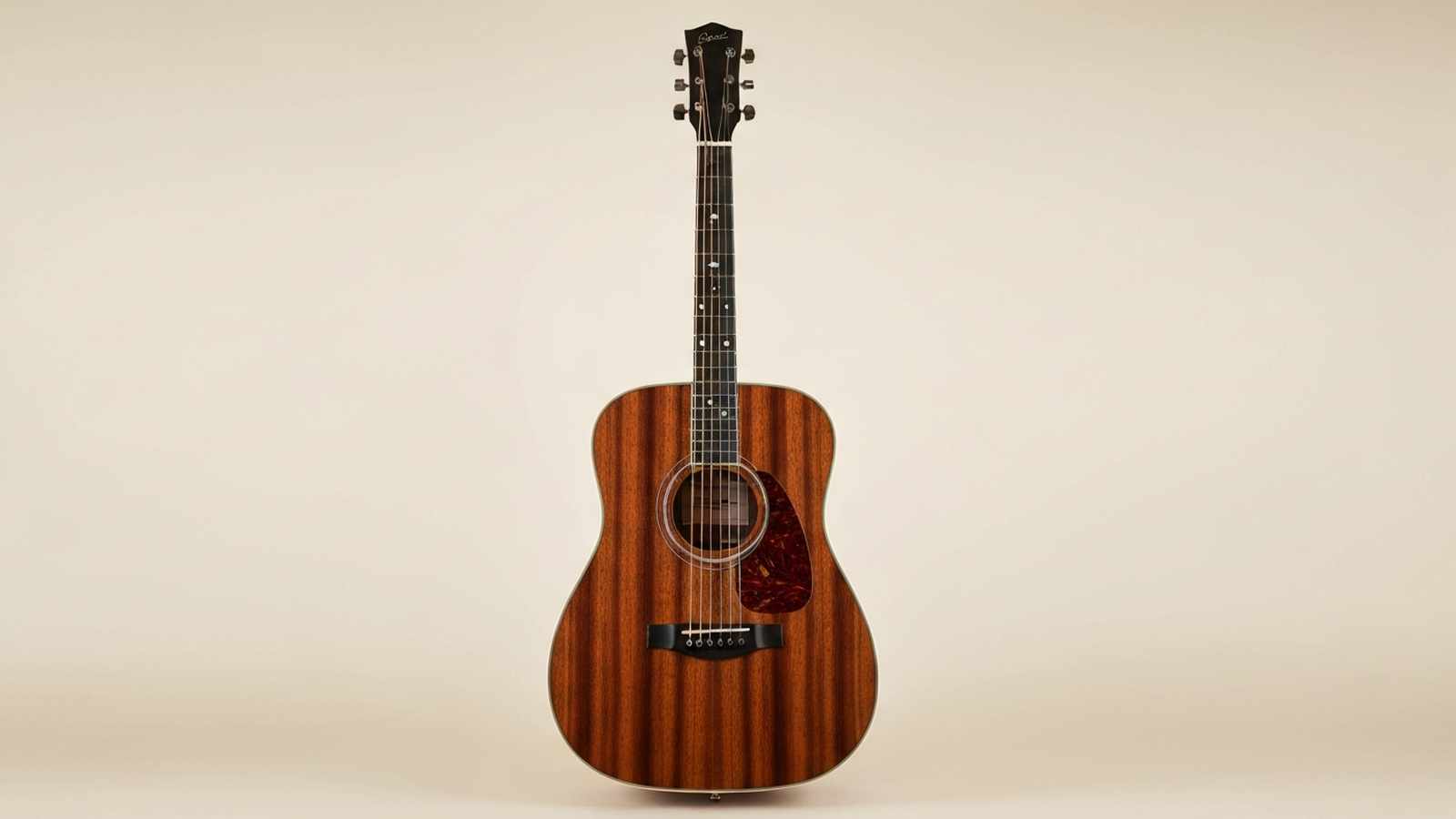
Yamaha FG830
Affiliate link. No extra cost to you
The Budget Rosewood Dreadnought That Shames More Expensive Guitars
After digging through hundreds of owner reports, demo recordings, and the full spec sheet, my conclusion matches what most working guitar teachers already know: this 349 dollar dreadnought punches above its price in every category that matters. The solid Sitka spruce top (the same top used on the FG800) paired with laminate rosewood back and sides produces a richer, more complex voice than the nato-backed FG800, and for strummers who want a single guitar that will take them from cowboy chords through bluegrass flatpicking without feeling like a compromise, the FG830 is the right choice at under 400 dollars.
At a Glance: Specifications
| Body Shape | Traditional Western (FG Dreadnought) |
| Top | Solid Sitka Spruce |
| Back & Sides | Rosewood (laminate) |
| Neck | Nato, C-profile |
| Fingerboard | Rosewood |
| Scale Length | 25.6" |
| Nut Width | 1.6875" |
| Electronics | None (acoustic only) |
| Origin | Indonesia |
| Street Price | $349 |
First Look: Design and Build
The FG830 ships from Yamaha's Indonesian facility in a branded gig bag (not a hardshell case at this price). At 4.4 pounds on the spec sheet the FG830 is slightly heavier than the FG800, which tracks because laminate rosewood is denser than laminate nato. Owner reports consistently describe the natural satin finish as clean, and complaints about buffing haze or drip lines are nearly nonexistent.
The abalone rosette is the one visual detail that signals you spent a little more than FG800 money. It is a thin purfling ring rather than a full abalone inlay, but it catches light under a stage bulb in a way that the plain FG800 rosette does not. Otherwise the headstock logo, binding, and dot inlays are identical to the cheaper FG800.
Tone and Sound Character
The rosewood back and sides are the entire reason to pick the FG830 over the FG800. In side-by-side demo recordings, strummed open chords bloom with noticeably more overtone content than the FG800. Compared against a Fender CD-60S at the same price, the FG830 comes across clearly warmer and more complex in the low-mid register: the rosewood delivers exactly the effect you would hope for at this price.
Fingerpicked passages like the intro to "Dust in the Wind" show the FG830's strengths clearly in demo recordings. Individual string definition is better than I would expect at 349 dollars, and owners repeatedly mention a sustain bloom on the low E string that lingers for several seconds on sustained notes. On bluegrass flatpicked runs the top is slightly slower to respond than the FG800, which is typical of rosewood dreadnoughts at any price.
Playability and Setup Out of the Box
Owner measurements put factory action around 2.5mm at the 12th fret on the low E and 1.9mm on the high E, consistent with what owners report on FG800 and FG840 units out of the same Indonesian factory. For strumming this is immediately playable. For fingerstyle players who want lower action, a 30 dollar tech setup will bring both measurements down by 0.3-0.4mm without introducing fret buzz.
The 1.6875 inch nut width is the standard Yamaha FG dimension and sits on the narrower side of modern acoustic geometries. Players with smaller hands will find the FG830 comfortable; players with larger hands who prefer 1.75 inch or wider may still find the dimension slightly cramped on complex jazz voicings.
Build Quality and Materials
Owner photos consistently show clean, even grain orientation on the solid Sitka top across the soundhole area. The top is braced with Yamaha's scalloped X-bracing pattern, which is largely responsible for why the FG series sounds so much better than comparable budget dreadnoughts from other brands. Owners who inspect through the soundhole report clean glue work on the bracing with no squeeze-out.
Nato neck and rosewood fingerboard are standard Yamaha appointments at this price tier and they are executed cleanly. Smooth fret ends come up again and again in owner reviews, and complaints about nut work are rare: owners describe strings ringing cleanly from the open position through the 14th fret without the sympathetic buzz that plagues many budget guitars.
Who Should Buy the Yamaha FG830
The FG830 is aimed at intermediate players who have outgrown an entry-level laminate guitar and want their first solid-top dreadnought with rosewood tonal character. Singer-songwriters who strum more than they pick, adult learners past their first year, and working teachers who need a reliable classroom instrument all land here appropriately. It is also the right choice for anyone who loves the rosewood sound but cannot justify a Martin D-28 yet.
Skip the FG830 if you plan to gig regularly (add the FG-TA for electronics, or a Martin DX1E), if you prefer mahogany tone over rosewood (get an FG820 with mahogany back and sides instead), or if you only need a practice guitar that will not see much use (the cheaper FG800 will save you 120 dollars with very similar tone).
What We Loved
- Solid Sitka spruce top with proven Yamaha scalloped bracing
- Laminate rosewood back and sides add noticeable warmth over FG800
- Owners consistently report a playable factory setup straight out of the gig bag
- Under 400 dollars for a real solid-top rosewood-backed dreadnought
What to Watch
- No case included at the 349 dollar street price
- 1.6875 inch nut width may feel narrow for large-handed fingerpickers
- Laminate back will not mature tonally the way solid rosewood would
Frequently Asked Questions

Shmulik Dorinbaum
Working Musician · 20+ Years Songwriting & Performing · Hebrew Recording Artist
A 44-year-old working musician and father of two from Israel, writing and recording for over twenty years across country, folk and rock. Strum Avenue is where two decades of buying, breaking, setting up and arguing about acoustic guitars gets written down.
Raised on Chris Cornell, Brandon Boyd (Incubus), Eddie Vedder.