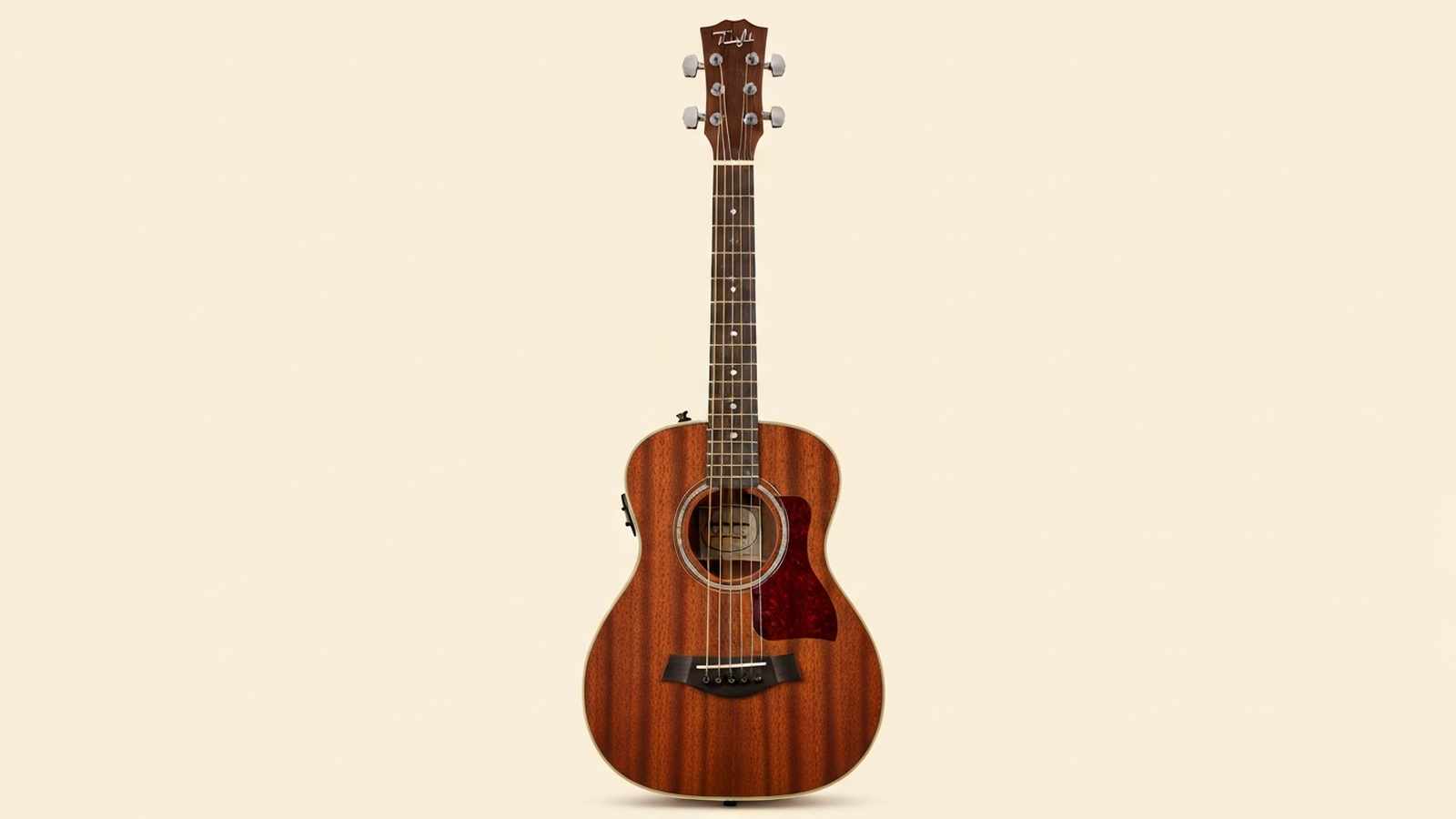
Yamaha JR1 FG Junior 3/4 Scale
Affiliate link. No extra cost to you
The Yamaha JR1 Is Still the Safest Bet for a First Child's Guitar
After going through hundreds of owner and teacher reports on the Yamaha JR1, I remain convinced it is the correct answer for almost any parent buying a first guitar for a child aged 5-10. The 21-inch scale length cuts string tension by roughly 30% versus a full-size dreadnought, the Yamaha build quality remains impressive at $179, and the laminate construction makes it nearly indestructible for the reality of a 6-year-old's daily life. It is not a solid-top instrument and never tries to be: this is a learning tool, and at this price it is without peer.
At a Glance: Specifications
| Body Shape | 3/4 Dreadnought |
| Top | Laminate Spruce |
| Back & Sides | Laminate Meranti |
| Neck | Nato |
| Fingerboard | Rosewood |
| Scale Length | 21.25" |
| Nut Width | 1.69" |
| Electronics | None (acoustic only) |
| Origin | Indonesia |
| Street Price | $179 |
First Look: Design and Build
The Yamaha JR1 ships in a Yamaha-branded gig bag that is included at the $179 price, a detail that matters more than people realize when the target buyer is a child and the target use is "hauled to a weekly lesson for three years." At a listed 2.9 pounds the JR1 is one of the lightest steel-string guitars sold today, and parents report a child under 50 pounds can hold it comfortably on their lap without slipping.
Finish work is clean for the price. Owner photos of the Natural finish consistently show straight binding, correct neck alignment, and no visible glue squeeze-out. Yamaha's Indonesian factory has been producing JR-series guitars for nearly two decades and the consistency is the biggest reason I recommend them over competing 3/4 guitars from Cordoba, Fender, or off-brand Amazon listings.
Tone and Sound Character
A $179 laminate-top 3/4 guitar will never have the voice of a Martin D-28, and expecting otherwise is a category error. What the JR1 actually delivers is clear, even voicing with enough volume for a small practice room and no obvious frequency dead spots. Open-chord strumming sounds proportional to the body size rather than artificially boosted.
Fingerpicked passages are thin: the laminate top cannot produce the bass response of a solid-wood instrument, and the short scale compresses note separation. For a 7-year-old learning "Happy Birthday" and open chords, the tone is more than adequate. For a 14-year-old who has progressed past beginner repertoire, it is time to upgrade to a full-size instrument.
Playability for Young Students
The 21.25-inch scale length is the single most important spec on this guitar for its intended audience. String tension at standard pitch is roughly 30% lower than a 25.4-inch full-scale dreadnought, which means a young child's fretting hand can hold chord shapes without the hand going pale or the fingers cramping. Guitar teachers on forums repeatedly describe young students managing a clean G-C-D progression on the JR1 after failing on a parent's borrowed full-size.
Owner setup reports put factory action around 2.8mm at the 12th fret low E and 2.1mm on the high E. That is slightly tall for adult hands but within the zone where a young beginner can still press down effectively. A 10-minute saddle shave takes it to 2.4mm and makes the guitar play even easier.
Build Quality and Durability
Yamaha's reputation for tight factory tolerances holds up on the JR1. Owners describe clean neck joints, centered bracing visible through the soundhole, and tuners that, while generic sealed die-cast units, hold pitch adequately for a child's practice sessions. Teachers with JR1s in long-term lesson use report no loose frets, no buzzing, and no tuning drift beyond the normal re-tune at the start of each session.
Laminate construction is actually an asset for a child's first guitar. Laminate is less sensitive to humidity swings than solid wood, which means the JR1 will survive a Minnesota winter and an Arizona summer without cracking the top. A solid-top Baby Taylor, by contrast, genuinely needs humidity control and will crack if left in a dry car for a weekend.
Who Should Buy the Yamaha JR1
Buy the JR1 if you are shopping for a child aged 5-10 and want a first guitar that will survive two years of daily use and cost under $200 total. The included gig bag, the Yamaha build consistency, and the 21-inch scale make it the highest-confidence pick in this narrow segment. Guitar teachers recommend it more often than any other entry-level instrument in this size class.
Skip the JR1 if your child is already 11 or older, has average-sized hands, and is showing serious interest in the instrument. At that stage, a full-size Yamaha FG800 or FS800 at $229-249 is a better long-term investment. Also skip the JR1 if you want a solid-top guitar: step up to the Baby Taylor BT1 at $379 or the Martin LX1 at $399 for solid Sitka tops in a similar size.
What We Loved
- 21-inch short scale dramatically reduces string tension
- Yamaha factory consistency is unmatched in this price range
- Included gig bag is reinforced at the headstock end
- Durable laminate construction survives humidity swings
What to Watch
- Laminate spruce top lacks the bloom of solid wood
- Thin bass response on fingerpicked passages
- Basic die-cast tuners hold pitch but lack precision
Frequently Asked Questions

Shmulik Dorinbaum
Working Musician · 20+ Years Songwriting & Performing · Hebrew Recording Artist
A 44-year-old working musician and father of two from Israel, writing and recording for over twenty years across country, folk and rock. Strum Avenue is where two decades of buying, breaking, setting up and arguing about acoustic guitars gets written down.
Raised on Chris Cornell, Brandon Boyd (Incubus), Eddie Vedder.