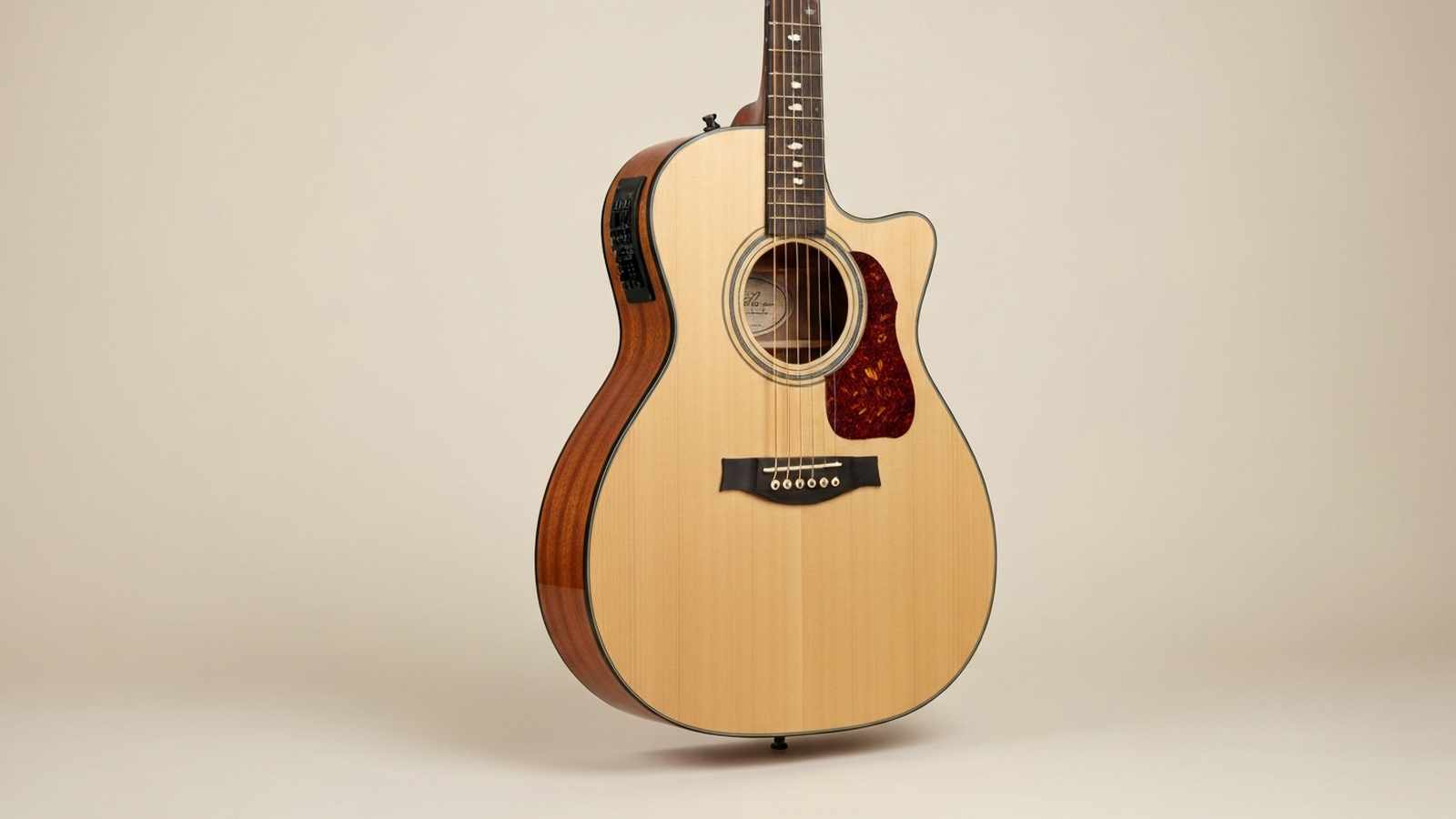
Yamaha Storia II
Affiliate link. No extra cost to you
A Serious Yamaha Hiding Behind Lifestyle Cosmetics
The deeper I dug into owner reports and demo recordings, the harder it became to dismiss the Yamaha Storia II as a decorator item. What Yamaha actually built is a legitimate solid-top concert acoustic in a visually appealing package aimed at casual players. The solid spruce top, the unique pale finish, and the subtly oversized sound hole give the Storia II a warmer, more intimate voice than the standard Yamaha FS800, and at $329 with electronics it is a real alternative for apartment dwellers and quiet fingerstyle players. It is not Yamaha's most efficient value pick, but it is the Yamaha I would keep on the wall.
At a Glance: Specifications
| Body Shape | Concert |
| Top | Solid Spruce |
| Back & Sides | Laminate Mahogany |
| Neck | Nato |
| Fingerboard | Walnut |
| Scale Length | 25.0" |
| Nut Width | 1.69" |
| Electronics | Passive Piezo with Side Volume |
| Origin | Indonesia |
| Street Price | $329 |
First Look: Design and Build
The Yamaha Storia II ships in a standard Yamaha cardboard box with no gig bag. In photos and store displays the pale Brick finish stands out immediately against any wall of traditional acoustics: the Storia series is deliberately designed to be visible and attractive in a living room or bedroom setting, and Yamaha's color palette looks nothing like a traditional natural-finish acoustic.
At 3.7 pounds on the spec sheet the Storia II is lighter than a dreadnought, and owners describe it as comfortable to hold for long sessions. The concert body with its subtly enlarged sound hole gives the instrument a distinct visual signature, and the soft-rolled neck edges draw consistent praise in owner reviews from the first minutes of play.
Tone and Sound Character
The solid spruce top and concert body produce a warmer, more intimate voice than the same-family Yamaha FG800 dreadnought. In demo recordings, strummed cowboy chords sound clean and balanced without the booming low end of a dreadnought, which is actually a real advantage for apartment living and quiet home practice. Owners report the top opening up noticeably within the first weeks, with fingerpicked arpeggios gaining meaningful bloom on the wound strings.
The slightly oversized sound hole is the Storia's subtle engineering trick: it gives the guitar a marginally brighter attack and faster response than a standard concert shape would. For songwriters, vocal accompanists, and fingerstyle players, this is a net positive. For bluegrass flatpickers or heavy strummers, the tighter voice may feel polite.
Playability and Setup
Owner measurements put factory action around 2.4mm at the 12th fret low E and 1.8mm on the high E, within Yamaha's standard spec and better than competing concert acoustics at this price. The 25-inch scale and 1.69-inch nut width are identical to the FG800, which means players crossing between Yamaha acoustics will find the transition seamless.
Owners who have played both say the rolled fretboard edges and satin neck finish give the Storia II a slightly more refined playing feel than the standard FS800 at the same company. It is a small but meaningful difference for players who value long-session comfort.
Build Quality at Yamaha's Indonesian Factory
Yamaha's build consistency in Indonesia remains the benchmark for sub-$400 acoustics. Owner reviews consistently describe flawless binding, correctly centered bracing visible through the soundhole, and properly dressed fret ends. The Storia II is not cutting corners on the construction side: the premium cosmetics come with genuine Yamaha-level manufacturing.
The passive piezo pickup system is basic but functional. The side-mounted volume knob is cleverly placed for on-stage adjustment, and the lack of a battery means one fewer thing to fail during a performance. For more advanced electronics, Yamaha offers the AC1M or AC3M models at higher price points.
Who Should Buy the Yamaha Storia II
Buy the Storia II if you want a Yamaha solid-top acoustic in a visually distinctive package, and if you are an apartment-dwelling or home-focused player who values an intimate concert voice over dreadnought volume. The unique finish is a real asset for players who want an instrument that looks at home on a wall or a living room corner, and the solid spruce top ensures the guitar will sound better over time rather than staying static.
Skip the Storia II if you are a pure value shopper: the Yamaha FG800 at $229 offers the same solid Sitka spruce top in a dreadnought body for $100 less. Also skip it if you need robust onboard electronics for regular gigging, because the passive piezo pickup is adequate for open mics but not refined enough for serious stage work.
What We Loved
- Solid spruce top with warm concert voice
- Distinctive finishes stand out in a living room setting
- Clean factory build from Yamaha Indonesia
- Rolled fingerboard edges that owners call comfortable from day one
What to Watch
- $100 more than a Yamaha FG800 for similar tonewoods
- Passive piezo electronics are basic
- Matte finish scratches more easily than gloss
- Smaller voice than a dreadnought for band settings
Frequently Asked Questions

Shmulik Dorinbaum
Working Musician · 20+ Years Songwriting & Performing · Hebrew Recording Artist
A 44-year-old working musician and father of two from Israel, writing and recording for over twenty years across country, folk and rock. Strum Avenue is where two decades of buying, breaking, setting up and arguing about acoustic guitars gets written down.
Raised on Chris Cornell, Brandon Boyd (Incubus), Eddie Vedder.