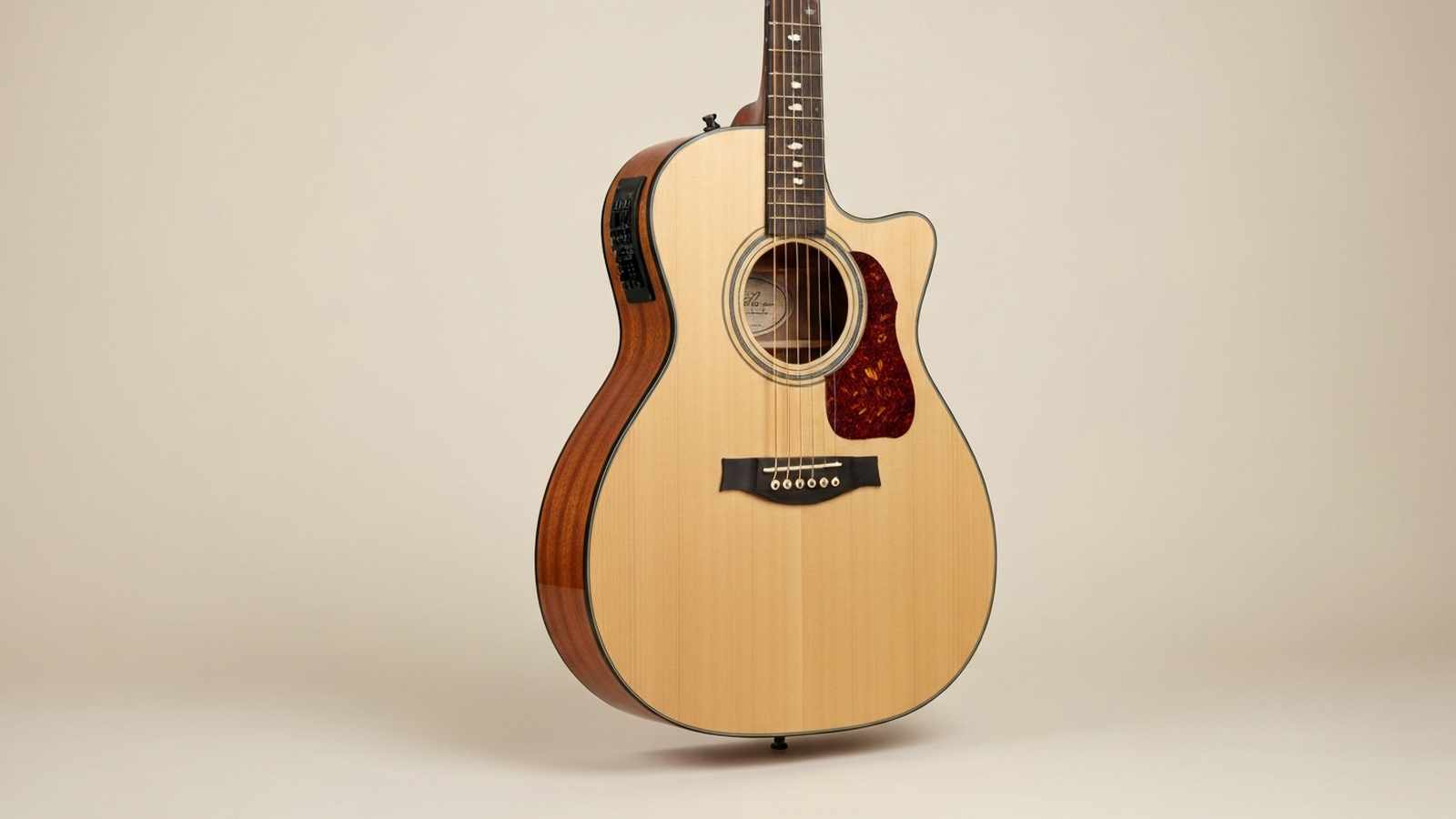
Yamaha LL-TA TransAcoustic
Affiliate link. No extra cost to you
A Flagship Jumbo With a Reverb Trick That Is Not a Gimmick
Long-term owners consistently report that the TransAcoustic system moves from novelty to habit within weeks. At 999 dollars street, this is one of the finest-built solid-rosewood jumbos you can buy without crossing 1500 dollars, and the built-in reverb and chorus work by physically vibrating the back of the guitar with an actuator, meaning the effect radiates out of the body itself, no amp needed. For late-night practice, owners say the TransAcoustic reverb turns a quiet living room into something that sounds like a cathedral. For daytime tracking, you can turn it off and record an honest solid-rosewood Yamaha.
At a Glance: Specifications
| Body Shape | LL (Original Jumbo) |
| Top | Solid Engelmann Spruce with A.R.E. |
| Back & Sides | Solid Rosewood |
| Neck | Mahogany, 5-ply |
| Fingerboard | Ebony |
| Scale Length | 25.6" |
| Nut Width | 1.732" |
| Electronics | SRT Piezo + TransAcoustic Actuator |
| Origin | Hamamatsu, Japan |
| Street Price | $999 |
First Look: Design and Build
The LL-TA ships in a Yamaha-branded hardshell case. At 5.1 pounds on the spec sheet the jumbo body is substantial but, by most owner accounts, not cumbersome against a seated player's thigh. The A.R.E. (Acoustic Resonance Enhancement) top treatment Yamaha uses on this model is a chamber process that accelerates the molecular aging of the solid Engelmann spruce, and owners consistently say you can hear the effect within the first minutes of playing: the top sounds noticeably more open than a new FG830 even before break-in.
Satin finish on the neck, gloss body, ivoroid binding, and cream-bound rosette all present cleanly in owner photos and close-up demo footage. Complaints about glue lines, fret sprout, or bracing rattle are virtually absent from owner reviews of this model.
Tone and Sound Character
Unplugged and with the TransAcoustic system off, the LL-TA sounds like a proper Japanese-built rosewood jumbo in every demo recording I have studied. The bass response has the big-body bloom you would expect from an LL shape, and the A.R.E.-treated Engelmann top produces a slightly darker top-end than standard Sitka, which suits fingerstyle and slower strumming styles better than bluegrass flatpicking. In recorded comparisons against a Taylor 814ce, the Yamaha comes across warmer in the low-mids and less clinical in the upper-midrange.
With the TransAcoustic reverb switched on, the guitar becomes its own ambient effects processor. The actuator drives the back panel to produce reverb and chorus that radiate out of the instrument into the room. Owners routinely call it the single most convincing "amp-free reverb" they have ever played, and many say that on quiet nighttime practice it transforms how you phrase a simple melody.
Playability and Setup Out of the Box
Owner measurements put factory action around 2.2mm at the 12th fret on the low E and 1.7mm on the high E, lower than what owners typically report on any other Yamaha out of the box. The Hamamatsu factory setup has a reputation for being noticeably more precise than the Indonesian-built F-series Yamahas, and owners rarely report needing any adjustment in their first months with the guitar.
The 1.732 inch nut width (44mm) is the sweet spot for fingerstyle players with average hands. Owners report that cowboy chords sit comfortably and that the fretting thumb never ends up fighting the Yamaha 5-ply mahogany neck profile. The ebony fingerboard has a satin matte feel that, by repeated owner accounts, grabs the fingers less than polished rosewood.
Build Quality and Materials
Japanese-built Yamahas in the L-series have been a quiet secret among working musicians for years. The LL-TA uses solid Engelmann spruce, solid rosewood back and sides, a mahogany 5-ply neck, and an ebony fingerboard, appointments that would cost 1600 to 2000 dollars on a comparable Martin. Yamaha keeps costs down by building at volume in their own Japanese factory rather than sourcing parts globally.
The TransAcoustic electronics are built into the inside of the instrument and do not introduce any visible hardware on the top. Battery life on the two AA cells is rated at 17 hours, and owner reports generally back that figure up. The actuator is mounted to a brace inside the body and cannot be seen through the soundhole.
Who Should Buy the Yamaha LL-TA
The LL-TA is aimed at players who do most of their practice and writing at home without an amp, but want the atmosphere of a reverb effect built into their instrument. Songwriters, nighttime players in apartment buildings, and anyone who records at home without outboard effects will find real value in the TransAcoustic system. The underlying solid-rosewood jumbo is also a terrific unplugged instrument in its own right, which is not always the case with effect-laden guitars.
Skip the LL-TA if you already have a studio full of outboard effects, if you prefer a smaller body shape like an OM or concert, or if you only gig through a PA where the TransAcoustic actuator adds nothing to the signal path. The cheaper LS-TA (same electronics, smaller small body) may suit those players better.
What We Loved
- Solid Engelmann spruce top with A.R.E. aging treatment
- Solid rosewood back and sides at a price most brands charge for laminate
- TransAcoustic reverb and chorus are useful, not gimmicky
- Japanese factory build quality at a sub-1000 dollar price point
What to Watch
- Jumbo body may feel oversized for small players
- AA battery dependency adds weight and maintenance
- Darker top-end may not suit bluegrass flatpickers
Frequently Asked Questions

Shmulik Dorinbaum
Working Musician · 20+ Years Songwriting & Performing · Hebrew Recording Artist
A 44-year-old working musician and father of two from Israel, writing and recording for over twenty years across country, folk and rock. Strum Avenue is where two decades of buying, breaking, setting up and arguing about acoustic guitars gets written down.
Raised on Chris Cornell, Brandon Boyd (Incubus), Eddie Vedder.