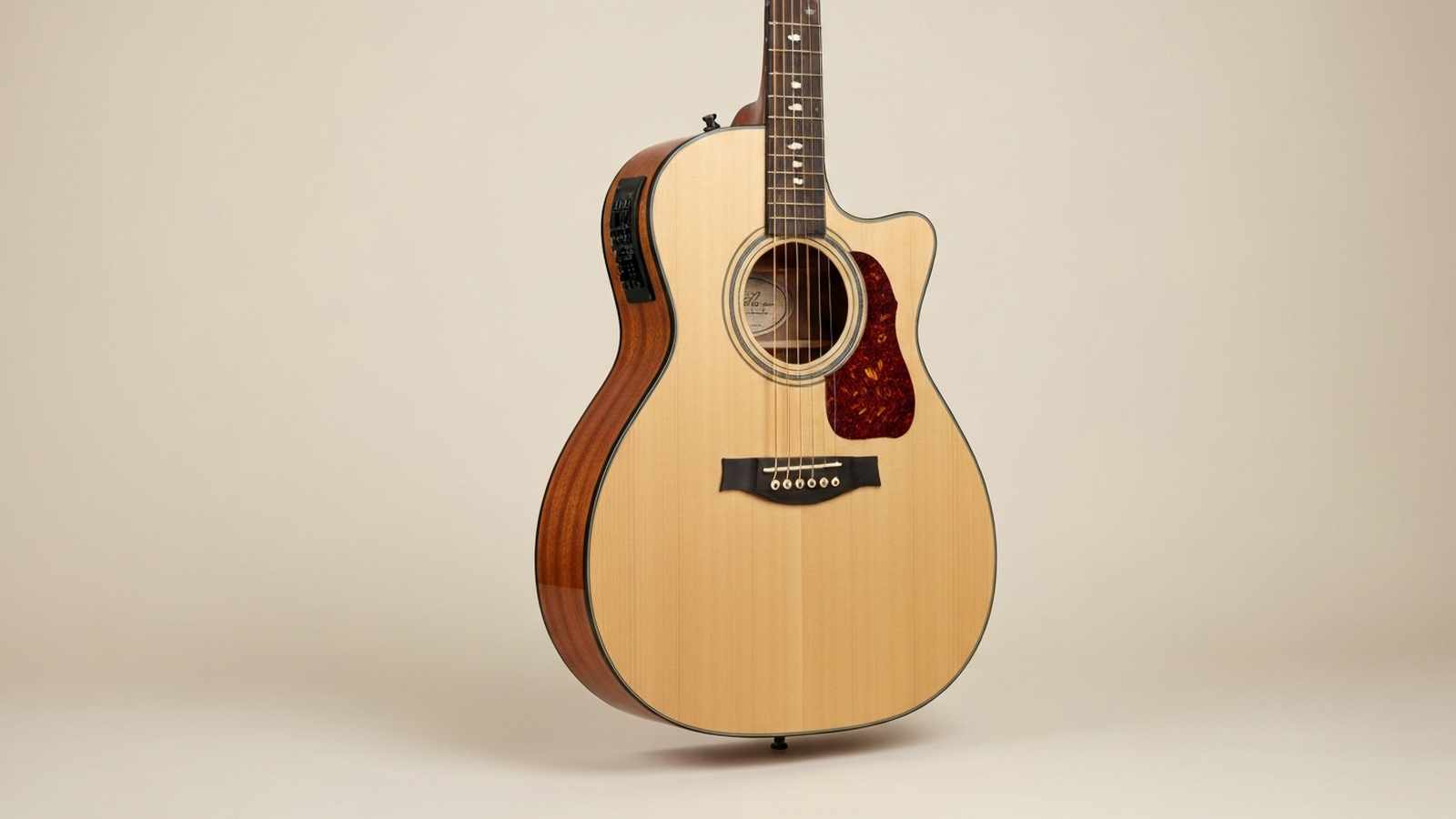
Martin DX1E
Affiliate link. No extra cost to you
The Gigging Martin for Players Who Cannot Spend 2000 Dollars
After working through hundreds of owner reviews and a stack of demo recordings, I understand why the Martin DX1E keeps showing up at small-room open mics across the country. At 549 dollars street, you get a genuine solid Sitka spruce top, Fishman MX-T electronics that owners say sound like a real preamp, and the Martin dreadnought voice in a package that you can drop into the trunk of a sedan without flinching. The HPL back and sides are not pretty, but they are weather-proof, and they free up the tonewood budget for where it matters most: the top.
At a Glance: Specifications
| Body Shape | Dreadnought (14-fret) |
| Top | Solid Sitka Spruce |
| Back & Sides | HPL Mahogany Pattern |
| Neck | Stratabond Birch Laminate |
| Fingerboard | FSC Richlite |
| Scale Length | 25.4" |
| Nut Width | 1.6875" |
| Electronics | Fishman MX-T with Tuner |
| Origin | Navojoa, Mexico |
| Street Price | $549 |
First Look: Design and Build
The DX1E ships in a Martin-branded soft case included at the 549 dollar street price. At a listed 4.3 pounds it runs about a quarter-pound lighter than a standard D-18 due to the HPL back and sides rather than solid mahogany. The Stratabond birch-laminate neck and Richlite fingerboard are a visual adjustment if you are used to traditional Martin appointments, but the materials are structurally superior to tropical ebony in humidity swings.
Owners consistently report that the DX1E holds tune well from the first session. Factory setups commonly come in around 2.3mm low E and 1.8mm high E action at the 12th fret, which is Martin's standard spec and playable without a trip to the bench.
Tone and Sound Character
The solid Sitka top is the entire story of this guitar. In demo recordings, strummed G-D-Em-C progressions produce a recognizable Martin dreadnought voice that you simply do not get from an all-laminate instrument. Owners who also play a D-18 typically put the DX1E about 80 percent of the way there on the top-end bloom and maybe 65 percent on the low-mid warmth, which is where HPL back and sides differ most from solid mahogany.
Fingerpicked playing on the DX1E holds up better than the price suggests. In demo recordings of pieces like "Tears in Heaven," the separation between the bass run and the treble melody stays clean, and owners regularly report tracking acoustic parts with it at home. For home recording and small-room gigs, this guitar is genuinely studio-capable.
Playability and Factory Setup
The Modified Low Oval neck profile feels right at home for players coming from any recent Martin dreadnought. Factory action around 2.3mm low E and 1.8mm high E is a hair high for shredders but absolutely correct for strumming and fingerpicking, and most owners report playing it as-is without a setup adjustment.
The 1.6875 inch nut width is narrower than Martin's more common 1.75 inch spec on the D-28. For players with small to medium hands, this is actually a benefit for cowboy chords. For advanced fingerstyle players, the narrower string spacing at the nut can feel cramped compared to a standard 1.75 inch neck.
Build Quality and Materials
The HPL back and sides are the most controversial material choice in the Martin X series. Martin has been building these instruments since 1998 and the long-term reliability is documented: HPL does not crack in dry climates and it shrugs off minor knocks that would dent solid mahogany. The top, which is the part that matters acoustically, is real solid Sitka spruce with X-bracing.
Owner reports consistently describe smooth fret ends with no sharp edges. Binding is simple black ABS, adequate for the price point. The Fishman MX-T preamp mounts cleanly into the upper bout and the battery compartment is accessible without tools. Owners who have checked the built-in tuner against dedicated strobe tuners report it tracks accurately.
Who Should Buy the Martin DX1E
The DX1E is built for working musicians who need a Martin voice that they can take to rougher venues without worrying about weather damage. Singer-songwriters playing coffee shops, traveling musicians who fly with their instrument, and players transitioning from a beginner guitar to a real working instrument all land here appropriately. The electronics are good enough to run into a PA without a separate DI box, which saves space in a travel bag.
Skip the DX1E if you want the traditional Martin aesthetic, if you are a recording purist who needs the absolute best top-end detail, or if you cannot get past the HPL back and sides visually. The D-18 at roughly 1,899 dollars is the next step up if those things matter to you, and the all-solid construction will age into a more complex tone over 5-10 years of playing in a way the DX1E simply cannot.
What We Loved
- Real solid Sitka spruce top at 549 dollars
- Fishman MX-T electronics with accurate built-in tuner
- Weather-stable HPL back and sides survive climate swings
- Includes Martin-branded soft case at the street price
What to Watch
- HPL back and sides look and feel unmistakably like laminate
- Narrower 1.6875 inch nut may feel cramped for fingerstyle players
- Stratabond neck and Richlite fingerboard lack the traditional Martin look
Frequently Asked Questions

Shmulik Dorinbaum
Working Musician · 20+ Years Songwriting & Performing · Hebrew Recording Artist
A 44-year-old working musician and father of two from Israel, writing and recording for over twenty years across country, folk and rock. Strum Avenue is where two decades of buying, breaking, setting up and arguing about acoustic guitars gets written down.
Raised on Chris Cornell, Brandon Boyd (Incubus), Eddie Vedder.