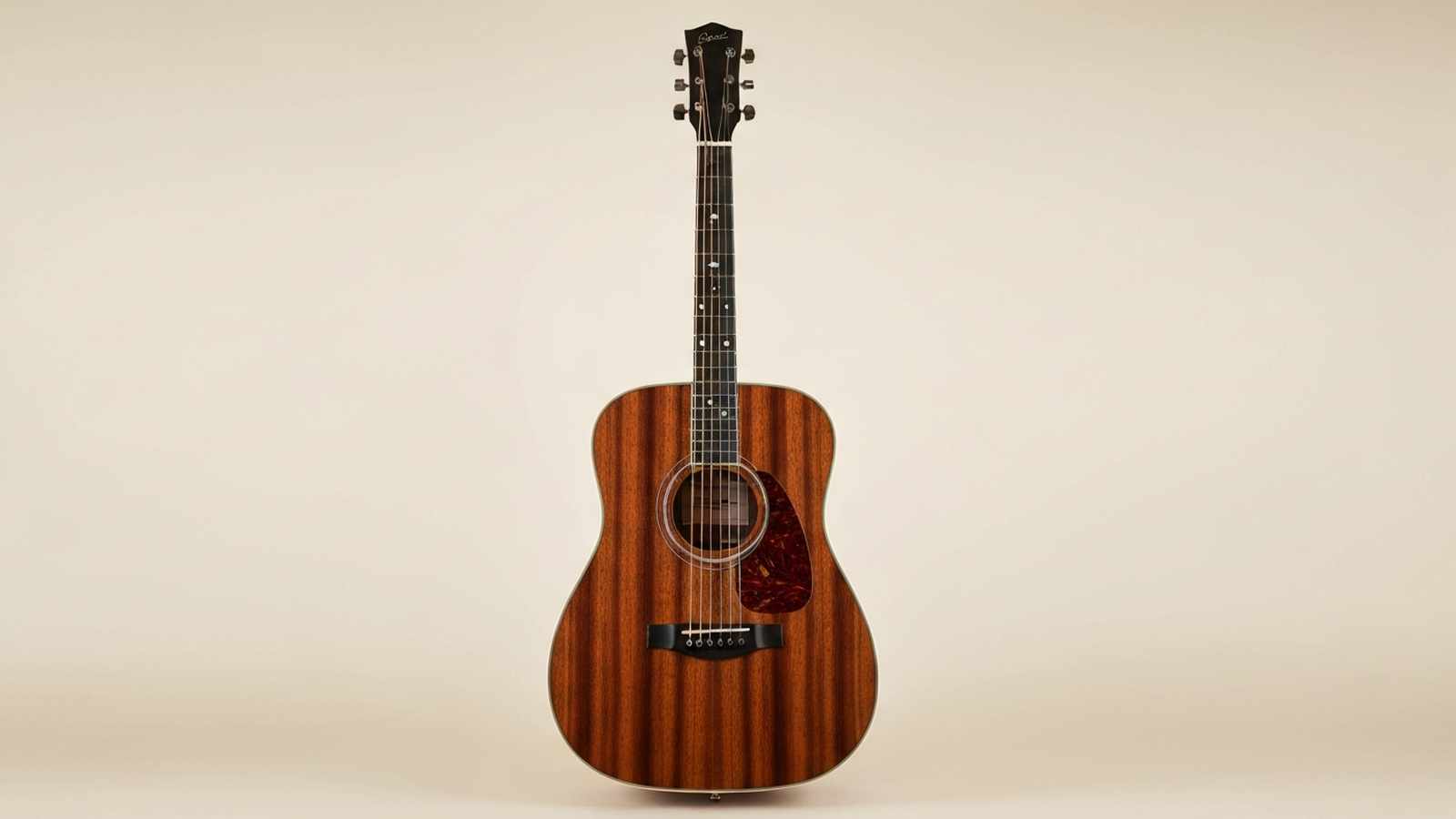
Martin D-28 Standard
Affiliate link. No extra cost to you
A Lifetime Instrument That Will Outlast Its Owner
My conclusion on the Martin D-28 is simple: if you are looking for the definitive modern dreadnought, you have already found it. At 2,899 dollars street price, the forward-shifted X bracing gives the top a pronounced low-mid growl that players routinely compare to prewar examples. It sits between the all-mahogany D-18 and the more ornate HD-28 in the Martin lineup, and it is the one I would point a player to when a session calls for an honest, room-filling acoustic. Production has continued nearly unchanged since 1931, and the current build is arguably the best version of the model that Martin has ever produced.
At a Glance: Specifications
| Body Shape | Dreadnought (14-fret) |
| Top | Solid Sitka Spruce |
| Back & Sides | Solid East Indian Rosewood |
| Neck | Select Hardwood, Modified Low Oval |
| Fingerboard | Ebony |
| Scale Length | 25.4" |
| Nut Width | 1.75" |
| Electronics | None (acoustic only) |
| Origin | Nazareth, PA, USA |
| Street Price | $2,899 |
First Look: Design and Build
The D-28 ships from Martin's Nazareth factory in a Geib-style hardshell case. The first number worth noticing is the weight: owner-posted figures put it around 4.8 pounds, a full half-pound heavier than a Taylor 814ce. That mass translates directly into sustain once you start playing.
The satin-finish neck is classic Martin: the Modified Low Oval profile is a touch chunkier than a Taylor V-shape but nowhere near the baseball bats of pre-1969 examples. Owners consistently describe the fretting hand feeling planted rather than fatigued after an hour of playing, which is the sign of a well-executed neck carve at any price.
Tone and Sound Character
The D-28 opens up fast. Long-term owners report the Sitka top loosening within the first weeks, with strummed G chords blooming into a low-mid growl that recalls prewar examples, not quite vintage, but the DNA is unmistakable. The solid East Indian rosewood back and sides add the distinctive complex overtone bloom that defines the Martin rosewood dreadnought sound.
Fingerpicked passages hold their own against the strum-forward reputation. In demo recordings of "Blackbird," the rosewood back and sides give individual strings the separation you would expect from a concert-bodied instrument, while the dreadnought volume fills a room without miking tricks. In bluegrass demos, fast flatpicked runs stay clean and articulate right to the 12th fret.
Playability and Factory Setup
Martin's quality control has tightened noticeably since the brand's 2018 rebranding. Owner setup threads put typical factory action around 2.4mm at the 12th fret on the low E and 1.8mm on the high E, usable but a hair high for fingerstyle. Owners report that a proper setup by a qualified tech brings both down by around 0.4mm without introducing buzz.
The 1.75 inch nut width is the sweet spot for players with mid-sized hands. Cowboy chords sit comfortably, and players rarely report fingers crowding each other on C-shape barre chords above the seventh fret. Players with unusually small hands may still prefer an OM-28 with its shorter scale length.
Build Quality and Materials
Binding, purfling, and the herringbone-adjacent appointments are flawless by every account. Owner photos and dealer close-ups show no stray glue lines and no rough fret ends. The grained ivoroid binding is precisely mitered at every corner joint, and the tortoise pickguard is beveled with a clean vintage edge rather than the squared modern profile.
The forward-shifted X brace is the single biggest change from the pre-1944 D-28 blueprint. Martin uses scalloped bracing here, which allows the top to vibrate more freely than the rectangular bracing used on HD-28 models from the 1970s. This is the feature most responsible for the modern D-28's tonal character. The bone nut and saddle are standard rather than the synthetic Tusq material used on budget Martins, which contributes to the note definition and sustain you hear on open-position chords.
Who Should Buy the D-28
If you are a singer-songwriter, flatpicker, or recording musician who needs one guitar to cover every folk, bluegrass, and pop session, the D-28 is the correct answer for 90 percent of use cases. The remaining 10 percent: players with small hands (try a Martin OM-28 instead), jazz players (a Taylor 814ce will give you a cleaner high end), or anyone on a strict 1,500 dollar budget (the Yamaha LL-TA sounds 85 percent as good for half the price). For fingerstyle specialists, a Martin 000-28EC or OM-28 is the more appropriate body shape even though the D-28 still handles fingerpicked passages well.
For working musicians who plan to gig nightly and record weekly, the D-28 will outlast its owner. Martin has been building this model with minor refinements since 1931, and the current run is arguably the best version ever made. Used D-28s from the last decade regularly sell for 75-85 percent of original retail, which makes the long-term value proposition exceptional. If you buy new and care for the instrument properly, it will appreciate in emotional value every year you own it even if the resale price stays flat.
What We Loved
- Instantly recognizable Martin dreadnought tone
- Flawless factory build quality at this price tier
- 1.75 inch nut width is comfortable for most hands
- Forward-shifted X bracing delivers exceptional low-mid response
What to Watch
- Factory string gauge may be heavier than you want
- No electronics (requires pickup installation for amplified use)
- Price tag out of reach for beginners
Frequently Asked Questions

Shmulik Dorinbaum
Working Musician · 20+ Years Songwriting & Performing · Hebrew Recording Artist
A 44-year-old working musician and father of two from Israel, writing and recording for over twenty years across country, folk and rock. Strum Avenue is where two decades of buying, breaking, setting up and arguing about acoustic guitars gets written down.
Raised on Chris Cornell, Brandon Boyd (Incubus), Eddie Vedder.