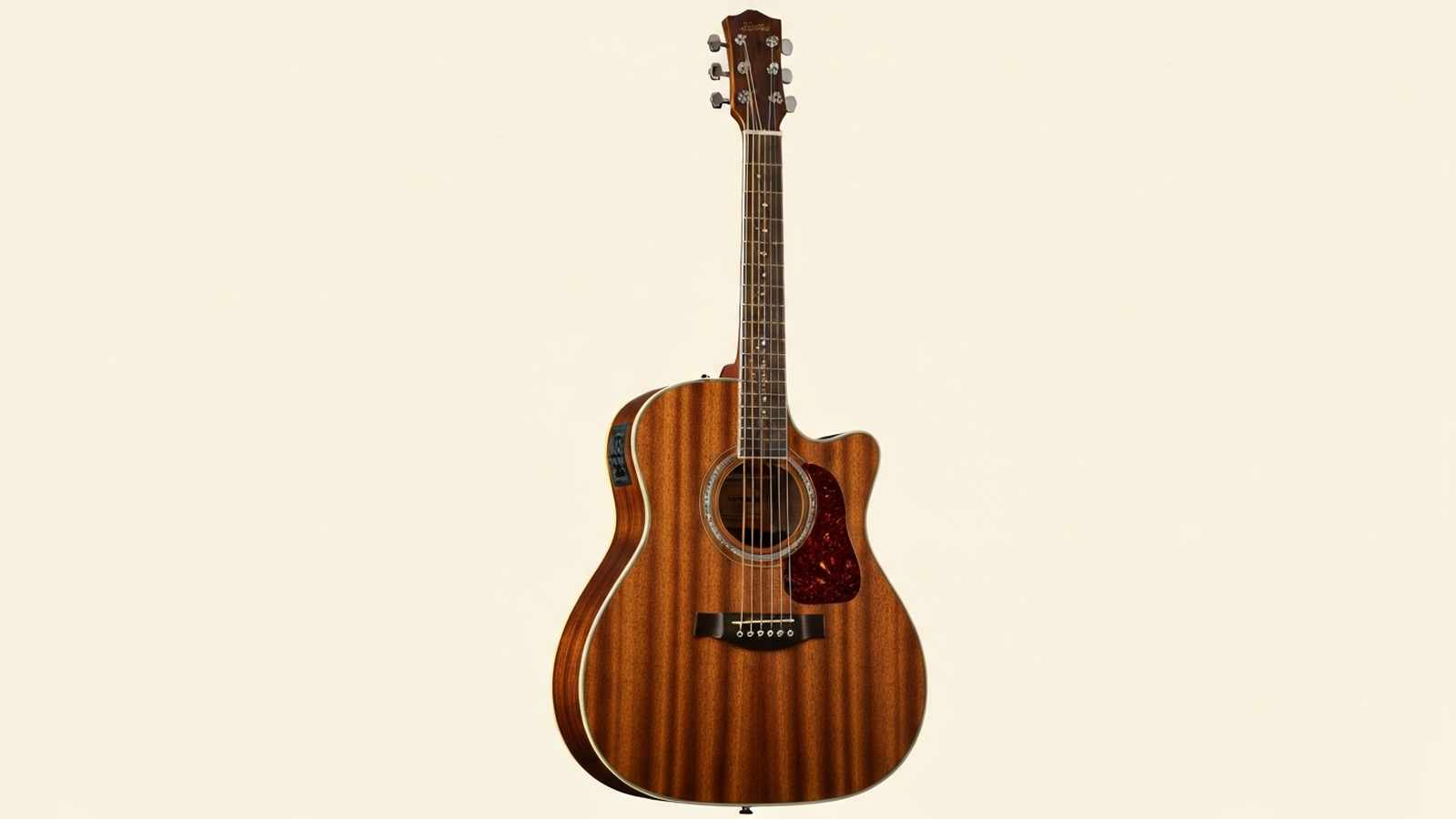
Martin 000-18 Standard
Affiliate link. No extra cost to you
The Martin You Buy When You Finally Take Fingerstyle Seriously
Compare the Martin 000-18 to a D-28 on the same fingerstyle piece in demo recordings, something like John Mayer's "Stop This Train", and the 000-18 wins by a full category: the dry mahogany voice and auditorium body size give each fingerpicked note separation the dreadnought cannot match. At $2,599 it sits $300 below a D-28 and is the Martin I would recommend to anyone whose primary technique is Travis picking, hybrid picking, or classical-influenced fingerstyle. It is not trying to be a dreadnought, and that is the point.
At a Glance: Specifications
| Body Shape | 000 Auditorium (14-fret) |
| Top | Solid Sitka Spruce |
| Back & Sides | Solid Genuine Mahogany |
| Neck | Select Hardwood, Modified Low Oval |
| Fingerboard | Ebony |
| Scale Length | 24.9" |
| Nut Width | 1.75" |
| Electronics | None (acoustic only) |
| Origin | Nazareth, PA, USA |
| Street Price | $2,599 |
First Look: Design and Build
The 000-18 ships from Nazareth in Martin's standard hardshell case. Owner-posted weights put it around 4.1 pounds, meaningfully lighter than the roughly 4.8-pound D-28, which is the 000 auditorium body doing exactly what you want from a fingerstyle instrument. Owners consistently describe the balance as sitting forward on the leg when seated, with no headstock dive.
Players coming from a gloss-finish 000 from the 2000s consistently call the satin-finish neck the cleaner feel, and the Modified Low Oval profile is close enough to the D-28 shape that switching between the two requires no recalibration. Owner photos show textbook binding and purfling: no glue squeeze-out and no rough corners.
Tone and Sound Character
Solid genuine mahogany gives the 000-18 a dry, focused voice with clear upper-midrange attack and almost no overtone wash. In demo recordings, fingerpicked arpeggios ring individually rather than blending into a chord, the opposite of a rosewood 000-28 where overtones bloom into each other. This is the reason the 000-18 has been the preferred instrument for Travis pickers for nine decades.
Strummed passages come across tight and controlled rather than booming. Engineers on recording forums repeatedly describe the 000-18 as a guitar that needs little to no EQ shaping under a condenser mic, with tracks that sit in a mix without heavy cuts.
Playability and the Short-Scale Advantage
The 24.9-inch short scale is a genuine playability asset. String tension at standard pitch is roughly 12% lower than a 25.4-inch scale guitar, which translates to easier bends, looser chord grip, and noticeably less fretting-hand fatigue after an hour of play. Owner setup threads put typical factory action around 2.2mm at the 12th fret low E and 1.7mm on the high E, close to what I would spec for a fingerstyle setup.
The 1.75-inch nut width is the same as a D-28 and still the sweet spot for fingerpicking. Individual strings sit far enough apart that you can place fingernails between them cleanly on a Travis pattern, without feeling like a classical guitar.
Build Quality and Scalloped Bracing
The 000-18 uses Martin's traditional scalloped X bracing, which is slightly different from the forward-shifted scalloped pattern on the D-28. The scalloping allows the spruce top to vibrate more freely, and combined with the smaller 000 body it gives the guitar a quick note attack and clear decay curve. Owner inspection photos consistently show clean internal bracing with no visible glue squeeze-out, which is the benchmark for Nazareth-built instruments.
Ebony fingerboard, bone nut, and bone saddle are standard on the 000-18 and remain the spec I prefer over the Richlite-and-synthetic nut found on cheaper Martin lines. Martin uses African ebony with the expected fine grain.
Who Should Buy the Martin 000-18
If your primary technique is fingerstyle, whether Travis picking, hybrid picking, classical-influenced arrangements, or solo instrumental playing, the 000-18 is effectively the Martin for you. It sits between the OM-18 (same wood, longer scale) and the 000-28 (rosewood back and sides) and offers the cleanest balance of string tension and midrange clarity. Players who love Tommy Emmanuel, Leo Kottke, or Pierre Bensusan will find the dry mahogany voice matches their technical vocabulary.
Skip the 000-18 if you are primarily a strummer or bluegrass flatpicker. The dry voice and smaller body will feel polite against a dreadnought in a jam, and you will wish you had spent the same money on a D-18 or D-28. Also skip it if you rarely play fingerstyle, because the extra clarity is wasted on strummed rhythm work.
What We Loved
- Dry mahogany voice with clean note separation
- 24.9-inch short scale reduces fretting-hand fatigue
- 1.75-inch nut width ideal for fingerstyle
- Flawless Nazareth build quality and scalloped X bracing
What to Watch
- Smaller voice than a D-18 for strumming
- $2,599 price sits in serious investment territory
- No onboard electronics for amplified use
Frequently Asked Questions

Shmulik Dorinbaum
Working Musician · 20+ Years Songwriting & Performing · Hebrew Recording Artist
A 44-year-old working musician and father of two from Israel, writing and recording for over twenty years across country, folk and rock. Strum Avenue is where two decades of buying, breaking, setting up and arguing about acoustic guitars gets written down.
Raised on Chris Cornell, Brandon Boyd (Incubus), Eddie Vedder.