Top Fingerpicking Guitarists to Learn From (Study Guide)
The 7 fingerstyle masters we study at the bench, ranked by pedagogical value. Each entry includes the album to start with, the technique to steal, and the signature guitar they played.
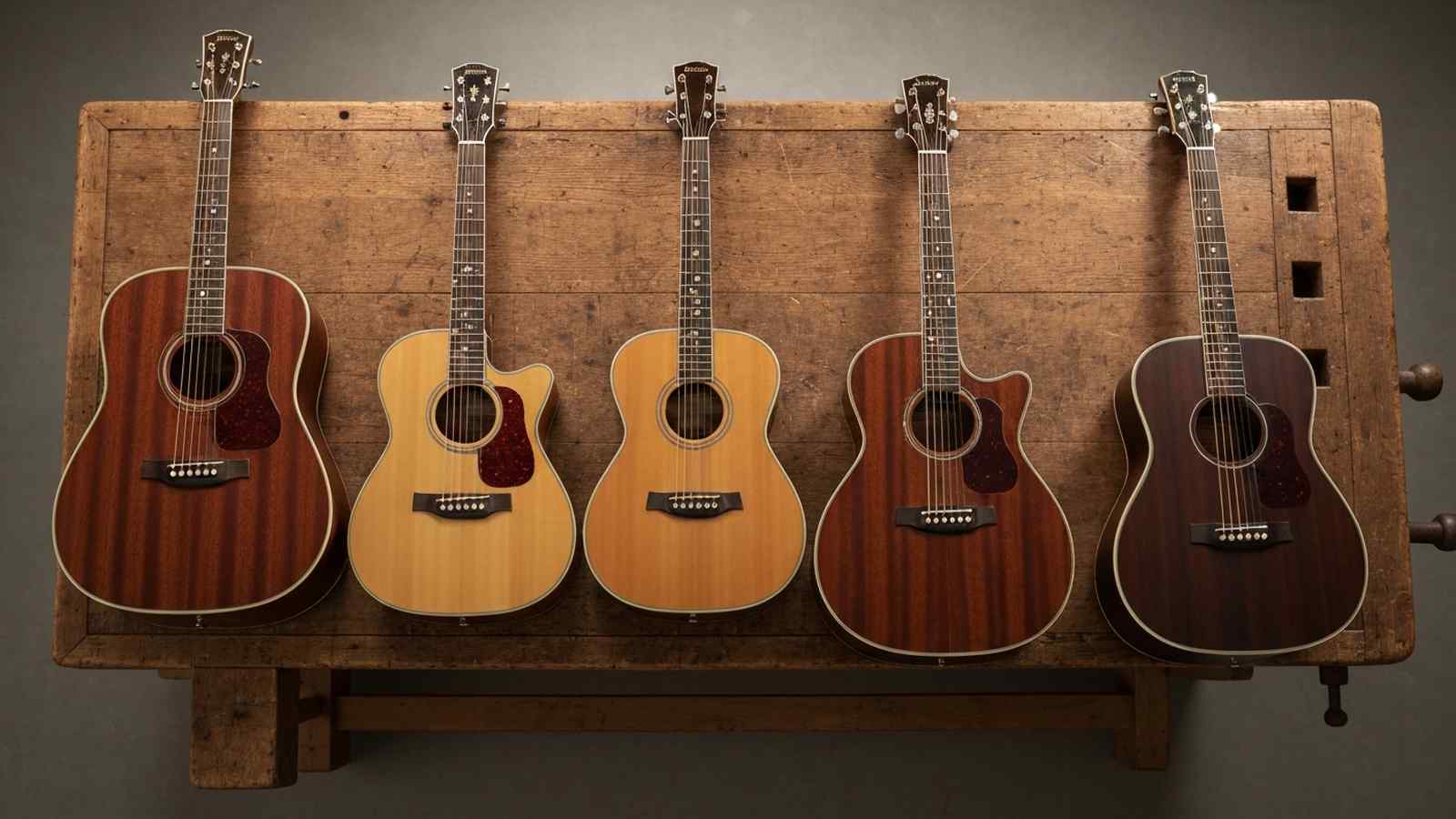
Fingerpicking technique compounds. Study the right player for a month and your right hand gains vocabulary that you'll use for the next 30 years. These 7 guitarists are the ones we recommend to every student who walks into our Brooklyn teaching space, picked not just for their playing but for how well their approach breaks down into learnable phrases. Each section below names the album to start with, the one technique to steal first, and the guitar that player built their sound around. We've been teaching fingerstyle since 2011 and these names have survived every shift in our curriculum.
Top 7 for 2026
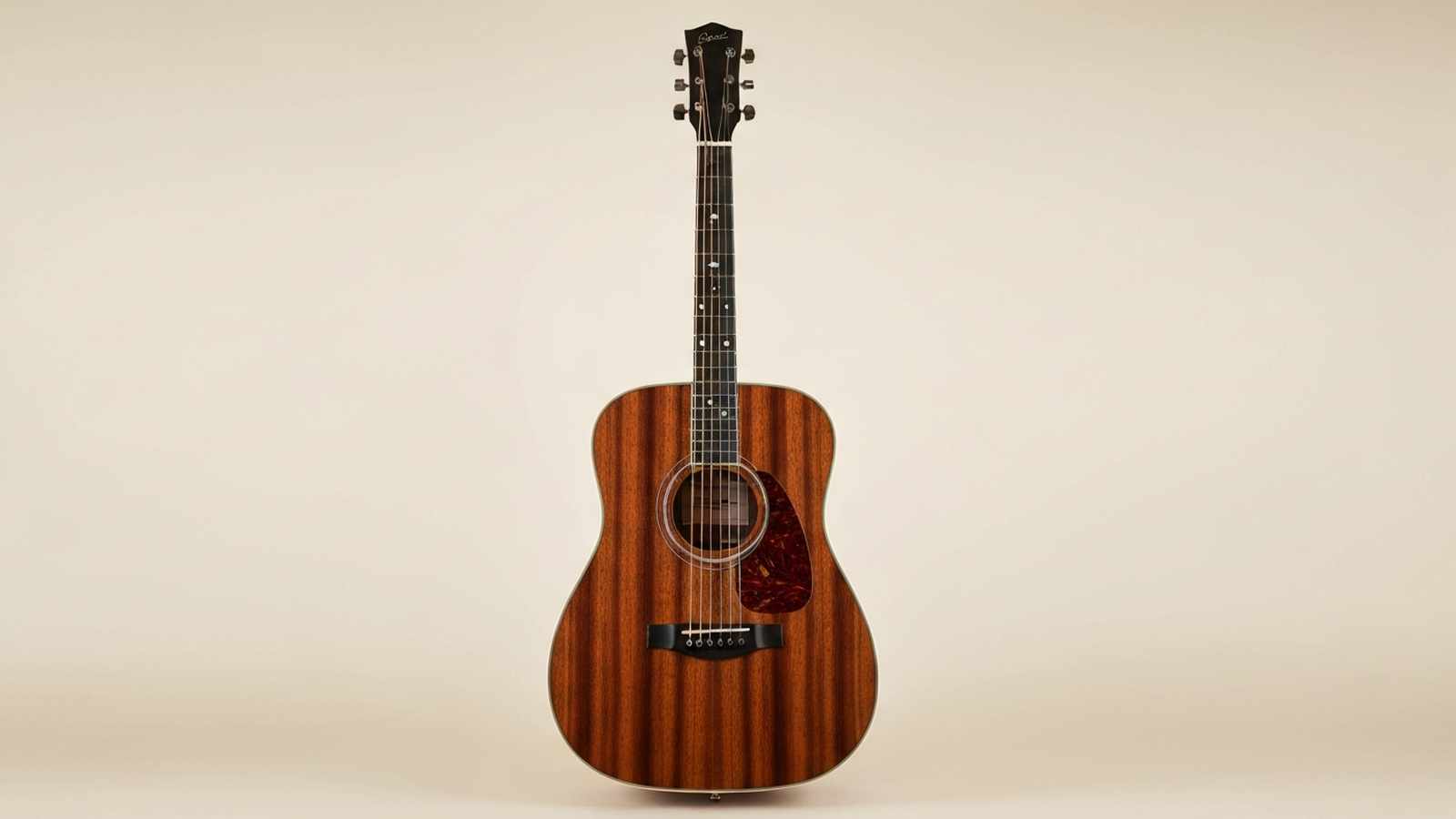
Elizabeth Cotten - Essential Album: Freight Train and Other North Carolina Folk Songs
Cotten invented her own left-handed upside-down fingerpicking style as a child and used it to write 'Freight Train' before age 12. Her alternating-bass thumb pattern is the cleanest foundation for any fingerpicking education, simpler than Travis picking, more musical than metronome exercises. Start with the 1958 Folkways recording. The technique to steal: her tempo consistency. She rarely deviates more than 2 BPM across a three-minute song. She played a Martin 00-18 for most of her career.
Merle Travis - Essential Album: The Best of Merle Travis
Merle Travis is the reason the alternating thumb pattern is called 'Travis picking.' He refined the approach on a Gibson Super 400 in the late 1940s and taught it directly to Chet Atkins and Doc Watson. The technique to steal: palm-muting the bass strings while keeping the treble strings ringing. It's a right-hand control skill nothing replaces. Essential listening: 'Cannonball Rag' and 'Nine Pound Hammer.' Travis played a Gibson Super 400 and later a signature-model Bigsby.
Mississippi John Hurt - Essential Album: Today!
Hurt was rediscovered in 1963 at age 71 and recorded Today! within weeks of his return to public performance. His alternating-bass technique is relaxed enough that beginners can follow his hands in slow motion and pick up the patterns in an afternoon. The technique to steal: his thumb plays on every beat regardless of melodic complexity, which is a metronome lesson hidden inside music. Start with 'Coffee Blues' and 'Frankie.' Hurt famously played a Guild F-30 during his 1960s comeback.
John Fahey - Essential Album: The Transfiguration of Blind Joe Death
Fahey invented American Primitive Guitar, a style that draws on Delta blues, Indian raga, and classical impressionism. Start with the 1965 Takoma recording and do not try to learn entire pieces at first; pick a 30-second phrase and play it until the fingering becomes automatic. The technique to steal: his use of open tunings to sustain drone notes under moving melodies. He primarily played a Martin D-28 and a Guild F-50 during his peak.
Leo Kottke - Essential Album: 6 and 12 String Guitar
The 1969 Takoma album, universally known as 'the armadillo album' for its cover, is the most-copied fingerstyle record of the past 60 years. Kottke combined Fahey's tunings with his own ferocious right hand to create pieces that feel like two guitars playing at once. The technique to steal: his thumbpicked bass lines on the 12-string. Start with 'Vaseline Machine Gun' and work toward 'The Driving of the Year Nail.' Kottke plays a Taylor 12-string signature model built specifically for his attack.
Tommy Emmanuel - Essential Album: The Mystery
The modern gold standard. Emmanuel extends Merle Travis's thumb independence into a full one-man-band approach, he plays bass, rhythm, and melody simultaneously with a precision no other living guitarist matches. The technique to steal: his use of the pinky as a fifth fingerstyle digit. Start with 'Angelina,' a tune simple enough to learn in a week but deep enough to practice for years. Emmanuel plays a Maton EBG808TE signature model built in Melbourne.
Andy McKee - Essential Album: Art of Motion
McKee's 'Drifting' video has over 60 million YouTube views and for good reason, it introduced percussive fingerstyle to a generation who had never considered the guitar top itself as a drum. Learning his material teaches hand independence between strumming, tapping, and percussive hits. Start with 'Rylynn.' The technique to steal: his use of the ring finger to tap harmonic notes on the fretboard while the thumb keeps a bass pattern. McKee plays a custom Greenfield G1 and a Kevin Ryan Mission Grand Fingerstyle.
How We Ranked These Seven Guitarists for Study
We didn't rank these players by subjective taste. We ranked them by what we call pedagogical density, how much a student gains per hour of focused study. We looked at three variables: clarity of recording (can you hear individual fingers?), technique reproducibility (can a determined intermediate student learn a signature piece in 30 days?), and transferability (do the skills carry over to other material once learned?).
Elizabeth Cotten scored highest on reproducibility because her tempo is so consistent that a metronome study of her recordings yields clean results in under an hour. Tommy Emmanuel scored highest on transferability, any skill you develop chasing his arrangements applies immediately to any fingerstyle context. John Fahey scored highest on density but lowest on reproducibility, which is why we recommend starting with Cotten before attempting his tunings.
We also excluded three widely-praised players from this final list: Chet Atkins (because his electric work dominates his catalog and the acoustic material is harder to find), Michael Hedges (because his tunings are so idiosyncratic that learning one piece does not transfer to another), and Pierre Bensusan (because his catalog rewards years of DADGAD study before any payoff, brilliant but not ideal as a first teacher).
What to Focus On When Learning From Recordings
The single most useful practice exercise when studying any of these guitarists is tempo reduction. Pull the track into Anytune, Amazing Slow Downer, or the built-in Transcribe! software and slow the recording to 50% speed without pitch shift. Then play along for 30 minutes. Your ears will hear rhythmic details that full-speed listening obscures, and your hands will develop the muscle memory needed to eventually play at full tempo.
Pay attention to right-hand placement. All seven players above have a consistent thumb anchor point, usually the edge of the bridge or a specific point on the top wood, that stabilizes their right hand. Watch video footage carefully and identify where that anchor sits. Copying this one detail will upgrade your tone before you change any notes.
Transcribe, don't read tab. Tab cheats the learning process because it pre-solves the fingering puzzle. When you transcribe by ear, your left hand discovers fingerings that fit your own hand size and your own guitar, and those discoveries stay with you. Spend 20 minutes a day transcribing one four-bar phrase and you will make more progress than a full hour of reading TuxGuitar files.
Tools and Resources That Accelerate the Learning
The single most useful tool for fingerstyle study is the Peterson StroboClip HD clip-on tuner, because precise intonation matters more in fingerpicking than in strummed playing. If a chord voicing is ever so slightly sharp, the ringing overtones will clash with each other and the technique will sound amateur regardless of how clean your fingering is.
TrueFire, Soundslice, and the Tommy Emmanuel Master Series all offer slowed-down video tabs of the pieces mentioned above. We subscribe to all three at our teaching studio. For students with a limited budget, Soundslice's free tier covers most beginner material and the built-in tempo control is genuinely excellent.
Consider a nylon-string classical for one hour a week. The wider string spacing trains your right hand for steel-string fingerstyle accuracy better than any steel-string exercise, and the slack nylon strings reveal pluck-pressure issues that you would miss on a tight-strung dreadnought.
Which Fingerpicker Should You Study First
If you are a complete beginner who has never fingerpicked before, start with Elizabeth Cotten. The two-finger technique of 'Freight Train' is forgiving and the tempo is stable enough that your metronome habits develop naturally. Once you can play 'Freight Train' cleanly, move to Mississippi John Hurt, same thumb vocabulary, slightly more melodic complexity.
Intermediate players who already have Travis picking under their fingers should skip to John Fahey and Leo Kottke. The alternate tunings will feel exotic but the picking-hand approach builds directly on what you already know. Advanced players aiming at modern fingerstyle should commit a full year to Tommy Emmanuel before touching any Andy McKee material. Emmanuel's work builds the foundation; McKee's work is the decoration.
Frequently Asked Questions

Shmulik Dorinbaum
Working Musician · 20+ Years Songwriting & Performing · Hebrew Recording Artist
A 44-year-old working musician and father of two from Israel, writing and recording for over twenty years across country, folk and rock. Strum Avenue is where two decades of buying, breaking, setting up and arguing about acoustic guitars gets written down.
Raised on Chris Cornell, Brandon Boyd (Incubus), Eddie Vedder.