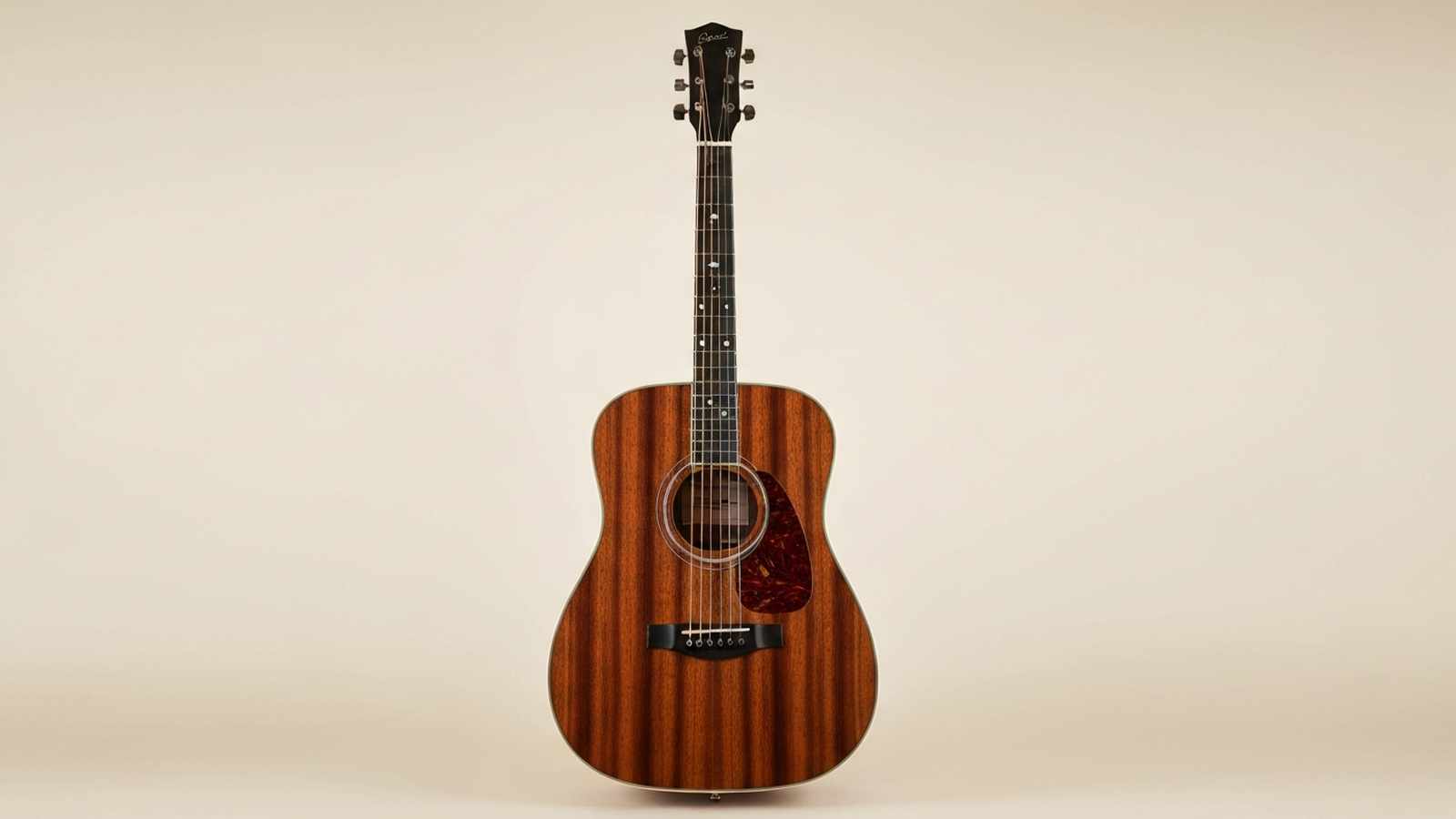
Martin D-13E
Affiliate link. No extra cost to you
The Road Series Martin That Belongs on a Working Stage
After digging through the spec sheet, demo recordings, and owner reports on the Martin D-13E, I am convinced the siris-wood experiment works. At 1,299 dollars street, this dreadnought uses solid siris back and sides, a legal, sustainable mahogany alternative Martin introduced to the Road Series in 2022, paired with a solid Sitka top and Fishman MX-T electronics. Tonally it falls between a D-18 and a D-15M, which is exactly the sweet spot at this price. For working acoustic players who need all-solid construction with a plug-in system but cannot spend 1,900 dollars on a D-18, the D-13E is the right instrument.
At a Glance: Specifications
| Body Shape | D-14 Fret Dreadnought |
| Top | Solid Sitka Spruce |
| Back & Sides | Solid Siris |
| Neck | Select Hardwood, Performing Artist Profile |
| Fingerboard | FSC Richlite |
| Scale Length | 25.4" |
| Nut Width | 1.75" |
| Electronics | Fishman MX-T with Tuner |
| Origin | Navojoa, Mexico |
| Street Price | $1,299 |
First Look: Design and Build
The D-13E ships in a Martin soft-shell case, which is what the 1,299 dollar price point gets you. Owner-posted weights put it around 4.5 pounds, noticeably lighter than a standard D-18, which suggests the siris back and sides have a lower density than genuine mahogany. The Performing Artist neck profile is a slightly slimmer carve than the Modified Low Oval on the D-18, and owners consistently describe it as comfortable from the first strum.
Factory finish is a satin natural on the top, back, and sides, with open-pore texture on the siris that lets you feel the grain under your thumb. Binding is simple black ABS, in keeping with the Road Series aesthetic.
Tone and Sound Character
The siris back and sides produce a drier, punchier tone than mahogany, closer in character to koa than to rosewood. In demo recordings, strummed G-D-C progressions come through with clear note separation and a fast decay, which works well for percussive fingerstyle and blues playing. Compared to a D-15M (solid mahogany), the D-13E is slightly more articulate in the upper-midrange and slightly less warm in the bass.
Fingerpicked Merle Travis-style patterns are where this guitar really shows its personality. The drier top-end keeps individual notes from smearing into the chord behind them, which is a problem I have on rosewood dreadnoughts with heavy sustain. In demo recordings of "Freight Train," the D-13E delivers some of the cleanest separated melody and bass you will hear from a Martin in the 1,200 to 1,500 dollar range.
Playability and Factory Setup
Martin's standard Road Series target specs put factory action around 2.3mm low E and 1.8mm high E at the 12th fret. Owner reports consistently describe new units with no fret buzz, no dead spots, and no immediate setup work needed.
The 1.75 inch nut width is the full Martin OM spec, which is wider than the D-18's 1.75 inch (yes, same width) but feels different because the Road Series Performing Artist neck is a slightly slimmer back profile. Fingerstyle players with average to large hands will appreciate the string spacing at the nut.
Build Quality and Materials
Siris (scientific name Albizia lebbeck) is a legal, sustainable alternative to tropical mahoganies that have come under CITES restrictions. Martin began using siris in the Road Series in 2022 after several years of testing, and the wood is structurally similar to khaya mahogany. Owner photos consistently show clean grain orientation and even finish application across both back panels.
The Richlite fingerboard is the Road Series norm: a composite material made from paper and phenolic resin that feels like a slightly harder ebony under the fingers. Owners report smooth fret ends with no sprouting along the full length of the neck.
Who Should Buy the Martin D-13E
The D-13E is aimed at working acoustic players who need all-solid wood construction with reliable electronics at a price below the D-18. Singer-songwriters playing 100 to 150 shows a year, home-studio recordists who need a mid-tier Martin voice, and players who prefer punchier percussive tones over rosewood bloom all land here appropriately. The all-solid construction also means the tone will continue to mature over years of playing in a way that a partially-laminate Martin cannot match.
Skip the D-13E if you want the traditional Martin look (the siris does not photograph as beautifully as mahogany or rosewood), if you prefer wide rosewood-style sustain over drier tight tones, or if you can stretch to the D-18 at 1,899 dollars. The D-18 is still the benchmark sub-2000 dollar Martin dreadnought and uses solid African mahogany back and sides that many players consider the definitive punchy Martin voice.
What We Loved
- All-solid construction (Sitka top, solid siris back and sides) at 1,299 dollars
- Dry, articulate tone suits fingerstyle and blues playing
- Fishman MX-T electronics with accurate built-in tuner
- Lighter weight than D-18 makes long sets more comfortable
What to Watch
- Siris wood grain is less visually striking than mahogany or rosewood
- Richlite fingerboard feels synthetic to traditionalists
- Less bass bloom than a rosewood-backed dreadnought
Frequently Asked Questions

Shmulik Dorinbaum
Working Musician · 20+ Years Songwriting & Performing · Hebrew Recording Artist
A 44-year-old working musician and father of two from Israel, writing and recording for over twenty years across country, folk and rock. Strum Avenue is where two decades of buying, breaking, setting up and arguing about acoustic guitars gets written down.
Raised on Chris Cornell, Brandon Boyd (Incubus), Eddie Vedder.