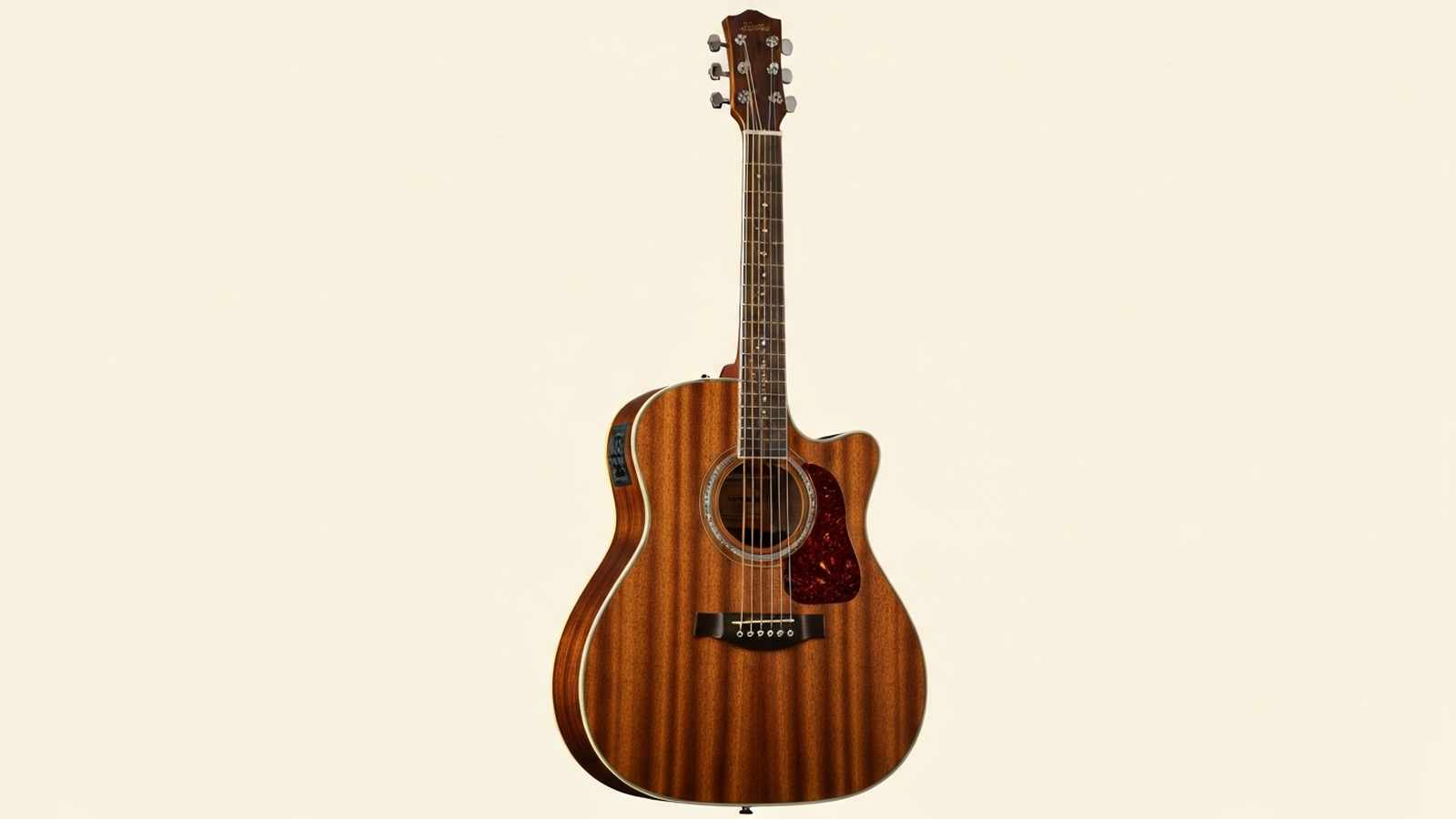
Martin 000-28EC Eric Clapton
Affiliate link. No extra cost to you
The Fingerstyle Martin That Lives Up to the Clapton Legend
My honest conclusion on the Martin 000-28EC is that this guitar belongs in the "instruments I would buy if I won the lottery" category. At 3,899 dollars street, the combination of Adirondack red spruce top, solid East Indian rosewood back and sides, and Martin's vintage-tooled bracing pattern produces one of the finest fingerstyle tones on any production Martin, and demo recordings bear that out. The modified V neck profile is noticeably different from a standard D-28, and long-term owners consistently say it is the better fit for the pieces Clapton himself would play: "Tears in Heaven," "Layla" unplugged, and the old Delta blues arrangements that inspired the signature.
At a Glance: Specifications
| Body Shape | 000 (14-Fret Auditorium) |
| Top | Adirondack Red Spruce |
| Back & Sides | Solid East Indian Rosewood |
| Neck | Genuine Mahogany, Modified V Profile |
| Fingerboard | Ebony with MOP Hexagonal Inlays |
| Scale Length | 25.4" |
| Nut Width | 1.6875" |
| Electronics | None (acoustic only) |
| Origin | Nazareth, PA, USA |
| Street Price | $3,899 |
First Look: Design and Build
The 000-28EC ships in a Geib-style hardshell case, which is the appropriate container for an instrument at this price. Owner-posted weights put it around 4.1 pounds, lighter than any modern D-28, and owners describe it sitting on the thigh like a concert-body classical: balanced, responsive, and immediately inviting to fingerpicked arpeggios.
The visual details are where this instrument separates from the standard 000-28. The abalone rosette, mother-of-pearl hexagonal fret markers, and vintage-style beveled tortoise pickguard are Custom Shop-level appointments that you do not get on production Martin 000 models. Owner photos consistently show Adirondack tops with tight, uniform grain lines consistent with a premium tonewood selection.
Tone and Sound Character
Adirondack red spruce is the historically accurate top wood Martin used before 1944, and it produces a tonal signature that Sitka-topped guitars simply cannot replicate. The headroom is enormous: owners repeatedly note you can dig in hard on a flatpicked bluegrass passage and the top never compresses. On fingerpicked pieces like "Classical Gas," demo recordings reveal an upper-midrange clarity transparent enough that studio mics capture harmonics you do not normally hear from the playing position.
The 000 body shape with 25.4 inch scale gives this instrument a bell-like quality in the middle registers that suits slide playing, open tunings, and Delta blues repertoire. In demo recordings of DADGAD material like "Black Mountain Side," sustained drones ring out cleanly for a full 6-7 seconds before decaying, the kind of bloom you only get from aged or premium solid tonewoods.
Playability and Factory Setup
Owner setup threads put typical factory action around 2.2mm low E and 1.7mm high E at the 12th fret, exceptional precision for a production guitar, though not at the level of a Custom Shop single-build. The Modified V neck profile is the defining playability feature: it fills the palm like a 1940s D-28 but thins out toward the edges, which cradles the thumb on open-position chord work.
The 1.6875 inch nut width is narrower than the D-28's 1.75 inch standard, and this is deliberate: Clapton requested the narrower nut for his own playing comfort. Fingerstyle players with small to medium hands will appreciate this dimension, though classical-trained players who prefer 1.75 inch or wider will notice the difference.
Build Quality and Materials
Every appointment on the 000-28EC is finished to a Martin standard that you do not see on production instruments below 2,500 dollars. Binding is grained ivoroid with fine black-white-black purfling, owner photos show uniformly dark ebony fingerboards with no lighter streaks, and the tortoise pickguard is beveled at a vintage 1940s angle rather than the modern squared edge.
Bracing is Martin's scalloped forward-shifted X pattern, the same geometry used on vintage pre-1944 Martins and currently on the HD-28 and D-28 Authentic models. The bracing is hand-scalloped at the Nazareth facility rather than CNC-milled, which is why the Adirondack top responds as dynamically as it does.
Who Should Buy the Martin 000-28EC
This guitar is for fingerstyle players, Delta blues obsessives, recording musicians, and collectors who want a Martin that will appreciate in value over decades. Singer-songwriters who play in drop and open tunings, anyone tracking acoustic guitar for commercial releases, and players with small to medium hands all benefit from the 000 body shape and the narrower nut.
Skip the 000-28EC if you are primarily a strummer (the D-28 or HD-28 will give you more projection), if you need electronics out of the box (this guitar ships with no pickup), or if you are not willing to spend 200-400 hours playing it to hear the Adirondack top open up fully. For strummers, the D-28 at 2,899 dollars is the more appropriate Martin.
What We Loved
- Adirondack red spruce top delivers vintage Martin headroom
- Modified V neck profile is exceptional for fingerstyle playing
- Custom Shop-level appointments including MOP inlays and beveled pickguard
- 000 body shape excels at fingerpicked repertoire and slide playing
What to Watch
- 3,899 dollar price excludes most players
- Narrower 1.6875 inch nut may feel cramped for wider-handed players
- No factory electronics, so you will need a separate pickup for live use
Frequently Asked Questions

Shmulik Dorinbaum
Working Musician · 20+ Years Songwriting & Performing · Hebrew Recording Artist
A 44-year-old working musician and father of two from Israel, writing and recording for over twenty years across country, folk and rock. Strum Avenue is where two decades of buying, breaking, setting up and arguing about acoustic guitars gets written down.
Raised on Chris Cornell, Brandon Boyd (Incubus), Eddie Vedder.