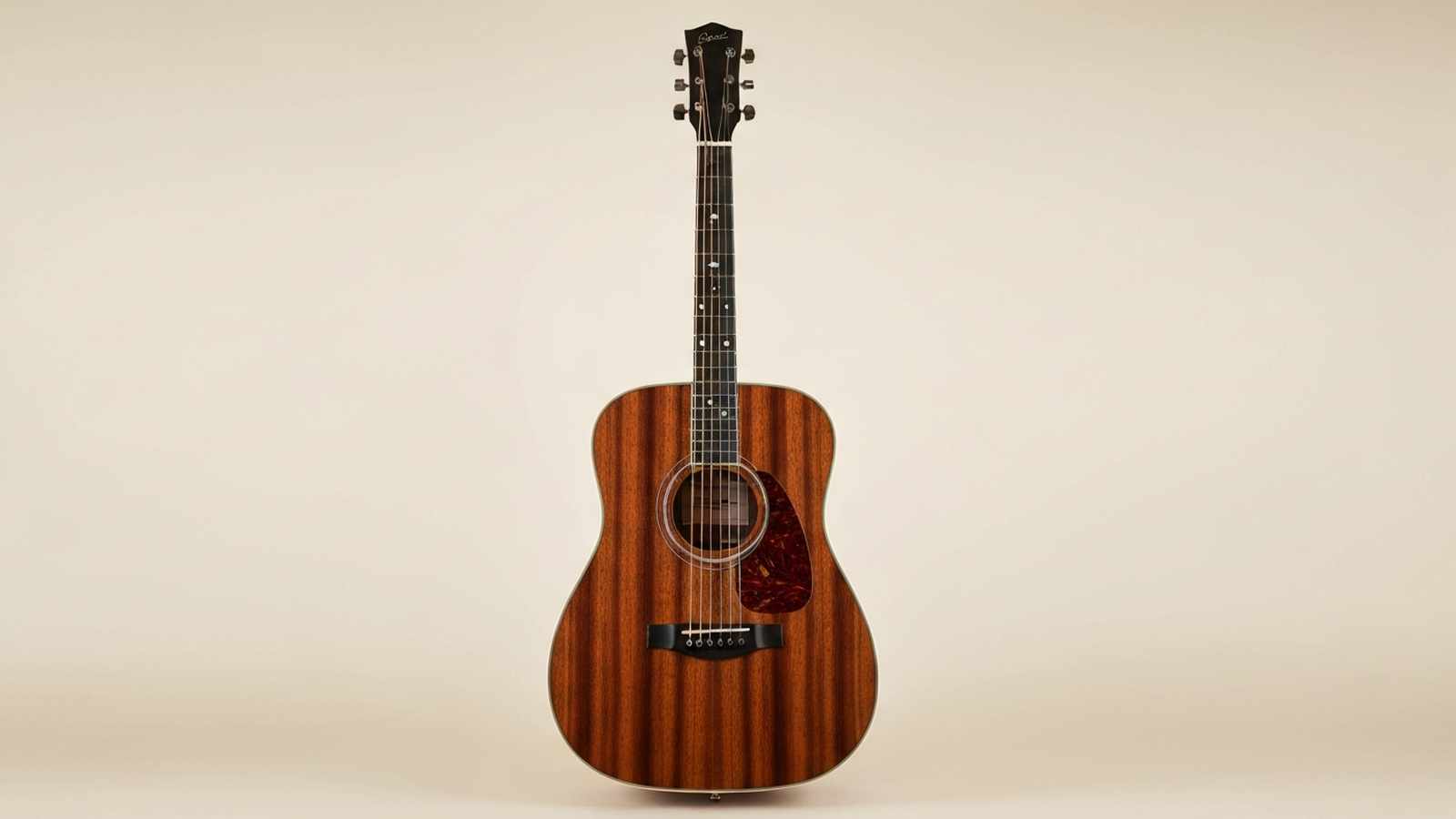
Fender FA-100 Dreadnought Bundle
Affiliate link. No extra cost to you
An Honest $139 Bundle That Beats Every Amazon-Brand Competitor
Spend enough time in the FA-100's spec sheet and owner reviews and you accept what this guitar actually is: a no-frills, laminate-top entry instrument designed to get someone through their first three months of lessons without financial risk. At $139 complete with gig bag, strap, picks, tuner, and extra strings, it beats every sub-$150 Amazon-brand starter by a clear margin. It is not a long-term instrument, but for a beginner who is genuinely unsure whether they will stick with guitar, the FA-100 represents the lowest possible cost of entry without the shame of buying a toy.
At a Glance: Specifications
| Body Shape | Dreadnought |
| Top | Laminate Spruce |
| Back & Sides | Laminate Basswood |
| Neck | Nato |
| Fingerboard | Walnut |
| Scale Length | 25.3" |
| Nut Width | 1.69" |
| Electronics | None |
| Origin | China |
| Street Price | $139 (bundle) |
The Question Is Not Whether It Is Good
At $139 for a guitar plus a gig bag, strap, picks, tuner and spare strings, nothing here is going to be good in the sense that a $600 guitar is good. Asking whether the FA-100 is a good guitar produces a useless answer. The question that matters is whether it is good enough to get somebody through the first six months without teaching them that guitar is miserable, and that is a much more interesting bar to clear.
It clears it, mostly. The thing the FA-100 has that its Amazon-brand competition does not is Fender's quality control, which at this price shows up less as refinement and more as consistency: fret ends that are usually filed, a neck that is usually straight, tuners that usually hold. Buy an unbranded $120 dreadnought and you are rolling dice on all three. That difference is worth more than any spec on the sheet.
This is a research review. I have not had this particular guitar on my knee. What follows is built from the specification sheet, the pattern of what owners report after the honeymoon, and comparison against instruments in the same bracket.
What a Laminate Top Actually Costs You
The FA-100 has a laminate spruce top over laminate basswood back and sides. Laminate means thin sheets of wood glued in a stack rather than one solid piece, and the practical consequence is the whole reason this guitar costs $139.
A solid top vibrates as a single membrane and it keeps loosening up with playing time, which is what people mean when they say a good acoustic opens up over years. A laminate top is stiffened by the glue lines between the layers. It will sound roughly the same in ten years as it does in the shop. That is not a defect, it is the trade, and it is also why laminate guitars survive being left in a hot car better than solid-top ones do.
What you hear is a tone that is present but flat. Strummed with a pick, the FA-100 is perfectly serviceable and a beginner learning chord changes will not feel short-changed. Fingerpicked, it thins out quickly, and the individual notes lack the bloom that makes fingerstyle rewarding to practise. If the person you are buying for is drawn to fingerpicking, that limitation will bite sooner than the twelve-month mark.
The Setup Costs More Than You Think, and Matters More Than the Guitar
The most common complaint about entry-level dreadnoughts, this one included, is that the strings sit too high off the neck and the guitar is hard to press down. Owners describe it as needing strong fingers. It is almost never the buyer's fingers.
Factory action on guitars in this bracket often arrives well above the 2.0 to 2.5 mm at the twelfth fret that a comfortable steel-string wants. High action makes chords hurt, makes barre chords impossible and makes the guitar play sharp. A beginner has no way of knowing this is not simply what guitars feel like, which is the single most common reason people quit in the first three months.
A basic setup runs somewhere around $50 to $80 at most shops, which is a strange proportion of a $139 guitar and is also the best money in this entire purchase. If the budget is genuinely $139 total, it is worth considering whether $90 on the guitar and $50 on the setup beats $139 on the guitar and none, because a cheap guitar that plays easily beats a slightly better guitar that fights you.
The bundle accessories are a real part of the value here and worth counting honestly. The tuner and the spare strings are genuinely useful. The gig bag is thin and will protect against dust rather than impact. The picks are picks.
The Twelve-Month Window
Owners who stick with guitar consistently describe the same arc with instruments at this price: fine for a while, then a growing sense that the guitar is holding them back, then an upgrade somewhere between nine and eighteen months in. That is not a failure of the FA-100, it is what a $139 instrument is for.
What makes the window close is usually not tone, it is dynamic range. As your right hand develops, you start wanting the guitar to get quiet when you play softly and to open up when you dig in. A laminate top compresses that range at both ends. You play harder and it does not get bigger. That ceiling is felt long before anyone can articulate it.
The resale reality is worth stating plainly: there is essentially none. A used FA-100 is worth very little, so plan on this being a $139 expense rather than a $139 investment, or plan on it becoming the guitar that lives at a relative's house.
Who Should Buy It, and Who Should Not
Buy it if the guitar is a test. A teenager who has said they want to learn, a parent who is not yet sure the interest is real, someone who wants an instrument at a holiday house. The FA-100 answers the question of whether the interest survives contact with sore fingertips, at the lowest cost of finding out, and with fewer nasty surprises than an unbranded competitor at the same price.
Do not buy it if the person is already committed. If someone has been taking lessons on a borrowed guitar and is now buying their own, spending $250 to $350 gets a solid top and changes the whole experience of practising. The Yamaha FG800 sits in that bracket and is the standard recommendation for a reason.
Do not buy it as a travel or backup guitar for an existing player either. You will not enjoy it and it will sit in a corner. A small-bodied instrument in the $300 to $500 range does that job properly.
And if you are buying it, budget for the setup. That is the sentence in this review that will actually change somebody's experience.
What We Loved
- Complete bundle includes gig bag, tuner, strap, picks, and strings
- $139 is one of the lowest total entry costs on the market
- Fender build consistency is above average at this price
- Adequate for the first three to six months of lessons
What to Watch
- Laminate top will never bloom like a solid-top guitar
- Factory action is typically high and needs a setup
- Thin fingerpicked tone limits advanced practice
- Most players will outgrow it inside 12 months
Frequently Asked Questions

Shmulik Dorinbaum
Working Musician · 20+ Years Songwriting & Performing · Hebrew Recording Artist
A 44-year-old working musician and father of two from Israel, writing and recording for over twenty years across country, folk and rock. Strum Avenue is where two decades of buying, breaking, setting up and arguing about acoustic guitars gets written down.
Raised on Chris Cornell, Brandon Boyd (Incubus), Eddie Vedder.