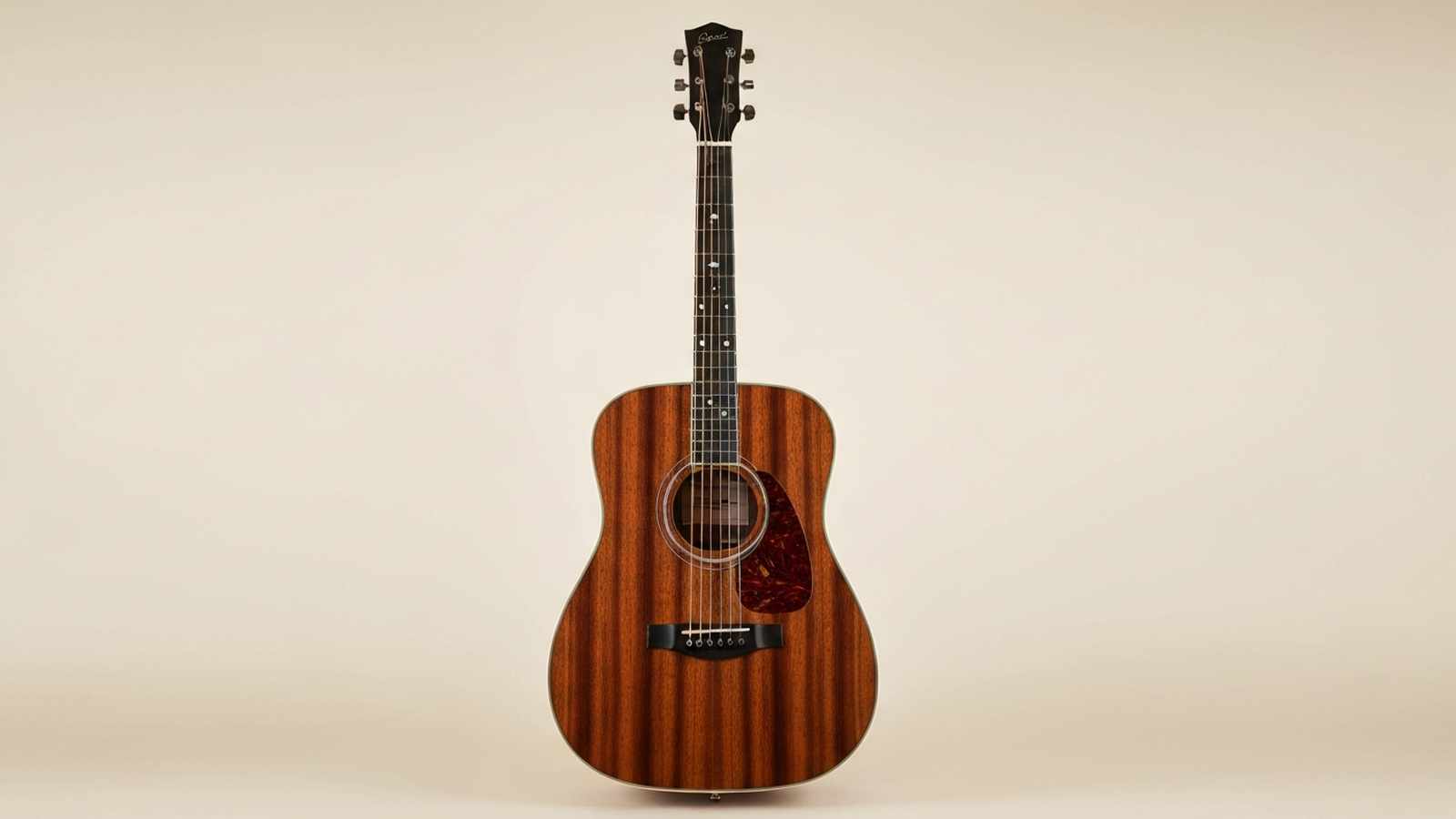
Fender FA-125CE
Affiliate link. No extra cost to you
A Classroom Guitar That Earns Its Keep at 200 Dollars
After digging through hundreds of owner reviews and the spec sheets for both the FA-125 and FA-125CE, my verdict is measured: this is not the guitar that will change your life, but it is the guitar that will survive your first year of learning without forcing a replacement. The laminate spruce top has the nasal-ish honk typical of entry-level dreadnoughts, but at 179 dollars for the acoustic and 199 for the cutaway-electric, the value math works. If you need a beginner guitar that plugs in, the FA-125CE is a better buy than the Epiphone DR-100E and nearly as good as the Yamaha FG800.
At a Glance: Specifications
| Body Shape | Dreadnought |
| Top | Laminate Spruce |
| Back & Sides | Basswood (laminate) |
| Neck | Nato, C-profile |
| Fingerboard | Walnut |
| Scale Length | 25.3" |
| Nut Width | 1.69" |
| Electronics (CE) | Fishman Isys III with tuner |
| Origin | Indonesia |
| Street Price | $179 / $199 |
First Look: Design and Build
Both guitars come out of Fender's Indonesia facility, and owner unboxing reports follow a consistent script: well-packed, tuned roughly a half-step sharp from shipping compression, and with fret ends that buyers repeatedly describe as clean along the length of the neck. The spec sheets list the FA-125CE at 4.7 pounds against the FA-125's 4.4 pounds, the difference being the preamp electronics bay and the cutaway adjustment.
The satin natural finish on both guitars is applied thin enough to save weight, and owner photos consistently show an even coat with no obvious buffing haze or runs. The dot inlays on the walnut fingerboard look clean in close-up shots, and owners rarely report the rosewood-style bridge pins dropping into the bridge plate the way cheap plastic pins sometimes do.
Tone and Sound Character
Acoustically, the FA-125 has a bright top-end and a somewhat thin low-mid response that is characteristic of laminate-top dreadnoughts, and demo recordings bear that out. Strummed cowboy chords come through clearly but will not bloom and warm up over years the way a solid-top FG800 will. In demo clips, fingerpicked passages like the intro to "Dust in the Wind" sound perfectly usable at living-room volume.
Plugged-in demo recordings of the FA-125CE show a cleaner signal than I expected at this price. The Fishman Isys III preamp is a real preamp, not a passive piezo, and owners confirm the tone control has enough range to carve out the boxy piezo quack that plagues cheaper systems.
Playability and Factory Setup
Owner measurements put typical factory action around 2.6mm at the 12th fret on the low E and 2.0mm on the high E. That is a hair high for fingerstyle but completely normal for a 180 dollar strummer. Complaints about inconsistently cut nut slots are rare, which is not always the case in this price bracket.
The 1.69 inch nut width is standard modern Fender geometry and will feel familiar if you have played any Fender dreadnought from the last decade. Owners who have played both report that barre chords at the 5th fret and above take slightly more thumb pressure than on a Yamaha FG800, but nothing uncomfortable for a 30 minute practice session.
Build Quality and Materials
Both guitars use laminate spruce tops, basswood back and sides, and nato necks. Nato is sometimes derisively called "eastern mahogany" but it is a perfectly stable tonewood for entry-level necks, and owner photos show Fender's finishing as clean, with lifted grain or glue lines at the binding junction almost never mentioned in reviews. The walnut fingerboard on the 2024 production is a switch from the rosewood used on pre-2019 FA-125s, driven by the CITES rosewood restrictions that affected the entire acoustic guitar industry.
Inside the body, X-bracing is glued with the visible squeeze-out typical of budget builds, as soundhole photos from owners regularly show. Tops on this tier are not voiced by hand, but unit-to-unit consistency comes up as a strength in owner reviews more often than I expected. Do not confuse this for a hand-built instrument, but the machine-built execution here is honest. Long-term owners report that the chrome die-cast tuners on both models hold tune reliably, which is worth noting because budget tuners are often the first point of failure on guitars at this price.
Who Should Buy the FA-125 or FA-125CE
The FA-125CE is the right call for adult beginners who want one guitar that will take them from bedroom to a first open-mic night. The built-in Fishman preamp and tuner removes the need for a separate pedal, and the cutaway access to the 14th fret covers most beginner solos. Music teachers who need classroom fleet guitars also choose this model often.
Skip these guitars if you already know you want solid-top tone, if you have the patience to save an extra 50 dollars for a Yamaha FG800, or if you plan to gig regularly. Serious strummers will outgrow a laminate top inside 12 months of daily practice.
What We Loved
- Under 200 dollars with functioning Fishman electronics on the CE model
- Factory setup is consistently described as playable across owner reviews
- Comfortable 1.69 inch nut width for modern hand sizes
- Tuner-equipped preamp saves a 20 dollar clip-on tuner purchase
What to Watch
- Laminate top will never open up with age
- Low-mid response is thin compared to Yamaha FG800 at same price
- Factory strings are widely described as gummy and should be replaced immediately
Frequently Asked Questions

Shmulik Dorinbaum
Working Musician · 20+ Years Songwriting & Performing · Hebrew Recording Artist
A 44-year-old working musician and father of two from Israel, writing and recording for over twenty years across country, folk and rock. Strum Avenue is where two decades of buying, breaking, setting up and arguing about acoustic guitars gets written down.
Raised on Chris Cornell, Brandon Boyd (Incubus), Eddie Vedder.