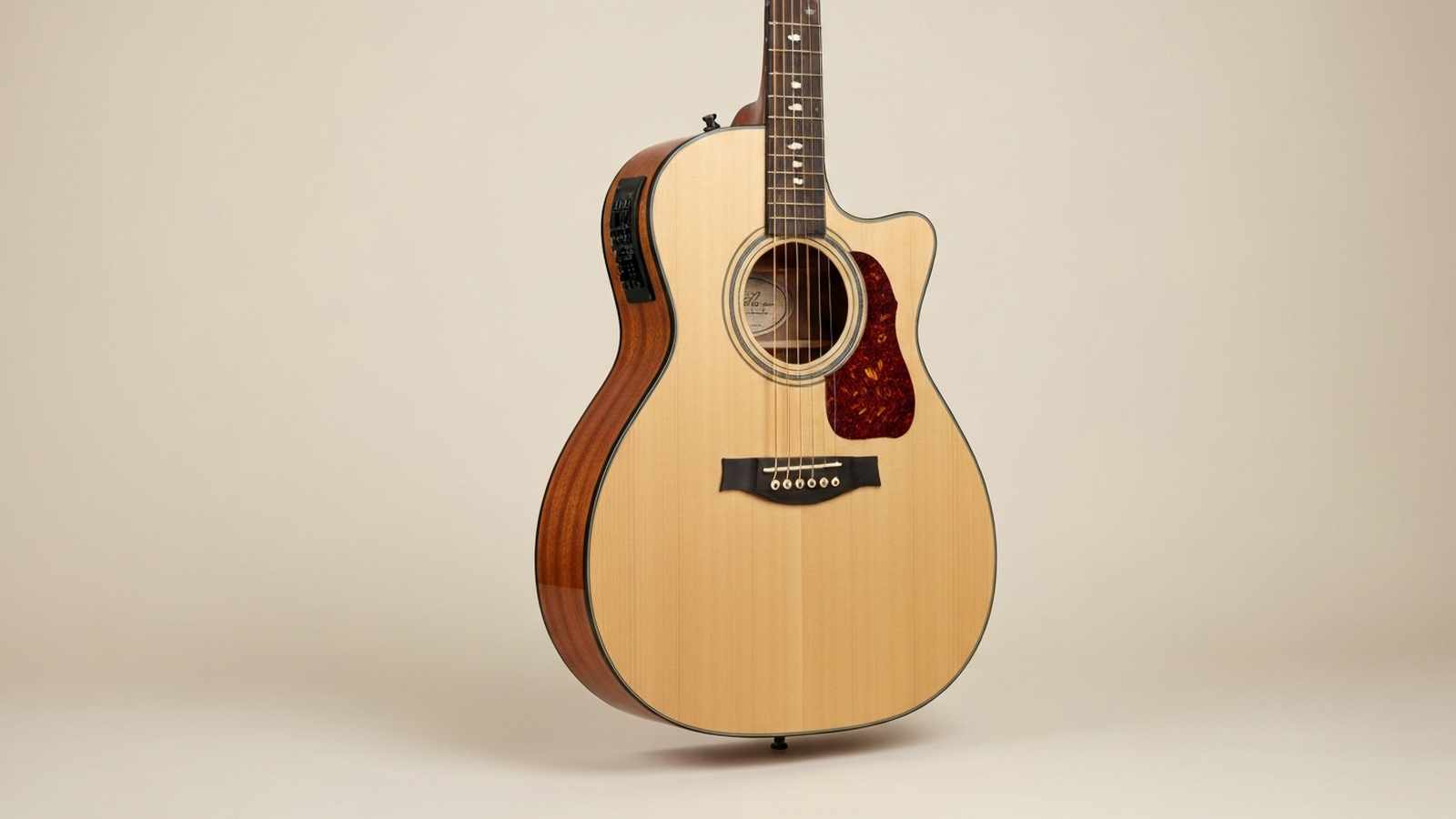
Fender Malibu Player
Affiliate link. No extra cost to you
The Right Guitar for Electric Players Crossing Over
Spend enough time in the Malibu Player's spec sheet and owner threads and you understand exactly who Fender built this for: electric players who want an acoustic that feels like home. The 25.3-inch scale, 1.69-inch nut width, and slim C-shape neck borrow directly from the Stratocaster playbook, and the Strat headstock is more than a cosmetic touch: owners say the different mass distribution changes how the guitar resonates. At $399 with onboard Fishman electronics, this is a smart first acoustic for anyone already fluent on a Fender Player Series Strat.
At a Glance: Specifications
| Body Shape | Grand Concert |
| Top | Solid Spruce |
| Back & Sides | Laminate Mahogany |
| Neck | Mahogany, Slim C Profile |
| Fingerboard | Walnut |
| Scale Length | 25.3" |
| Nut Width | 1.69" |
| Electronics | Fishman with built-in tuner |
| Origin | Indonesia |
| Street Price | $399 |
This Guitar Was Designed to Solve One Specific Problem
Most acoustics are designed for acoustic players. The Malibu Player is designed for someone who has spent years on a Stratocaster, picks up an acoustic, finds it feels like a completely different instrument, and puts it down again.
Everything about it addresses that. The neck is a slim C profile, the same shape language Fender uses on its electrics. The scale is 25.3 inches, near enough to a Strat's 25.5 that the fret spacing feels familiar. The body is a grand concert, small enough to sit comfortably against you rather than requiring the arm-over-the-shoulder posture a dreadnought demands. And the headstock is the six-in-line Strat shape, which is cosmetic and is also, honestly, part of why people buy it.
This is a research review, built from the specification sheet, the pattern in owner reports and comparison with instruments in the same bracket, rather than from time with this guitar in my hands.
Solid Top, Laminate Back and Sides: Where That Lands
The Malibu Player has a solid spruce top over laminate mahogany back and sides. At $399 with electronics included, that is a sensible place to spend and to save, since the top does most of the work in generating tone and the back and sides mostly shape it.
Unplugged, the result is a competent guitar rather than an exciting one. The solid top gives it real dynamic response and it will open up with playing time. The laminate body limits how much low end and complexity develops underneath. Owner reports describe it as bright and a little polite, which is a fair characterisation of a small-bodied guitar with a laminate back.
That word polite is worth sitting with, because for the intended buyer it is not a criticism. An electric player crossing over is usually not after a booming dreadnought. They want something that behaves predictably, records cleanly and does not fight them, and this does all three.
Plugged In Is Where It Makes Sense
The Fishman system with the built-in tuner is the part of this guitar that justifies its price. An onboard pickup and preamp at $399, on a guitar with a solid top, is genuinely good value, and it is what separates the Malibu from most of what sits near it.
It also fits the buyer. Someone coming from electric already owns an amp, already owns cables, already thinks in terms of plugging in. Handing them an acoustic that behaves like a piece of equipment rather than like a piece of furniture removes another point of friction.
One realistic expectation: a piezo pickup on an acoustic is not a magnetic pickup on a Strat, and it will not sound the same through the same amp. Piezo systems have a characteristic quack that is unflattering through a guitar amp voiced for electrics, and much better through an acoustic amp or a PA. That is a property of the technology rather than a fault in this guitar, and it disappoints people who were not told.
The Details That Show Where the Money Went
The walnut fingerboard is the compromise most worth knowing about. Walnut is drier and more open-pored than rosewood, and owners describe it as feeling less smooth. It responds well to conditioning oil, which is a five-minute job, and it is a cosmetic and tactile difference rather than a tonal one.
No gig bag at $399 is a genuine irritation given that considerably cheaper bundles include one. Budget separately.
The Indonesian factory build quality comes up in owner reports as consistent rather than remarkable, which at this price is the correct outcome. Fret ends and finish work are the two areas where guitars in this bracket vary, and they are the two things worth checking before you accept a delivery.
Who It Is For, and the Honest Alternative
It suits an electric player who wants an acoustic they will actually pick up, a singer-songwriter who needs to plug in at open mics, and anyone who finds full-size dreadnoughts physically awkward.
It is the wrong guitar for a player who wants the biggest unplugged sound available for $400, and the alternative deserves stating plainly. A Yamaha FG800 at around $229 has a solid top and no electronics, and unplugged it will out-project this. If nobody is ever plugging in, the Yamaha is the better instrument and leaves change over.
The Malibu earns its price when the pickup gets used and when the neck feel is the thing standing between someone and playing acoustic guitar at all. Those are real reasons, they are just narrower than the marketing implies.
What We Loved
- Slim C neck and 25.3-inch scale feel like a Stratocaster
- Solid spruce top at under $400 with electronics
- Usable Fishman pickup system with tone shaping
- Strat-style headstock is a legitimate aesthetic hook
What to Watch
- Laminate back and sides limit unplugged tone
- Ships without a gig bag at this price
- Walnut fingerboard is drier than rosewood
Frequently Asked Questions

Shmulik Dorinbaum
Working Musician · 20+ Years Songwriting & Performing · Hebrew Recording Artist
A 44-year-old working musician and father of two from Israel, writing and recording for over twenty years across country, folk and rock. Strum Avenue is where two decades of buying, breaking, setting up and arguing about acoustic guitars gets written down.
Raised on Chris Cornell, Brandon Boyd (Incubus), Eddie Vedder.