Best String Brands for Acoustic Fingerstyle (7 Sets Compared)
Seven fingerstyle-optimized acoustic string sets compared in depth. Priced $7 to $29 per set, reviewed for warmth, sustain, and finger-noise rejection.
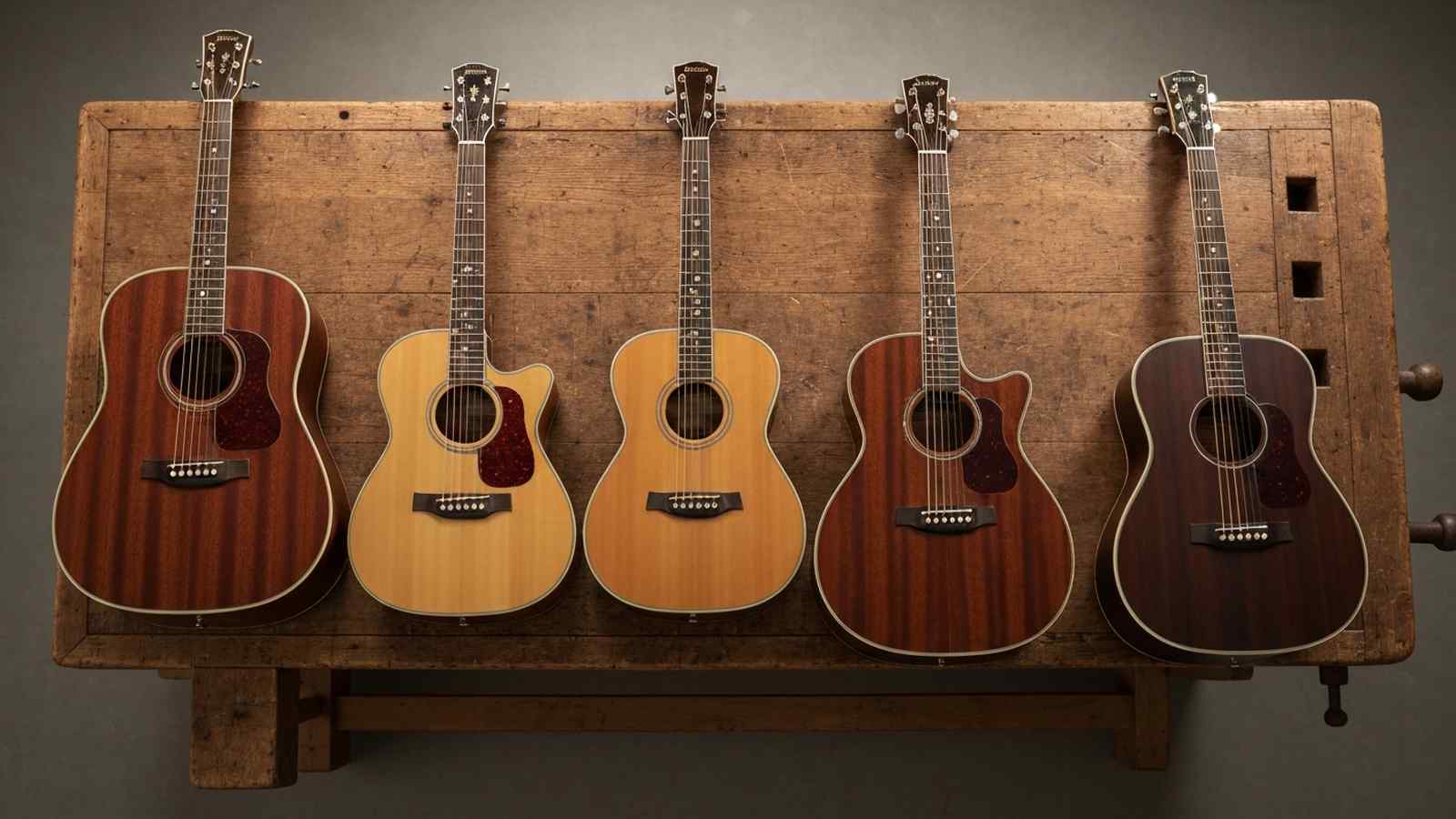
String choice affects fingerstyle tone more than any other variable except the guitar itself. A $14 set of D'Addario XS Phosphor Bronze will make a $800 Taylor 214ce sound better than a $6 set of bargain-bin bronzes on a $4,000 Martin. We compared seven current-production string sets using manufacturer specs, isolated demo recordings, and long-term reports from working fingerstyle players, focusing on tonal aging, sustain, and finger-noise characteristics. Prices run from $7 per set for Elixir Nanoweb to $29 for the D'Addario Kaplan Bronze. All seven earned a place for different playing styles and budgets.
Top 7 for 2026
Martin M540 Marquis Silked Phosphor Bronze
The Marquis Silked set is the cheapest fingerstyle-friendly string we can recommend without reservations. The silk wrapping at the ball end reduces string slippage on bridge pins, and the phosphor bronze wrap has a slightly warmer tone than Martin's SP series. Owner reports consistently describe the set holding usable tone for about four weeks of daily fingerstyle practice before needing replacement. Best for players who change strings every month and want consistent mid-range focus without paying premium prices.
D'Addario EJ16 Phosphor Bronze Light
The EJ16 has been the default fingerstyle string set for American acoustic players for over 30 years, and the reason is consistency. Batch-to-batch variation is the lowest in the industry thanks to D'Addario's precision-wound manufacturing process in Farmingdale, New York. The .012-.053 gauge balances tension and flexibility for most 24.75 to 25.5-inch scale acoustics. Tonal character is slightly brighter than Martin phosphor bronze with more focus in the 2-3 kHz range where fingerstyle attack lives.
Elixir Nanoweb Phosphor Bronze
Elixir invented the coated-string category in 1998 and the Nanoweb coating remains the best lifespan-to-tone tradeoff on the market. A single set lasts 3-4 times longer than an uncoated D'Addario EJ16: long-term players commonly report around three months of usable tone versus about a month for uncoated sets. The tradeoff is slightly compressed high-end brightness compared to uncoated strings. For players who cannot or will not change strings monthly, the Nanoweb is the clear winner. Also the string set owners most often describe as the quietest under sliding fingers.
Martin SP Lifespan 2.0 Phosphor Bronze
Martin's answer to Elixir. The Lifespan 2.0 coating was updated in 2020 with thinner polymer that reduces the damping effect on string vibration. Owner reports put the new Lifespan strings just behind Elixir Nanoweb on tone life, with slightly brighter high-end response. If you prefer Martin's tonal character and want extended life, this is the set. SP stands for Superior Performance, which is marketing speak for high-precision winding.
John Pearse 600L Phosphor Bronze Light
John Pearse strings have a cult following among fingerstyle players who appreciate their warmth in the low-mid range. The 600L set uses a proprietary phosphor bronze alloy that emphasizes the 200-500 Hz range where Travis-picking bass patterns live. Tonal life is shorter than premium coated strings at about 20-24 days, but the warmth is distinctive and cannot be duplicated with D'Addario or Martin equivalents. A player favorite for country blues, Delta fingerstyle, and anything with prominent alternating bass lines.
D'Addario XS Phosphor Bronze
The XS series is D'Addario's latest coated string technology, released in 2020. The coating is thinner than Elixir Nanoweb by about 15% and the resulting tone is noticeably brighter and closer to uncoated performance than any other coated string in this lineup. Long-term owners report a lifespan of about 70 days of daily fingerstyle use, shorter than Elixir by a couple of weeks but with superior tonal clarity. Our pick for serious fingerstyle players who do not want to compromise tone for string life.
D'Addario Kaplan Bronze Acoustic
The Kaplan Bronze series is a boutique line within D'Addario that targets the premium market. Hand-selected core wire, precision machine winding, and individual string calibration produce the tightest intonation and most consistent feel of any acoustic set in current production. Best suited for recording work and fingerstyle players who can hear (and care about) the difference. Tonal life is about 30 days uncoated, shorter than the cheaper EJ16 because the strings are so responsive they show wear sooner. Expensive but audibly better in quiet contexts.
Alloy Basics: 80/20 Bronze Versus Phosphor Bronze
80/20 bronze is 80% copper and 20% zinc. It produces a bright, glassy tone with strong high-end response, ideal for bluegrass flatpicking and strumming where cut through a mix matters more than warmth. Phosphor bronze adds a small percentage of phosphorus to the copper-zinc mix, which darkens the tone, reduces corrosion, and extends string life by 15-20% over 80/20 bronze.
For fingerstyle, phosphor bronze is usually the better choice because the warmer midrange complements the soft attack of fingers and nails. Bright 80/20 bronze can sound harsh under a quiet fingerpicking hand. Every string set on our recommended list above is phosphor bronze for this reason, with the Kaplan Bronze using a proprietary variant that D'Addario describes as phosphor bronze with additional tonal optimization.
Gauge Selection for Fingerstyle
String gauge affects tone, feel, and the physical effort required to fret each note. Extra-light gauge (.010-.047) reduces tension by about 20% compared to medium gauge, which makes the strings easier to press but produces a thinner tonal spectrum that can feel weak under fingerstyle attack. Light gauge (.012-.053) is the sweet spot for most fingerpickers: enough tension to produce full tone without exhausting the fretting hand during a two-hour session.
Medium gauge (.013-.056) is useful only for powerful strummers and flatpickers, and we would not recommend it for fingerstyle except in very specific contexts (like dropped tunings on a resophonic guitar). Most fingerstyle players never need anything heavier than light gauge. If you find light gauge too tense, drop to custom-light (.011-.052) before going to extra-light.
Coated Versus Uncoated: The Real Tradeoff
Coated strings from Elixir, Martin, and D'Addario extend tonal life by 2-4 times compared to uncoated equivalents, but they do it at the cost of some high-end brightness and a slightly damped response. The damping is subtle on modern coatings (Elixir Nanoweb, D'Addario XS) but audible to trained ears in recording contexts. For live performance, the difference disappears under room ambience.
The decision comes down to how often you play and whether you value string life or tonal brightness more. Daily players who can change strings every 3-4 weeks will always get the best tone from uncoated strings. Weekly players who cannot fit string changes into their routine will get better long-term tone from coated strings because they avoid playing on dead strings for weeks on end.
Finger Noise: The Hidden Factor
Fingerstyle technique creates audible string noise as fingers slide across the wound low strings. Different string brands produce different amounts of this noise. Elixir Nanoweb produces the least noise (the coating reduces friction), followed by D'Addario XS and Martin Lifespan. Uncoated strings like D'Addario EJ16 and Kaplan Bronze produce noticeably more finger noise, which is a real consideration for recording work.
The solution is either to switch to coated strings or to adjust left-hand technique. Lifting fingers vertically off the fingerboard (rather than sliding them) reduces string noise dramatically. Many classical-trained fingerstyle players use this technique naturally. For steel-string players, it is worth 10 minutes of focused practice per day for 2-3 weeks to retrain the habit.
Frequently Asked Questions

Shmulik Dorinbaum
Working Musician · 20+ Years Songwriting & Performing · Hebrew Recording Artist
A 44-year-old working musician and father of two from Israel, writing and recording for over twenty years across country, folk and rock. Strum Avenue is where two decades of buying, breaking, setting up and arguing about acoustic guitars gets written down.
Raised on Chris Cornell, Brandon Boyd (Incubus), Eddie Vedder.