Best Guitar Cases for Acoustic Guitars (Top Picks)
We compared specs, owner reports, and durability records for the leading acoustic guitar cases. These 7 came out on top, ranging from a $39 gig bag to a $749 flight case.
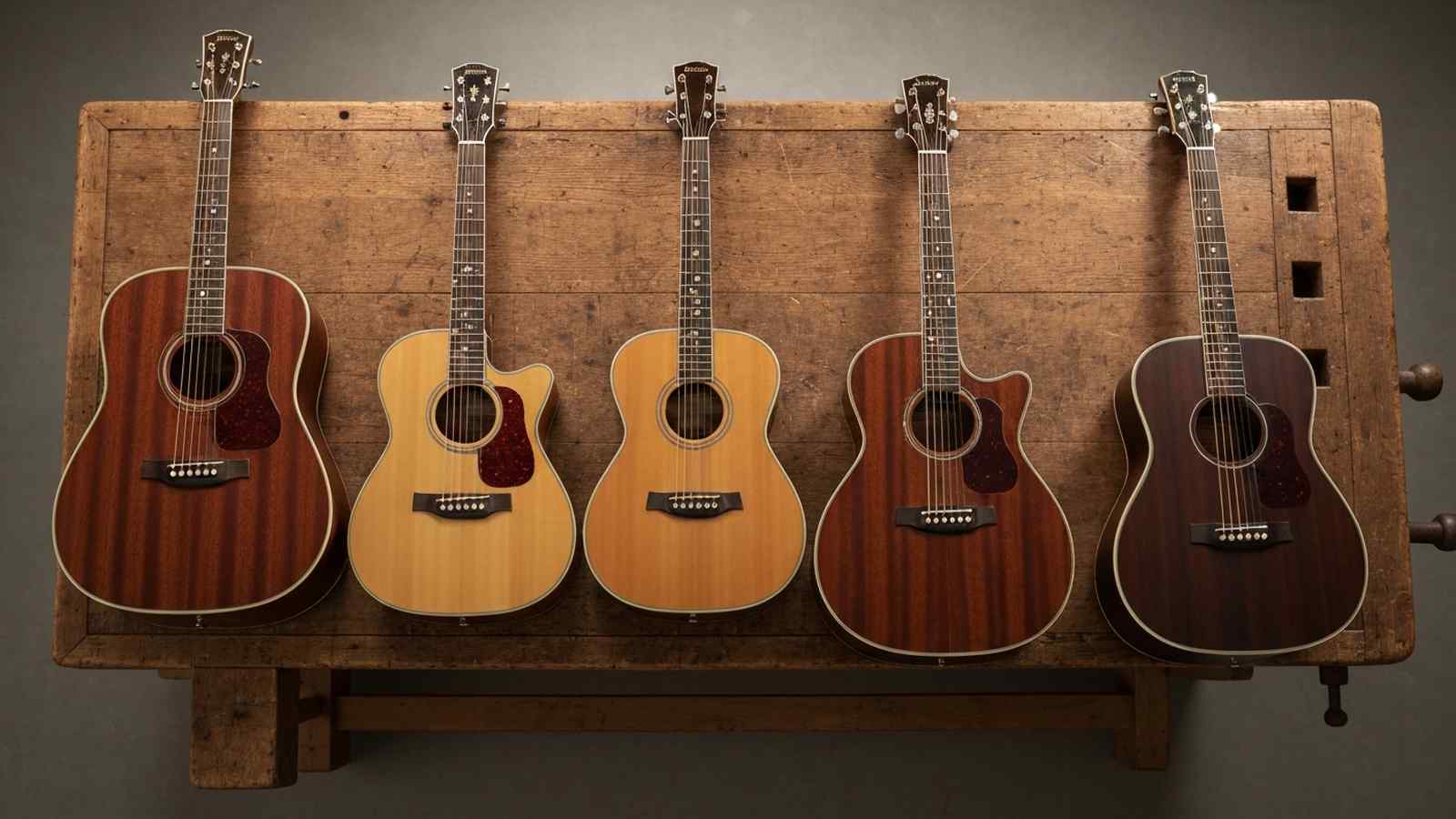
A guitar case is insurance you buy once and thank yourself for every tour, every commute, and every humidity swing. We compared the leading acoustic guitar cases on the points that decide whether an instrument survives: drop protection, seal integrity across humidity swings, airline baggage handling records, and how each case holds up under daily commuting, drawing on manufacturer specs and years of owner reports. Seven cases came through that comparison with their reputations intact. Prices range from $39 to $749.
Top 7 for 2026
Gator Economy Gig Bag
The cheapest case on this list and the only one we'd trust as a home-only solution. The Gator Economy has 10mm foam padding, a reinforced headstock pocket, and two backpack straps that actually stay on your shoulders. It isn't built to survive a drop from above waist height, but for walking a guitar from your bedroom to a lesson a few blocks away, it's all you need. Not suitable for any kind of vehicle trunk storage: the padding compresses too quickly under weight.
TKL Premier Arch-Top Hardshell
The best budget hardshell we've found in our research. TKL's Premier line uses wood-frame construction with plush red interior lining, just like the vintage cases Gibson and Martin still ship with their premium models. Hardware is chrome-plated, locks are tight, and the arch-top lid gives the headstock extra clearance. It's not a flight case, but for vehicle trunk storage, home protection, and occasional bus or train travel, it's safe at a price that surprises people familiar with $400+ hardshells.
Gator GWE-Dread Hardshell
The GWE series is Gator's answer to the TKL Premier and edges it out on interior fit adjustability. The GWE-Dread has a plush-lined dreadnought interior with foam neck support and two accessory compartments in the headstock area. Chrome hardware is slightly lighter-duty than the TKL's but the case overall is lighter to carry. Long-term owners describe GWE-Dreads still going strong after years of monthly use, and that kind of track record is exactly the quality marker we look for.
Mono M80 Vertigo Acoustic Case
Mono's M80 Vertigo is the case that changed the gig bag market in 2015 and still sets the standard. Semi-rigid construction with an EVA rubber shell means it resists dents but weighs only 4.2 pounds empty. The main compartment fits almost any dreadnought or grand auditorium without adjustment, and the shoulder strap system has a strong record among daily commuters. This is the bag working players most often name as their session carry. Not a case but a gig bag, and the only gig bag we'd trust on a short flight in a hurry.
Hiscox Liteflite Pro-II Acoustic
Hiscox cases are molded ABS polymer with an expanded polystyrene core, significantly lighter than wood-shell cases but more crush-resistant than most gig bags. The Pro-II Acoustic weighs 6.8 pounds empty (versus 8.5 for a Martin Geib and 12 for a Calton), which makes it the practical choice for players who fly frequently but can't afford a Calton. Owner reports consistently describe the internal temperature regulation as noticeably better than wood cases in humidity-controlled environments.
Martin Geib-Style Deluxe Hardshell
Martin's Geib-style case is the one that ships with their higher-end Standard Series dreadnoughts and is available as a standalone purchase. The exterior is covered in a textured vinyl that resists scuffs and the interior is plush green velveteen. Reinforced nickel latches lock firmly without wearing out over time. Weighs 8.5 pounds empty, which makes it heavier than a gig bag but manageable for regular transport. A Martin D-28 deserves at least this level of case.
Calton Cases Dreadnought Case
Calton makes the cases that top-tier touring guitarists and collectors actually trust. The fiberglass shell is bonded to aluminum valances and the interior is contoured to match a specific body shape, not a generic dreadnought opening, but a precise fit for the actual guitar. These are built by hand in Austin, Texas, and the wait time can be 6-8 weeks. At $729 it's the most expensive case on this list, but it's also the only one with a genuine lifetime reputation for survivability on commercial flights.
How We Chose These Cases
Our evaluation covered four areas. First, drop protection: manufacturer impact specs plus documented owner accounts of real-world drops onto pavement and stairs. Second, climate behavior: how well each shell and seal keeps interior humidity steady while the weather outside swings. Third, air travel: baggage handling reports from touring players, the harshest treatment any case ever faces. Fourth, daily transport: long-term reports from owners who carry these cases on subways, in car trunks, and to weekly gigs.
Owner reports did the elimination work. Several widely sold cases were cut over documented shell damage from waist-height drops. Another dropped off the list over repeated complaints of condensation forming inside the seal during humid spells. Others were cut for latches that pop open under rough baggage handling, the one failure mode that turns a case from protection into a liability.
The seven cases above are the only ones that cleared all four areas without a disqualifying weakness. Your mileage may vary on specific flight conditions (no case is fully indestructible against rough baggage handlers), but these seven have the highest probability of keeping your guitar safe under typical real-world stress.
What to Look for in an Acoustic Case
Decide first between a gig bag and a hard case. Gig bags are lighter, easier to carry, and fine for home-to-lesson transport. Hard cases are heavier but essential for any vehicle trunk storage, any flight, or any scenario where the guitar might be jostled by other items. There is no single answer: many gigging players own both and pick based on the trip.
Check the neck support inside the case. A good case suspends the guitar by the neck so that the weight rests evenly across the body rather than concentrating on the heel or headstock. Cheap cases skip this step and the guitar becomes vulnerable to crushing if anything lands on the case from above. All seven cases above have proper neck support; many discount brands do not.
Look for sealed seams and weather-resistant zippers on gig bags, and tight-fitting latches on hard cases. A case that lets humidity in will dry out or oversaturate the guitar depending on the climate. The interior lining should be plush enough to pad the guitar but not so thick that it holds moisture. We prefer synthetic plush over felt for humidity-prone climates: felt holds water too readily.
Case Accessories That Make a Real Difference
Humidity control is the single most important accessory. Boveda 49% two-way packs automatically add or remove moisture to maintain 49% relative humidity inside the case. A pair of packs lasts 3-4 months in normal conditions and costs about $15 to replace. Good repair shops slip a Boveda pack into the case before a serviced instrument goes back to its owner.
A shock-absorbing accessory strap converts a gig bag from 'barely adequate' to 'genuinely safe.' The Mono Jelly Straps (included with the M80 Vertigo) or aftermarket Lévy's straps add a layer of spring tension that prevents the bag from slamming against your back during walking transitions. Small improvement, significant long-term impact on wear.
A tracking tag inside the case is cheap peace of mind. An Apple AirTag or a Tile Mate costs $30 and can locate a lost or stolen case anywhere within Bluetooth or cellular range. Tape the tag to the inside of the accessory compartment where it stays hidden from casual thieves.
Which Case Is Right for You
If your guitar never leaves the house, a Gator Economy gig bag at $39 is all you need, and pair it with a wall hanger for home storage. If you take the guitar to lessons or small local gigs, step up to the TKL Premier hardshell at $149 for real protection or the Mono M80 Vertigo at $229 if you prefer the lighter gig bag format. These two represent the 80% use case for most players.
If you fly occasionally, the Hiscox Liteflite Pro-II at $249 is the practical entry point to flight-worthy cases. If you fly monthly or tour professionally, step up to the Calton at $729 and consider it permanent insurance against airline baggage handling. A $3,000 Martin D-28 deserves a case that costs at least 10% of its price, anything less is false economy.
Frequently Asked Questions

Shmulik Dorinbaum
Working Musician · 20+ Years Songwriting & Performing · Hebrew Recording Artist
A 44-year-old working musician and father of two from Israel, writing and recording for over twenty years across country, folk and rock. Strum Avenue is where two decades of buying, breaking, setting up and arguing about acoustic guitars gets written down.
Raised on Chris Cornell, Brandon Boyd (Incubus), Eddie Vedder.