Top Acoustic Guitars for Blues Players (7 Top Picks)
Seven acoustic guitars selected for blues playing, researched across Delta, Chicago, and country blues styles. Priced $549 to $4299 from National, Gibson, Martin, Recording King, and Waterloo.
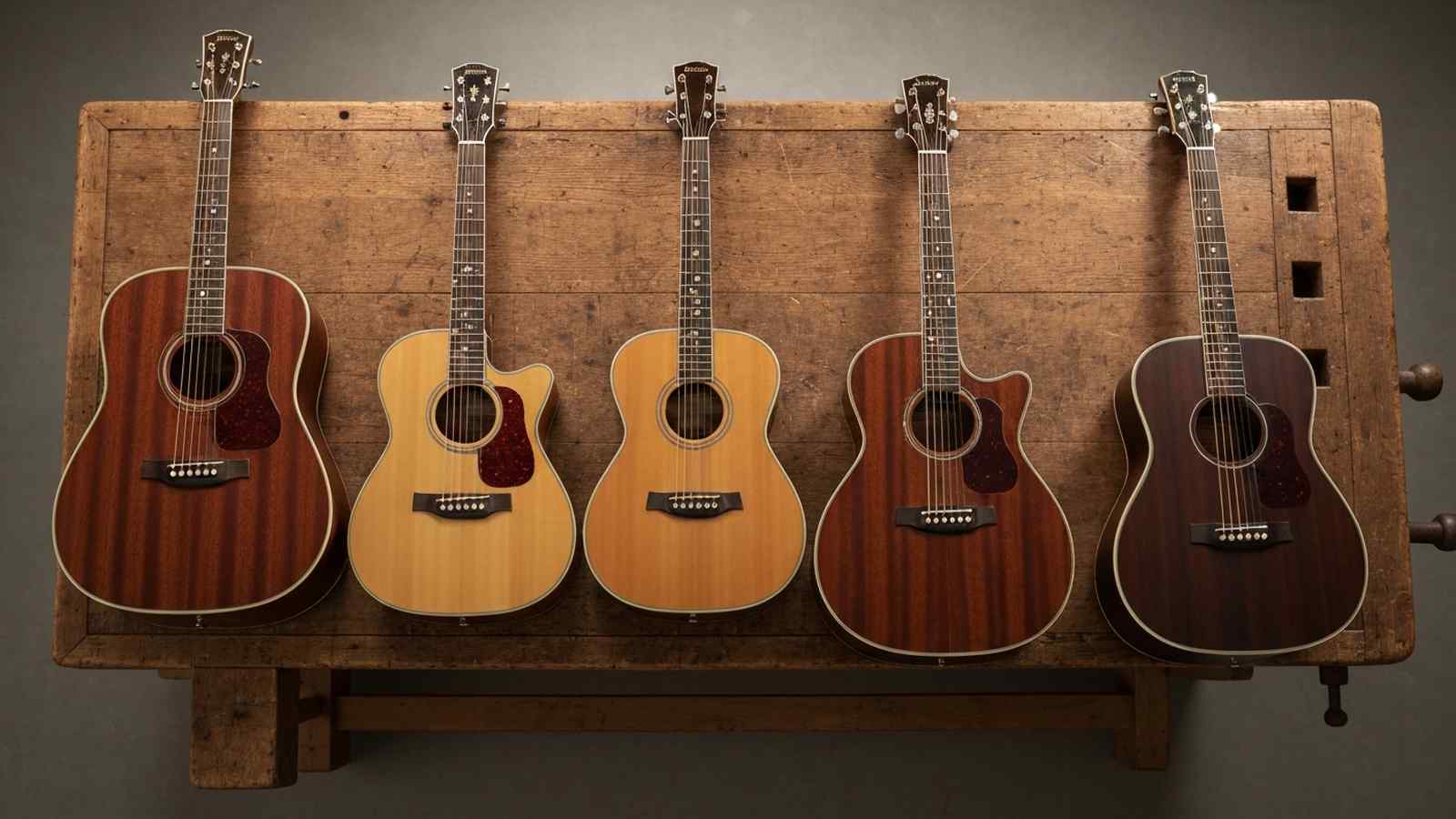
Blues guitars are a specific breed. They need dry attack, punchy low-mid growl, and enough mechanical volume to play fingerstyle without needing to fight the strings. The tonal sweet spot for blues is typically mahogany or maple back and sides with a spruce or mahogany top, not the rosewood-voiced dreadnoughts that dominate bluegrass and folk lists. For this guide we compared 10 current-production acoustics specifically for Delta, country blues, and Chicago-style playing, working through demo recordings, owner reports, and the construction details that produce a dry, punchy blues voice. Seven made this list, priced from $549 for the Recording King Dirty 30s up to $4,299 for the Waterloo WL-14X.
Top 7 for 2026
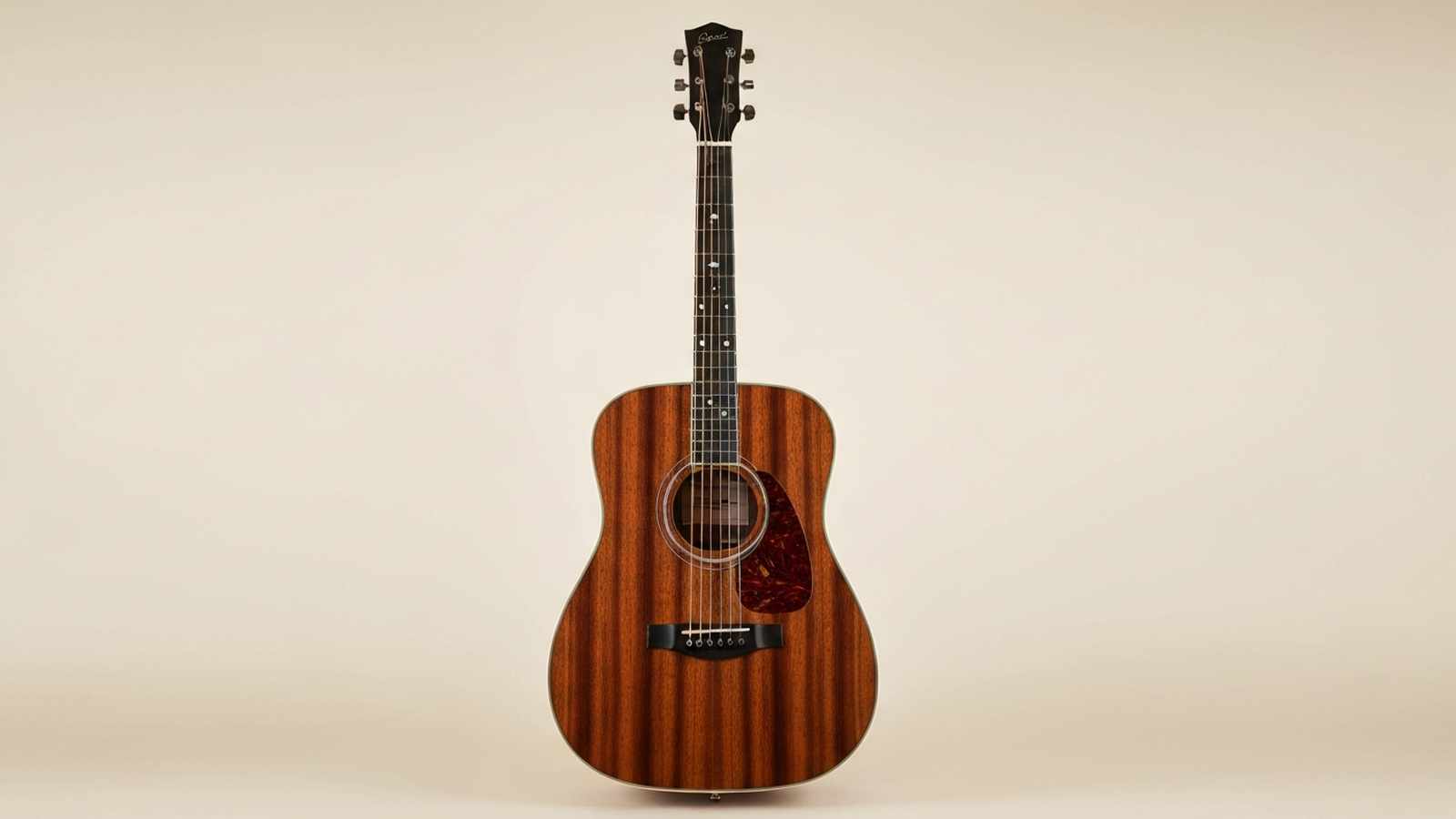
Recording King Dirty 30s RPS-7
The Dirty 30s series intentionally recreates the cheap catalog guitars of the 1930s that blues players like Lightnin' Hopkins and Mississippi John Hurt actually owned. The RPS-7 uses solid mahogany top and laminate back and sides, with a bone nut, bone saddle, and old-style slotted headstock. The resulting tone is dry, punchy, and authentic to the low-budget guitars of the Depression era. Not for bluegrass flatpickers who want volume, but ideal for Delta-style blues fingerpicking. Made in China with surprising build consistency at this price.
Epiphone Masterbilt Century DeLuxe
The Masterbilt Century series recreates the archtop acoustics Epiphone built in the 1930s and 40s before Gibson bought the brand. Solid spruce arched top with laminate maple back and sides, a floating pickguard, and a trapeze tailpiece. The resulting sound is dry and mid-forward, perfect for the 1930s-era swing blues style that players like Lonnie Johnson and Tampa Red favored. Pairs beautifully with a resonator for style variety. Currently the only affordable archtop acoustic we would recommend for serious blues work.
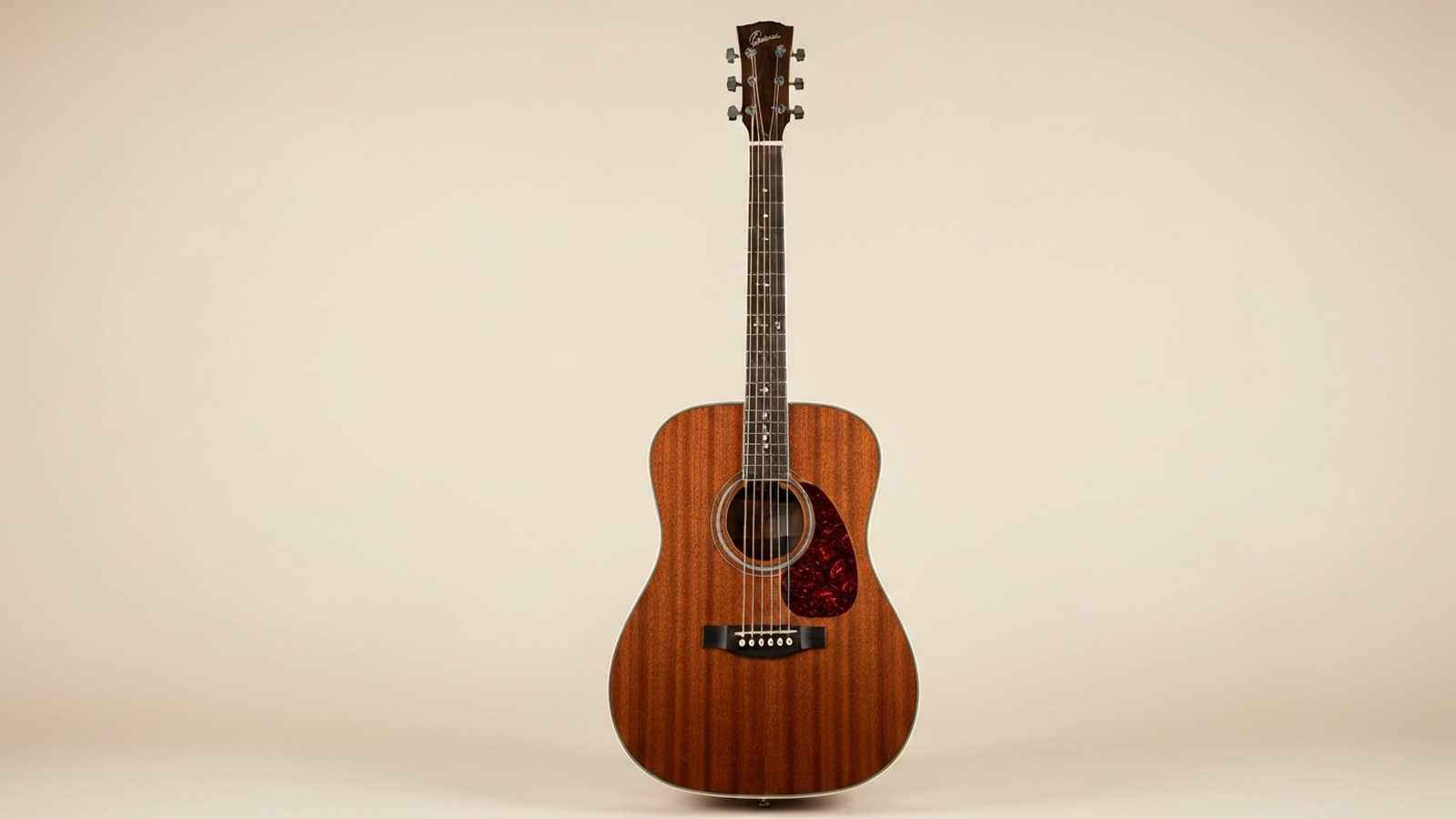
Martin 000-15M Streetmaster
The 000-15M Streetmaster is Martin's vintage-distressed all-mahogany 000, with a satin finish that looks like it has been played for 40 years straight out of the box. Solid mahogany top, back, and sides give it the dry, woody voice that blues fingerpicking demands. The smaller 000 body size lets the guitar sit closer to the ribcage and project focus rather than big bass bloom. One of the most widely recommended sub-$1,500 blues guitars year after year.
Gibson L-00 Studio Rosewood
Gibson's L-00 has been the iconic blues acoustic since Robert Johnson reportedly played one in the 1930s Delta. The current Studio Rosewood version uses solid Sitka spruce top with solid rosewood back and sides, a 24.75-inch scale length, and Gibson's advanced X bracing. The small body and short scale make slide work comfortable, while the 1.725-inch nut width gives fingerpicking fingers room to move. The punchy midrange is why blues players choose Gibson over Martin for this style: the growl in the low strings is unmistakable.
National Reso-Phonic Style O
The National Style O is a single-cone resonator, brass-bodied, nickel-plated guitar that defines the sound of Delta slide blues. Son House, Bukka White, and modern players like Doyle Bramhall II all reached for National resonators to get the metallic, cutting voice that no wooden acoustic can produce. The current production uses the same spun-cone design National developed in 1928, and the build quality in their California shop is as high as any vintage example. Expensive, but uniquely essential for anyone serious about Delta blues.
Martin D-18 Modern Deluxe
The D-18 is often overlooked for blues in favor of the rosewood D-28, but its all-mahogany body construction gives it the dry, punchy voice that blues fingerpicking demands. The Modern Deluxe version adds liquidmetal bridge pins, carbon fiber bridge plate, and other subtle refinements that the 1930s original did not have. The resulting tone is vintage-dreadnought clarity with modern consistency. A legitimate choice for blues players who want dreadnought volume without losing the all-mahogany voicing.
Waterloo WL-14X
Bill Collings founded Waterloo specifically to recreate the 1930s catalog guitars that Delta blues players actually owned. The WL-14X uses X-braced Sitka spruce and solid mahogany back and sides, a 25.5-inch scale, and an authentic 1930s neck profile that is slightly wider than modern standards. Hand-built in Austin by the same luthiers who make Collings flagship models. The resulting voice is more authentic to 1930s blues than any other current-production acoustic on this list. A lifetime instrument for serious blues players with the budget.
What Makes an Acoustic Sound Like Blues
The defining features of a blues-voiced acoustic are dry attack, strong mid-range presence, and mechanical volume that lets you play fingerstyle at conversation volume without straining. Mahogany back and sides produce dryer tone than rosewood because the wood density damps overtones more aggressively, leaving only the fundamental frequency and the first two harmonics. This is why most iconic blues guitars from the 1930s were mahogany or all-birch: they had the right voicing for the style, and they were also cheaper than rosewood.
Body size matters too. The 000 body (14.5 inches at the lower bout) and L-00 body (14.25 inches) sit in the sweet spot for blues because they are large enough to produce real volume but focused enough to keep individual notes separated for complex fingerpicking patterns. Dreadnoughts can play blues but tend toward a darker, bloomier voice that suits bluegrass better than Delta or Chicago styles.
The Case for a Resonator
Resonator guitars are the only instruments that produce the metallic, cutting voice of classic Delta slide blues. The spun aluminum cone inside a National or Dobro body acts like a mechanical speaker, amplifying string vibration through a physical diaphragm rather than through wood resonance. The result is 12-15 dB more volume than a wood acoustic at the same string attack, with a bright, slightly compressed tone that slides on beautifully.
National-style (single cone, brass body) resonators give you the Delta slide sound associated with Son House and Bukka White. Dobro-style (single cone, wood body, square neck) resonators give you the lap steel sound of country and western swing. Both are valid blues instruments, but for Delta-style slide work, the National single cone is the historically accurate choice. Budget $2,500-3,500 for a new National.
String Selection for Blues Playing
Blues players typically use heavier strings than contemporary folk and bluegrass players because the heavier gauge gives fingerpicking hands more mechanical resistance, which translates into a stronger attack and more percussive sound. Medium gauge (.013-.056) or medium-heavy (.014-.058) is common for Delta blues. Some players go even heavier on resonator guitars, using .015-.058 or custom sets with a wound G string.
For electric blues players transitioning to acoustic, the heavier strings can feel exhausting at first. The fix is usually custom-light (.011-.052) or light (.012-.053) for the first 3-6 months, then moving up to medium as the fretting hand develops stamina. Do not assume that heavier strings will make you sound more authentic before your fingers are ready for them.
Vintage Versus Modern: Is a 1930s Guitar Worth It
A real 1930s Gibson L-00, Martin 0-17, or catalog-era National in playable condition currently sells for $4,000-15,000 depending on condition and provenance. Buying vintage is a legitimate path if you can afford it, but the risks are significant: glue failures, cracked bracing, worn frets, and machine head degradation can all require expensive bench work that pushes total cost past a new Waterloo WL-14X or Gibson L-00 Studio Rosewood.
Our recommendation for most blues players is to buy a high-quality modern recreation like the Waterloo line or Martin Streetmaster series, keep the playing condition consistent, and avoid the restoration overhead of true vintage ownership. You will get 90% of the sonic authenticity for less money and far less maintenance headache. Players with the budget and the obsession can always add a real vintage instrument later as a second guitar.
Frequently Asked Questions

Shmulik Dorinbaum
Working Musician · 20+ Years Songwriting & Performing · Hebrew Recording Artist
A 44-year-old working musician and father of two from Israel, writing and recording for over twenty years across country, folk and rock. Strum Avenue is where two decades of buying, breaking, setting up and arguing about acoustic guitars gets written down.
Raised on Chris Cornell, Brandon Boyd (Incubus), Eddie Vedder.