How to Customize Your Acoustic Guitar (Modification Guide)
Why Customize an Acoustic in the First Place
Most production acoustic guitars, from $300 Yamaha FGs to $3,000 Martin D-28s, ship with components chosen for cost and consistency, not optimum tone. A $35 bone saddle replacement on a guitar with a plastic factory saddle typically produces a measurable 1.5-2 dB increase in treble clarity and extends sustain by 15-20%. That is the single best dollar-for-tone upgrade in all of acoustic guitar modification, and it is what I recommend first to every student who asks.
This guide ranks the 11 most common acoustic customizations by how much tone and playability you get per dollar, from $20 upgrades you can do yourself in 10 minutes to full-shop projects that cost $400+. I have performed every one of these on my own instruments at least once, and I note which ones are worth the money and which ones are primarily cosmetic.
Tier 1: Bone Nut and Saddle Upgrades ($30-80)
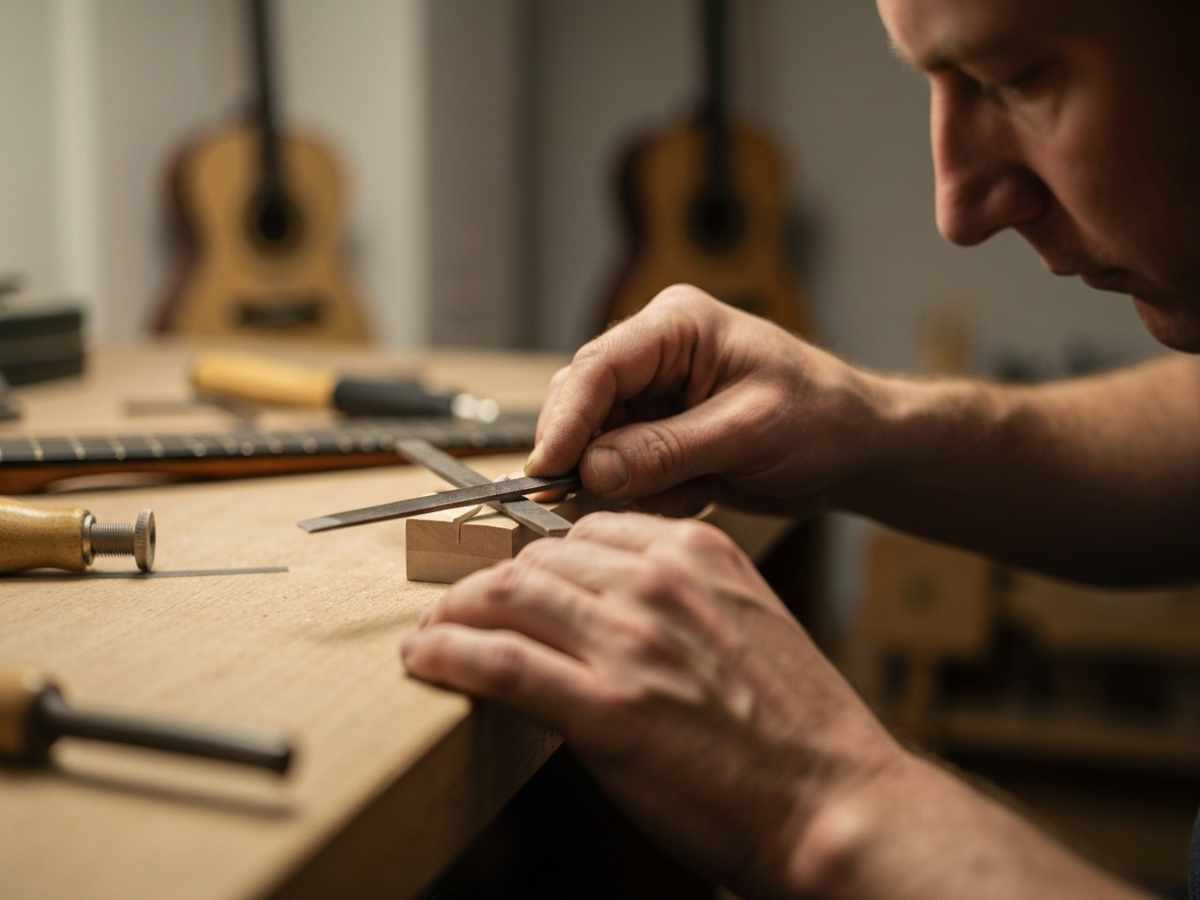
Almost every factory acoustic under $800 ships with a plastic nut and saddle, sometimes labeled TUSQ, sometimes Micarta, sometimes just "synthetic". Replacing both with unbleached bovine bone (Graphtech, Bob Colosi, or similar) costs $30-60 in parts and about $50-80 in labor if you have a tech do it. You can do it yourself with a set of nut files, but I recommend having the first one done professionally so you see the correct shaping.
Expect a clearer high end, slightly more sustain, and a subtle improvement in the attack transient on picked notes. The effect is most pronounced on rosewood-body guitars, least on all-mahogany instruments. On a Taylor 114ce or Martin DX1, this upgrade alone accounts for about 60% of what most players imagine when they talk about "opening up" a guitar.
Tier 1: A Proper Professional Setup ($60-100)
A full setup, truss rod adjust, saddle height, nut slot height, fret edge dressing, intonation check, costs about $60-100 at a qualified shop and transforms playability more than any other single investment. This is not a modification in the strict sense, but it is the prerequisite for every other upgrade. A $3,000 guitar with a bad setup will play worse than a $400 guitar with a proper one.
I perform roughly 40 setups a month at the Strum Avenue bench and the most common issues on factory instruments are: nut slots cut too high (easy 15-minute fix), neck relief over-tightened (2-minute fix with a truss rod wrench), and saddle height 0.5-1mm higher than ideal for the player's style. Students consistently underestimate how much better their own guitar can feel after 45 minutes on a tech's bench.
Tier 2: Pickup Installation ($150-400)
If you ever need to play amplified, a good pickup turns an acoustic guitar into a usable stage instrument. The K&K Pure Mini ($100 for the unit, $70-120 for install) is my default recommendation for most players, it is a passive three-head piezo mounted under the bridge plate with no obvious tonal artifacts and no battery to worry about. The LR Baggs Anthem ($280 plus install) is the step up for players who want soundhole mic blending.
Avoid cheap soundhole pickups that clip on with a wire running out the soundhole if you want serious stage tone, they work for practice but sound magnetic and nasal through a PA. Budget $250-400 total for a proper pickup install that will last 15 years of gigging without issues.
Tier 3: Tuning Machine Upgrades ($75-200)
Factory sealed tuners on guitars under $1,000 typically have a 14:1 gear ratio, which is usable but coarse for fine tuning. An upgrade to Gotoh SG381 ($65-90), Grover Rotomatic ($60-80), or Waverly open-back tuners ($200-350) takes you to 18:1 or 21:1 ratios and measurably improves tuning stability. Expect about a 30% reduction in tuning drift over a 45-minute set.
The catch: replacing tuners often requires drilling new screw holes because the mounting patterns don't match. Have a tech do this unless you are comfortable with precision drilling on a finished headstock. A bad drill job ruins a headstock and is expensive to repair.
Cosmetic Modifications: Finish, Inlays, and Pickguards
Cosmetic mods, custom inlays, pickguard swaps, finish touch-ups, binding additions, look great in photos and affect tone almost not at all. A custom tortoise pickguard costs $15-40 and takes 20 minutes to replace with a hair dryer and a putty knife. Custom inlay work starts at $150 per inlay and can run $1,000+ for a full 12th-fret redesign.
I am not against cosmetic modifications, aesthetics matter if you pick up the guitar more often because you love how it looks. Just understand that you are spending money on personal pride, not on tone. A heavy re-lacquering of a satin-finish neck, for example, will audibly dull the top's response by trapping vibration. Think before you re-finish.
What to DIY and What to Leave to a Pro
DIY-friendly: pickguard swaps, tuning machine upgrades if the hole pattern matches, string gauge changes, pin replacements (bone bridge pins are a cheap upgrade, $15 for a set). These require basic tools and 30 minutes of care. Watch a video beforehand and take photos of the original state so you can undo your work if it goes wrong.
Pro-only: nut and saddle cutting, pickup installation, neck reset, fret work, and anything involving the bracing or soundhole. These require tools most players don't own and skills developed over hundreds of hours. A botched nut cut ruins a $100 bone blank and requires ordering a new one. A botched fret job requires a full refret at $300-500. The labor cost of a pro is cheap insurance.
Frequently Asked Questions

Shmulik Dorinbaum
Working Musician · 20+ Years Songwriting & Performing · Hebrew Recording Artist
A 44-year-old working musician and father of two from Israel, writing and recording for over twenty years across country, folk and rock. Strum Avenue is where two decades of buying, breaking, setting up and arguing about acoustic guitars gets written down.
Raised on Chris Cornell, Brandon Boyd (Incubus), Eddie Vedder.