Why Your Acoustic Guitar Won't Stay in Tune (and How to Fix It)
The Six Real Causes of Tuning Instability
Acoustic guitars fail to stay in tune for six specific reasons, and each has a different fix: new or dying strings that have not yet stabilized, nut slots that bind the strings during tuning, worn or loose tuning machines, humidity swings affecting the neck or body, tuning technique that approaches pitch incorrectly, and intonation problems at the saddle. Most tuning instability in the instruments that come through my bench is caused by the first three problems, with nut binding being the single most common specific cause. If your guitar cannot hold pitch for more than 10-15 minutes of playing, one of these six issues is almost certainly responsible.
Before blaming the guitar, verify that you actually have a tuning problem rather than a perception problem. Record yourself tuning the guitar with a reliable clip-on tuner like the Snark SN-8 or D'Addario NS Micro, then play for 10 minutes and retune. Compare the recorded pitch measurements. If the strings are genuinely drifting by more than 2-3 cents within 10 minutes of normal playing, there is a real problem. If the drift is smaller than that, you may be hearing natural pitch variation rather than a hardware fault.
Nut Binding: The Most Common Cause
When a string moves through a tight nut slot during tuning, it can bind and jump rather than sliding smoothly. The result is that tuning up to pitch does not actually bring the full string length to the target tension, the string above the nut is under higher tension than the string below. During playing, vibration eventually equalizes the two sections, and the pitch drops. This is the single most common cause of 'drifts flat during playing' on acoustic guitars, and it is usually fixable in 20 minutes of bench time.
The fix is to lubricate the nut slots with graphite from a #2 pencil or a dedicated nut lubricant like Big Bends Nut Sauce. Remove the strings, rub pencil graphite into each slot, then reinstall the strings. For persistent binding, a qualified luthier can recut the slots at a slightly wider angle or install a new bone nut with properly sized slots. A basic nut slot adjustment costs $30-60 at most shops. If your acoustic goes flat within 5-10 minutes of tuning, try the graphite fix first, it resolves the problem in about 70% of cases for a cost of zero.
New Strings and Dying Strings
Fresh strings drift in pitch for their first 15-45 minutes of play because the windings are settling against the core and the string is stretching into its working tension. This is not a fault, it is normal behavior. The fix is simply to play the guitar through the first 30-60 minutes of a new string's life and retune as needed. A manual stretching technique (tuning up, gently pulling each string 1-2 inches away from the fretboard, and retuning) reduces settling time to about 10-15 minutes. Most new strings are fully stable within 2 hours of active playing.
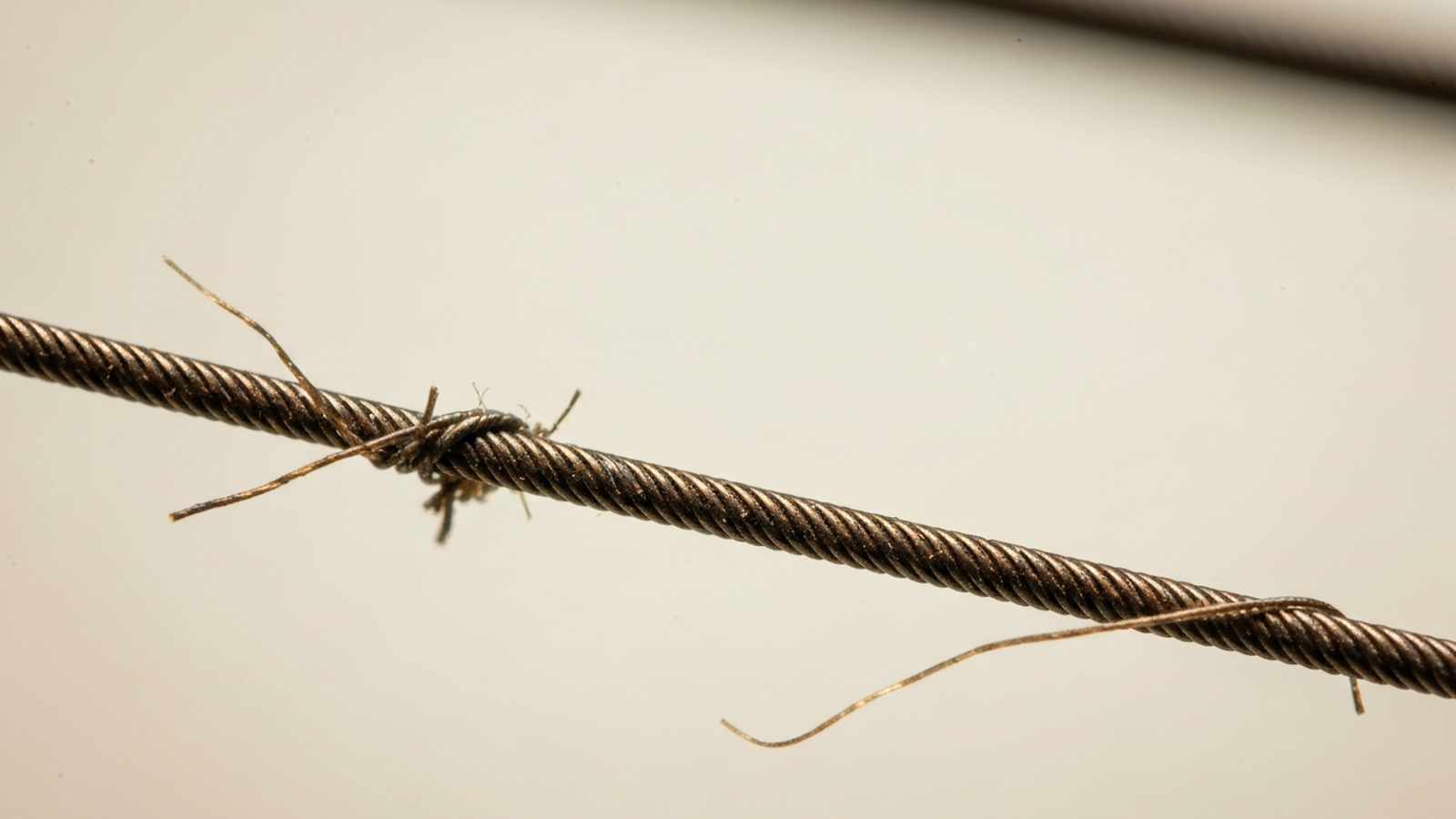
Dying strings cause a different problem: they develop dead spots and corrosion that shift their vibrating mass unevenly. This produces intonation problems that cannot be corrected at the bridge and chord voicings that sound out of tune even when open strings are perfectly tuned. If your guitar has strings older than 3-4 months of regular playing, change them before troubleshooting any other tuning issue. A $10 set of D'Addario EJ16 phosphor bronze is the cheapest potential fix for tuning instability, and it is surprising how often this alone solves the problem.
Tuning Machines: Worn or Loose Hardware
Tuning machines can fail in several ways. The most common is slipping gears, where the machine head turns freely without holding pitch, the worm gear has worn or the post has developed play. The second is loose mounting screws, where the machine itself is not firmly attached to the headstock. The third is stripped string posts, where the string does not grip the post during winding. Each has a specific fix: slipping gears require tuning machine replacement ($40-120 depending on quality), loose mounts require tightening or new screws ($0-5), and stripped posts require new machine installation.
Factory tuning machines on budget acoustics (under $500) are often the limiting factor in tuning stability. Upgrading to Grover Rotomatics, Gotoh 510 series, or Waverly open-back tuners typically costs $60-150 for a set of six and transforms a guitar's tuning behavior. This is one of the best upgrades you can make to an otherwise decent budget acoustic, the tonal instrument stays the same, but the stability and feel during tuning improve dramatically. For a $299 Fender CD-60S or similar, a $70 Grover upgrade addresses most of the guitar's real weaknesses.
Humidity, Technique, and Intonation
Humidity swings move the neck relief and body geometry of an acoustic guitar slightly, which shifts the tuning reference points. A guitar stored in 50% RH that is suddenly moved to 25% RH will go sharp as the neck back-bows and then drift flat over several hours as the wood adjusts. The fix is climate control, case humidifier, 45-50% RH target, and avoiding temperature or humidity shocks. I have seen guitars that 'cannot stay in tune' on a tour bus suddenly behave perfectly when the owner started using a Dunlop case humidifier.
Tuning technique matters more than most players realize. Always tune upward to the target note rather than tuning down. If you overshoot (string goes too sharp), drop it a few cents below pitch and tune up from below. This eliminates gear backlash and ensures the tuning machine is under tension at the final pitch. Finally, intonation problems at the saddle produce chord voicings that sound out of tune even when open strings are tuned perfectly. A proper intonation setup requires moving or replacing the saddle slightly and typically costs $40-80 at a shop. If your open strings tune cleanly but chords above the 7th fret sound wrong, intonation is the likely cause.
Frequently Asked Questions

Shmulik Dorinbaum
Working Musician · 20+ Years Songwriting & Performing · Hebrew Recording Artist
A 44-year-old working musician and father of two from Israel, writing and recording for over twenty years across country, folk and rock. Strum Avenue is where two decades of buying, breaking, setting up and arguing about acoustic guitars gets written down.
Raised on Chris Cornell, Brandon Boyd (Incubus), Eddie Vedder.