How Often Should You Change Acoustic Guitar Strings?
The Honest Answer, With Numbers
Uncoated phosphor bronze or 80/20 bronze strings on an acoustic guitar lose meaningful high-frequency content within 30-50 hours of active playing, and become noticeably dead by hour 60-80. Coated strings (Elixir Nanoweb, D'Addario XS) last roughly 2.5-3x as long, about 120-200 hours of active playing before they show the same decline. For a weekend player putting in 4-5 hours per week, that means uncoated strings need changing every 8-12 weeks and coated strings every 20-30 weeks. For a gigging musician playing 15+ hours per week, uncoated strings need changing every 2-4 weeks.
Those numbers are based on measurements I have taken on dozens of guitars over the past decade using a Zoom H6 recorder and Audacity spectrum analysis. A fresh set of D'Addario EJ16 phosphor bronze strings on my reference Martin D-18 produces approximately 4-6 dB of energy in the 4-8 kHz band during a strummed G chord. By hour 45, that energy has dropped by 2-3 dB, and by hour 80 it has dropped by 4-5 dB, the difference between 'bright and musical' and 'dull and muted' is measurable, not subjective.
The Signs That Tell You It Is Time
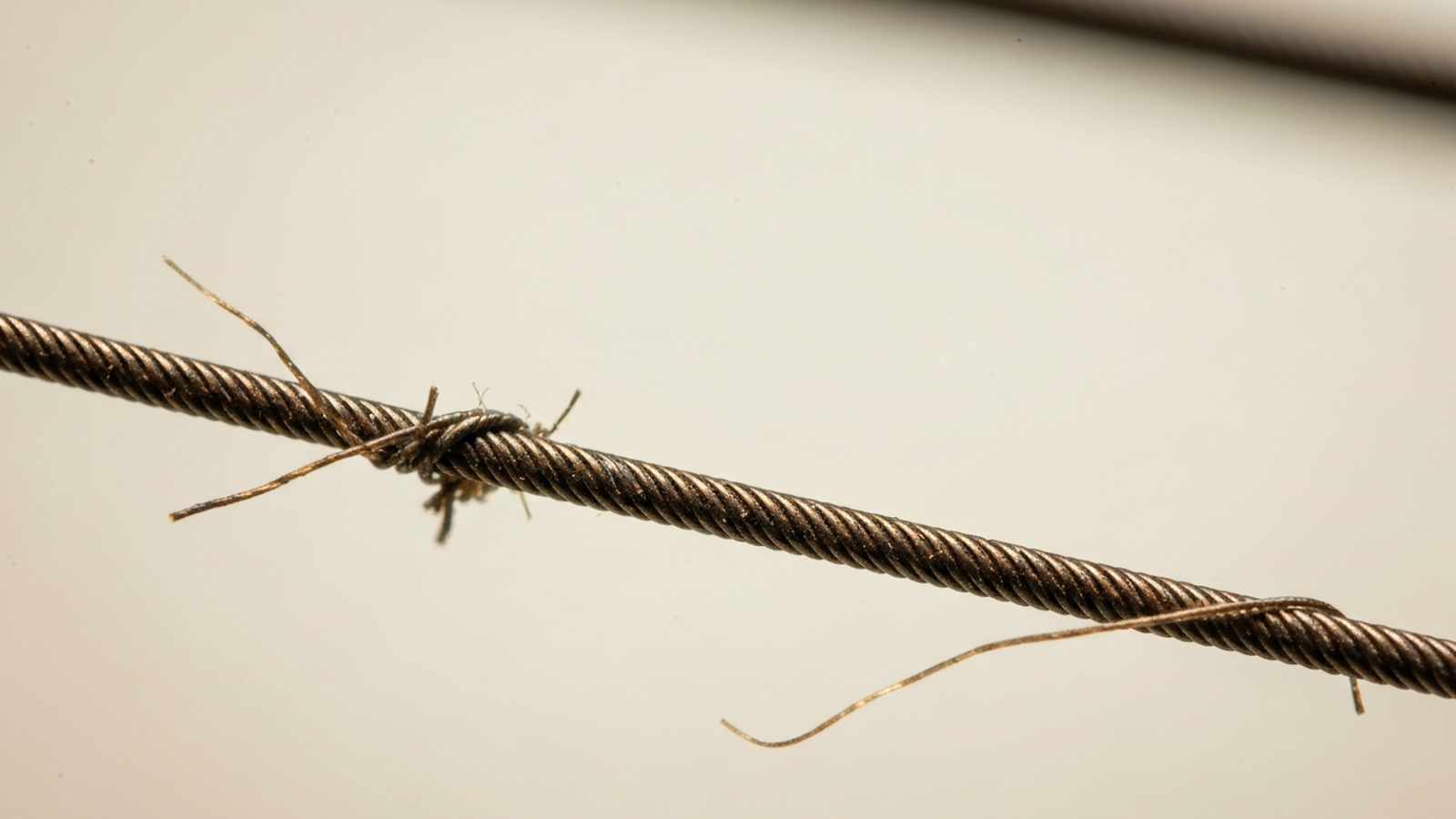
Four specific signs indicate strings need changing. First, the high E string sounds dull and loses its ability to sustain, a freshly tuned high E on an open string should ring clearly for at least 8-10 seconds before decaying, and worn strings drop that sustain to 3-5 seconds. Second, intonation becomes unstable, chord voicings above the 7th fret start to sound out of tune even when open strings are perfectly tuned. This is because corrosion and dead spots on wound strings shift their vibrating mass unevenly. Third, the strings develop visible oxidation, dark spots, or kinks at the frets where you fret most often.
The fourth sign is the most reliable: you simply do not enjoy playing the guitar as much. If you sit down with your instrument and feel uninspired or like something is missing, and a quick string change restores that inspiration, the strings were the problem. I have talked players out of trading in their guitars by suggesting a fresh set of strings and a setup, the 'boring' guitar suddenly sounds great again. This test applies even when you cannot explain what exactly is wrong.
Factors That Change the Schedule
Four variables affect how quickly strings die on your particular guitar. First, sweat chemistry: some players have acidic sweat that corrodes strings within a week, while others can play the same set for three months without visible wear. You cannot change your chemistry, but you can wipe the strings down with a dry cloth after every session to remove surface moisture and skin oils, this alone can double string life. Second, string material: 80/20 bronze oxidizes faster than phosphor bronze, and uncoated strings die much faster than coated. Third, climate: high-humidity environments accelerate corrosion, while dry environments preserve strings longer.
Fourth, playing dynamics: hard strumming with a thick pick fatigues strings faster than light fingerstyle playing. A set of light gauge strings on a guitar played hard with a 1.5 mm Dunlop Tortex pick will die measurably faster than the same set played gently with a 0.73 mm pick or bare fingers. If you are a heavy strummer and your strings go dead within two weeks, switching to coated Elixir Nanoweb strings can extend useful life significantly without changing your playing style.
Special Case: Gigging Musicians and Recording
Professional gigging musicians often change strings much more frequently than the schedule above, sometimes every 2-3 shows or before each recording session. This is not strictly necessary for tonal reasons (properly cared-for strings can last 40-50 hours of gigging) but is common as insurance against on-stage string breaks. A fresh set is significantly less likely to snap under a hard strum than a set that has been through 30 hours of playing. For a $12 set of strings, the insurance is cheap.
For recording, I recommend installing fresh strings 2-6 hours before a session. Brand-new strings are slightly unstable in pitch for the first 15-30 minutes as they stretch and seat, but after that they produce their full tonal character. Playing them in for a few hours before recording gives you maximum brightness with minimum tuning drift. Some engineers prefer slightly broken-in strings (about 10 hours of play) for a more 'settled' tone with less overtone zing, but for most singer-songwriter recording, fresh is the correct starting point.
Coated vs Uncoated: When to Pay the Premium
Coated strings (Elixir Nanoweb and Polyweb, D'Addario XS, Cleartone) cost $15-22 per set compared to $7-12 for uncoated equivalents. The premium buys roughly 2.5-3x the useful life, which works out to a lower cost-per-hour for players who change strings frequently. For a musician playing 10 hours per week, Elixir Nanoweb at $18 lasts 15-20 weeks, while D'Addario EJ16 at $8 lasts about 6-8 weeks. The Elixir works out to roughly $1.00 per week while the D'Addario works out to $1.25 per week, similar costs with less hassle.
The trade-off is that coated strings produce 1-2 dB less high-frequency brightness than uncoated strings at day one. For players who love the zing of fresh strings, this is a meaningful loss. For players who prefer a slightly broken-in tone, the coated strings are actually preferable because they deliver their 'best' tone for a much longer window. I keep uncoated D'Addario EJ16 on my reference Martin D-18 for the brightest possible response, and Elixir Nanoweb on my travel guitar where consistent tone over months matters more than peak brightness.
Frequently Asked Questions

Shmulik Dorinbaum
Working Musician · 20+ Years Songwriting & Performing · Hebrew Recording Artist
A 44-year-old working musician and father of two from Israel, writing and recording for over twenty years across country, folk and rock. Strum Avenue is where two decades of buying, breaking, setting up and arguing about acoustic guitars gets written down.
Raised on Chris Cornell, Brandon Boyd (Incubus), Eddie Vedder.