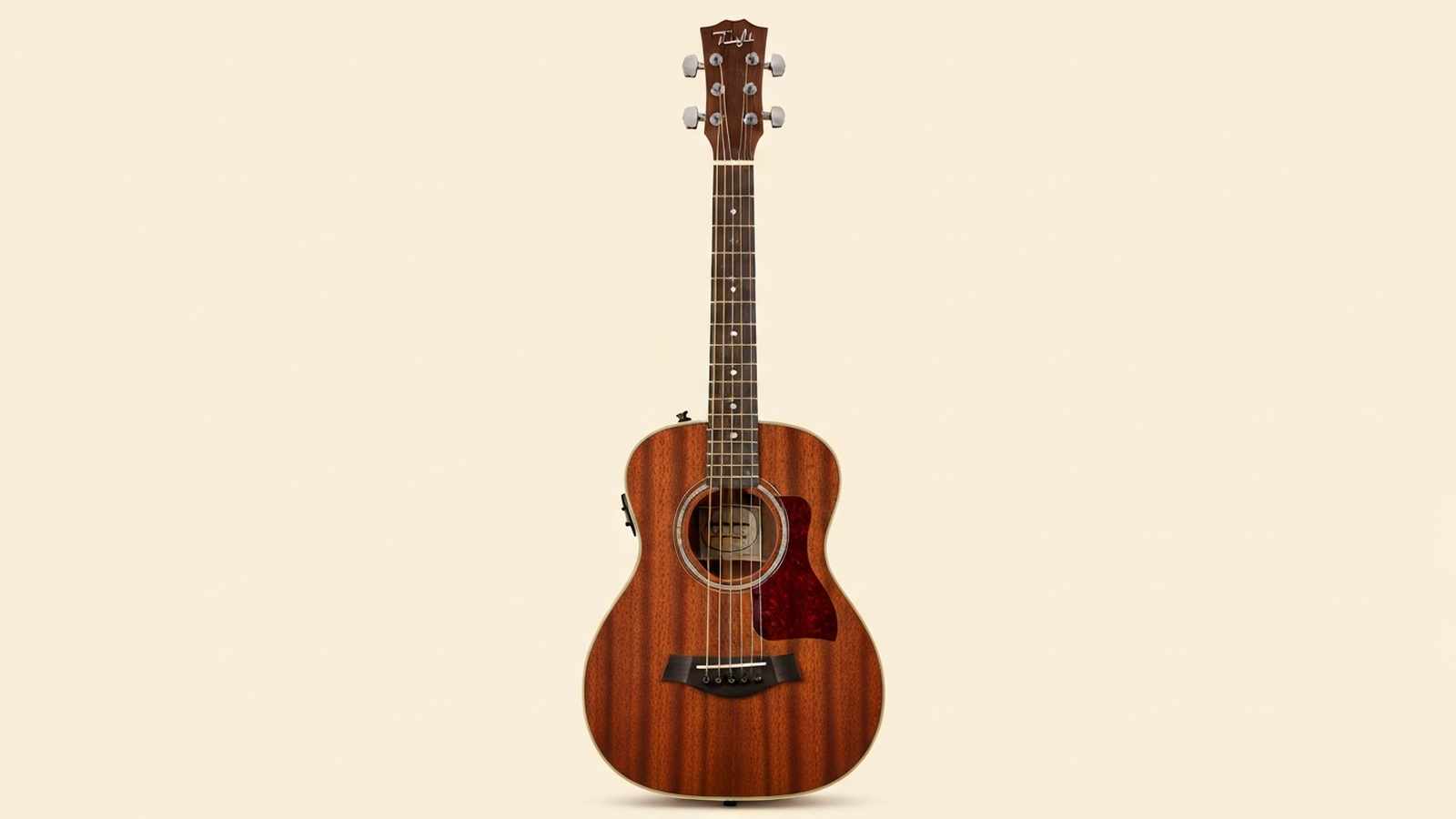
Daisy Rock Pixie Acoustic
Affiliate link. No extra cost to you
The Short Scale and Slim Neck Justify the Novelty Looks
Somewhere into researching the Daisy Rock Pixie for this review, I stopped rolling my eyes at the pastel finishes and started paying attention to the geometry. The 22.8-inch scale length and 1.625-inch nut width make this one of the most accessible first guitars for players under 5 feet tall, and at $199 it undercuts Taylor and Martin short-scale options by more than 10x. The tone is thin by adult-guitar standards, but for a 9-year-old learning open chords it removes nearly every physical barrier to practice.
At a Glance: Specifications
| Body Shape | Concert / 3/4 Parlor |
| Top | Laminate Spruce |
| Back & Sides | Laminate Mahogany |
| Neck | Mahogany, Slim Slender Profile |
| Fingerboard | Rosewood |
| Scale Length | 22.8" |
| Nut Width | 1.625" |
| Electronics | None (acoustic only) |
| Origin | China |
| Street Price | $199 |
First Look: Design and Build
Daisy Rock ships the Pixie in a thin cardboard carton that owners regularly flag as too light for safe transit: no bubble wrap around the headstock, just foam end caps. In the Sky Blue Burst finish the guitar comes in at a listed 3.1 pounds, about 1.2 pounds lighter than a full-size Seagull S6, and owners say the difference is obvious the moment you pick it up.
The finish work is cleaner than the price suggests. Owner reviews occasionally mention minor buff-through spots on the lower bout, but the binding lines run straight and the fret ends come rolled from the factory, which almost never happens at sub-$250.
Tone and Sound Character
Nobody is buying a Pixie for its tone, but the Pixie is not as bad as the marketing implies. The laminate spruce top has the papery high end you expect from an inexpensive short-scale, and owners confirm the bass response is essentially absent below the 4th string open D. On open G and C chords, though, demo recordings show enough midrange to carry across a living room, and the short scale gives individual notes a round, bell-like attack, something like a Baby Taylor with half the low-end.
Fingerstyle players will be frustrated. In fingerstyle demo clips, the bass line on the 6th string simply does not support a melody on the 1st. For strummed accompaniment of a young voice, however, the guitar sits cleanly in the mix and never booms or muddies the room.
Playability and the Case for Short Scale
The 22.8-inch scale length and 1.625-inch nut width are the two specs that matter on this guitar. String tension at standard pitch is roughly 20% lower than a full-scale dreadnought, which means a young beginner can hold down a C chord without the fretting hand going white at the knuckles. Parents in owner reviews repeatedly describe kids going from broken chords on a full-size guitar to a clean G-C-D progression on the Pixie within the first lessons.
Owner reports put typical factory action around 2.8mm at the 12th fret on the low E, which is tall for adult hands but acceptable for a child still building finger strength. A small saddle adjustment is a ten-minute job for any tech, and owners say the guitar plays noticeably easier afterward without any buzzing.
Build Quality and What You Are Actually Paying For
At $199 street, the Pixie is not competing with solid-top guitars; it is competing with department-store junk. On that playing field, it wins easily. Owner reviews describe a tight neck joint, a well-glued bridge, and generic die-cast tuners that hold pitch through a full practice session once the strings settle.
Electronics are absent on the standard Pixie, which I prefer at this tier. Adding a passive under-saddle pickup at the factory almost always compromises the bridge glue, and the Pixie's audience, bedroom learners, does not need amplification.
Who Should Buy a Daisy Rock Pixie
If you are shopping for a child aged 7 to 11, or a small-handed adult under 5 feet tall, the Pixie is a legitimately good first instrument. The short scale and slim neck remove most of the physical barriers that cause beginners to quit in the first six months. The pastel finishes are polarizing: some young players love them, some refuse to carry a pink guitar to a school recital. Shop the Sky Blue or Pearl White if the Cotton Candy is a deal-breaker.
Skip the Pixie if you are buying for a teenager or an adult beginner with average-sized hands. A Yamaha FG Junior or a Taylor Baby BT1 offers a better sonic foundation at similar or slightly higher prices, and the short scale becomes a liability once finger strength is built.
What We Loved
- 22.8-inch short scale removes tension barriers for small hands
- 1.625-inch slim nut width is genuinely easier for young beginners
- Clean factory fretwork and rolled fret ends at this price
- Light 3.1-pound body comfortable for long practice sessions
What to Watch
- Laminate top gives thin bass response
- Factory action is high for fingerstyle
- Pastel finish options alienate some older beginners
- No gig bag or accessories included at standard retail
Frequently Asked Questions

Shmulik Dorinbaum
Working Musician · 20+ Years Songwriting & Performing · Hebrew Recording Artist
A 44-year-old working musician and father of two from Israel, writing and recording for over twenty years across country, folk and rock. Strum Avenue is where two decades of buying, breaking, setting up and arguing about acoustic guitars gets written down.
Raised on Chris Cornell, Brandon Boyd (Incubus), Eddie Vedder.